




Driving Safety Forward
The automotive industry is undergoing a significant transformation, characterized by the increasing integration of electric powertrains and sophisticated
intelligent systems. This evolution introduces a higher degree of complexity in ensuring the functional safety of critical vehicle components, including those in the powertrain, chassis, advanced driver-assistance systems (ADAS), and automated driving functions. To navigate these intricate safety requirements, the ISO 26262 standard has emerged as the definitive framework for functional safety development within the automotive sector. Recognizing this imperative, companies are actively developing and expanding portfolios of specialized components designed to meet and exceed these rigorous safety benchmarks, ensuring that vehicles are not only more advanced but also exceptionally secure for drivers and passengers alike.
Powertrain Safety Boost
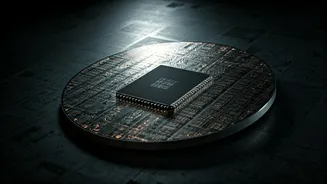
For high-voltage powertrain systems, a crucial component has achieved a significant safety milestone, attaining ISO 26262 ASIL D certification from TÜV Rheinland. This isolated gate driver is specifically engineered for demanding applications like traction inverters, on-board chargers (OBCs), and DC-DC converters. It boasts impressive capabilities, including a peak drive current of up to 19A, exceptional common-mode transient immunity (CMTI) of ±150kV/μs, an integrated 12-bit isolated analog-to-digital converter (ADC), and comprehensive protection features. These attributes are vital for enhancing switching reliability, enabling localized sensing, and improving overall safety integration, particularly in systems utilizing Silicon Carbide (SiC) and IGBT technologies that operate under challenging high-frequency and high-dv/dt conditions.
Diverse Application Support
Beyond the powertrain, advanced functional safety solutions are extending their reach to a wide array of automotive applications. For instance, an ultrasonic sensor interface, certified at ASIL B, is designed to support DSI3-compatible architectures crucial for systems like Ultrasonic Park Assist (UPA), Automated Park Assist (APA), and Automated Valet Parking (AVP). This interface offers flexibility in its Chirp/FSK encoding, incorporates low-noise signal processing for accurate readings, and includes integrated diagnostic functions for enhanced reliability. Furthermore, a family of linear LED drivers, also at ASIL B, provides control for up to 24 channels, catering to essential lighting functions such as tail lamps, turn indicators, brake lamps, and interactive lighting. These drivers are equipped with diagnostic capabilities and fail-safe mechanisms. For chassis applications, a family of Advanced Magnetoresistive (AMR) wheel-speed sensors, developed to meet ASIL B(D) requirements, ensures precise wheel-speed detection vital for Anti-lock Braking Systems (ABS), Electronic Stability Programs (ESP), and Electric Power Steering (EPS) systems.
Commitment to Safety Standards
The company's dedication to automotive functional safety is underscored by its achievement of the ISO 26262 ASIL D "Defined–Practiced" Functional Safety Management System certification, a rigorous audit conducted and awarded by TÜV Rheinland. This certification validates the existence of a robust management framework that effectively integrates system-level management with precise engineering practices. This comprehensive approach allows for the delivery of end-to-end functional safety solutions, addressing needs at both the system and chip levels, thereby providing a holistic safety assurance for automotive applications.
Market Growth and Future Outlook
The automotive business segment has experienced substantial growth, demonstrating strong market momentum. In 2025, this sector generated approximately US$495 million in annual revenue, with automotive contributing over 35% of the total business. Chip shipments for automotive applications surpassed 750 million units in that year, bringing the cumulative shipment count to more than 1.418 billion units. The first quarter of 2026 further highlighted this upward trend, with revenue reaching approximately US$168 million, marking a significant year-on-year increase of 59.17%. This sustained growth reflects increasing demand for advanced automotive components and a strong market position.