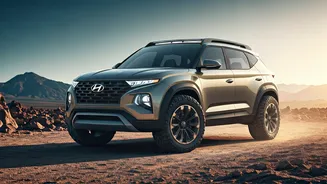








Rugged Exterior Design
The Hyundai Boulder Concept makes a striking impression with its robust 'Art of Steel' design language, characterized by a commanding, boxy silhouette
that harks back to classic off-road vehicles. Its front fascia is distinguished by a sculpted, muscular hood and a unique lighting signature. Two rows of pill-shaped daytime running lights are meticulously arranged to form the Morse code for 'H', adding a touch of clever branding. Complementing these are vertically stacked LED headlights and additional DRLs that enhance visibility in challenging conditions. The lower section of the front bumper is purpose-built for off-road use, featuring integrated tow hooks and a heavy-duty construction. The side profile emphasizes its go-anywhere capability with pronounced front and rear fenders, sharp, defined window lines, and practical, functional side steps. Adding to its adventurous appeal, the concept features an 18-inch alloy wheel set fitted with all-terrain tires, providing substantial ground clearance. The roof is equipped with a utility rack, further enhanced by integrated LED lighting elements for superior illumination during night excursions. At the rear, a distinctive double-hinged tailgate offers versatile access, with a full-size spare wheel mounted centrally. The rear windshield is electrically retractable, allowing for the accommodation of longer items. The entire exterior is finished in a sophisticated Liquid Titanium paint, underscoring its premium yet rugged identity. Hyundai envisions this concept as a highly adaptable 'blank canvas', ready for customization with a wide array of accessories to boost both its functionality and aesthetic appeal for diverse outdoor pursuits.
Adventure-Ready Interior
The interior of the Hyundai Boulder Concept mirrors the exterior's rugged ethos, featuring a stylish two-tone beige-and-black color scheme. The driver-focused cockpit is centered around a sporty, flat-bottomed, three-spoke steering wheel. This wheel is equipped with intuitive rotary knobs, providing easy access to various off-road driving modes, allowing drivers to quickly adapt to changing terrains. Augmenting the driver's view is an expansive head-up display that stretches across the entire width of the windshield, projecting crucial information without requiring the driver to divert their gaze. The central console is a hub of advanced technology, incorporating four distinct screens. These displays provide comprehensive off-road data, detailed navigation maps, entertainment options, and controls for the vehicle's specialized off-road hardware. A standout feature is the real-time, software-driven off-road guidance system. This innovative system acts as a virtual 'spotter,' offering real-time advice and assistance to help drivers navigate challenging off-road obstacles with greater confidence and safety. Hyundai has prioritized durability in the cabin, utilizing robust materials for key touchpoints and high-wear areas, such as the grab bars and handles. For added convenience during long journeys or while parked in scenic locations, the cabin also includes fold-out tray tables, enhancing the overall utility and comfort for occupants engaging in outdoor activities.
Future Pickup Foundation
While the Boulder Concept itself is not slated for direct production, its significance lies in its underlying architecture. This concept car serves as a crucial preview of Hyundai's all-new body-on-frame platform. This robust chassis is engineered to underpin a forthcoming pickup truck specifically designed for the demanding US market. Hyundai plans to introduce this production pickup by the year 2030, targeting consumers who value the distinct advantages of body-on-frame construction for their off-road and hauling needs. The development and manufacturing of these vehicles are intended to be US-centric, aligning with the strong consumer preference for this type of vehicle in that region. Although there is no official confirmation regarding its availability in the Indian car market, Hyundai has acknowledged plans for a different type of vehicle for India. This includes a 'muscular' monocoque SUV, also expected by 2030, which will feature significant off-road capabilities, catering to a different segment of the Indian automotive landscape. The Boulder Concept, therefore, represents a strategic step for Hyundai in expanding its portfolio into more rugged and specialized segments, particularly in markets with a high demand for capable utility vehicles.