




Accelerated Travel Times
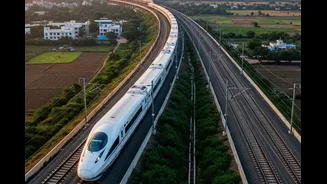
Telangana is spearheading a significant advancement in India's high-speed rail network with a proposed bullet train corridor connecting Hyderabad and Mumbai.
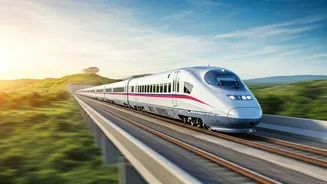
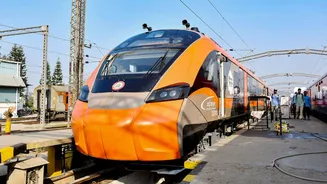
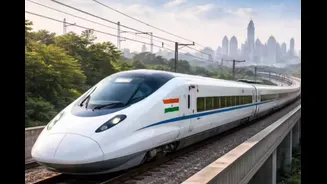
This ambitious 761-kilometer project is designed to dramatically reduce travel duration, with the goal of making the journey between these two major cities achievable in less than three hours. The Detailed Project Report (DPR) for this endeavor has now been completed, marking a crucial step forward. Beyond the immediate benefit of expedited passenger movement, the initiative aims to foster increased trade, enhance mobility options for businesses and individuals, and stimulate broader regional economic development. The project envisages trains operating at speeds between 320 to 330 kmph, promising a swift and efficient travel experience that could redefine inter-state connectivity.
Massive Infrastructure Investment
The financial blueprint for the Hyderabad-Mumbai high-speed rail corridor outlines a substantial investment estimated at approximately Rs 2 lakh crore. This considerable expenditure underscores the scale and strategic importance of the project, positioning it as a key piece of long-term economic infrastructure for the nation. While this figure represents the current estimates derived from the DPR and comparisons with similar projects, the final cost will be subject to adjustments based on various factors including official approvals, the finalization of funding arrangements, and more detailed technical evaluations. The sheer magnitude of the investment signals a commitment to creating a world-class transportation system that will serve as a catalyst for economic activity and development along its entire route for decades to come.
Phased Construction Timeline
With the Detailed Project Report now finalized, the next crucial stages for the Hyderabad-Mumbai bullet train involve securing necessary approvals from the Central government and coordinating with the state of Maharashtra and other relevant stakeholders. Officials are optimistic that if all statutory clearances and funding mechanisms are put in place according to schedule, the construction phase could commence by the end of 2027 or early 2028. The anticipated duration for the entire construction and commissioning process is estimated to be between six to eight years, suggesting that the high-speed rail corridor could become operational in the early to mid-2030s. Given the project's extensive scope, it is anticipated that the implementation will unfold in distinct phases, with alignment approvals, the establishment of robust financing structures, and effective inter-state collaboration playing pivotal roles in determining the pace of execution.
Economic Growth Engine
Beyond its primary function of drastically reducing travel times for passengers, the Hyderabad-Mumbai high-speed train project is strategically envisioned as a powerful engine for economic growth. Proponents believe it will significantly bolster trade flows by enabling quicker movement of goods and personnel, thereby reducing logistical bottlenecks. The enhanced mobility offered by the corridor is expected to stimulate business travel and foster stronger industrial development in the regions it connects. Telangana's Roads and Buildings Minister, Komatireddy Venkat Reddy, emphasized Hyderabad's prime geographical location, which makes it a natural nexus for various growth regions, and posited that high-speed rail would solidify this role. Industry analysts suggest that such an infrastructure development could also serve to better integrate emerging industrial zones and logistics hubs across Telangana, Maharashtra, and neighboring areas, creating a more cohesive economic landscape.
Hyderabad's Rail Hub Ambition
The development of the Hyderabad-Mumbai bullet train corridor is merely one facet of Telangana's broader vision to establish Hyderabad as a central hub within a comprehensive national high-speed rail network. Beyond the western corridor, the state is actively pursuing other significant bullet train proposals. These include a proposed connection from Hyderabad to Chennai, passing through Amaravati, and another route linking Hyderabad to Bengaluru. Discussions are reportedly ongoing with the respective neighboring states to finalize the proposed alignments and advance these ambitious projects. Collectively, these initiatives represent a strategic effort to position Hyderabad at the very core of a future network of high-speed rail lines, designed to connect multiple vital economic corridors across southern and western India.