




The Route Genesis
The newly opened Delhi-Dehradun Expressway, designated as National Highway 709B, has been widely promoted with the significant promise of reducing the travel
duration between the national capital region and Uttarakhand to a mere 2.5 hours. This ambitious project aims to revolutionize connectivity, boasting cutting-edge infrastructure designed to enhance both speed and distance efficiency. To ascertain the validity of this bold claim, an investigative journey was undertaken, starting from the expressway's official commencement point at Akshardham Temple in New Delhi. The objective was to experience the route firsthand, adhering to standard driving practices and speed regulations, to determine if the advertised travel time is achievable under real-world conditions.
The 2.5-Hour Promise
The much-publicized 2.5-hour travel time between Delhi and Dehradun has been put to the test. During a meticulously conducted trial run, commencing from Akshardham and proceeding to the entry point of Dehradun, the journey was completed in approximately 2 hours and 35 minutes. This result closely aligns with the ambitious projection, demonstrating that the expressway can indeed facilitate rapid transit. However, it's crucial to note that this timing encompasses the journey from the expressway's start to its Dehradun access point. The final travel duration into the city will be influenced by internal Dehradun traffic conditions and the specific destination within the city. Similarly, the starting point within the sprawling Delhi NCR region will also affect the overall commute.
Driving Experience Quality
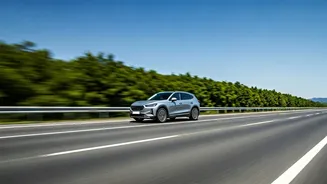
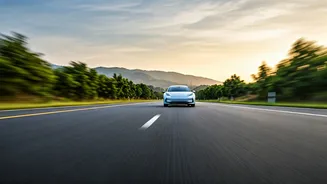
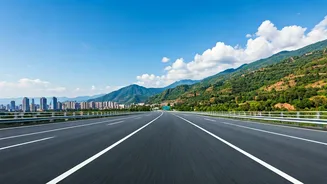
The driving experience on the Delhi-Dehradun Expressway is characterized by its exceptionally smooth and predictable road surface. Throughout the 100 km/h speed limit adherence, the journey felt exceptionally comfortable, more akin to a leisurely cruise than a hurried commute. The advanced engineering of the expressway ensures remarkable stability at higher velocities, making for an effortless drive. Vehicles maintain a natural flow, eliminating the urge to push limits unnecessarily. This high-quality construction, free from abrupt bumps or inconsistencies, contributes significantly to a fatigue-free and enjoyable long-distance journey, underscoring the infrastructure's design for efficient, high-speed travel.
Engineering Marvels Unveiled
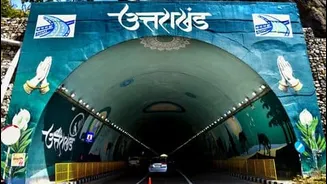
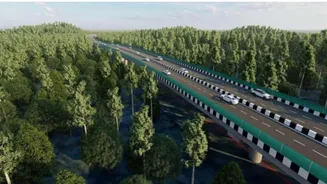
Beyond just facilitating rapid transit, the Delhi-Dehradun Expressway stands as a testament to intelligent infrastructure design. A particularly noteworthy feature is the 12-kilometer elevated wildlife corridor that traverses Rajaji National Park. This innovative section is meticulously engineered to permit the unimpeded movement of animals underneath the highway, thereby minimizing ecological disruption. Further enhancing its structural integrity and operational efficiency are the 340-meter Daat Kali tunnel situated near Dehradun, numerous bridges, and over 100 underpasses for vehicular traffic. This comprehensive approach reflects a deliberate effort to balance the imperative of reduced travel times with the complex challenges of environmental preservation and advanced engineering.
Amenities and Services
While the expressway excels in providing a swift and high-quality driving surface, the ecosystem of user facilities is still in its nascent stages. Currently, essential services such as operational fuel stations and electric vehicle charging points are conspicuously absent along the entire stretch. Available amenities are limited to basic toilet facilities at toll plazas, with larger rest areas and comprehensive service centers still under construction. This scarcity of conveniences presents a notable gap for a highway designed to support significant long-distance travel, underscoring an area requiring immediate development to enhance traveler comfort and utility.
Traveler Recommendations
For those planning to utilize the Delhi-Dehradun Expressway, meticulous preparation is strongly advised. Given the current limited availability of services, it is imperative to ensure your vehicle is adequately fueled or your electric vehicle is fully charged before embarking on the journey. Carrying sufficient water and snacks is also recommended, as prolonged stretches of uninterrupted driving can make hydration crucial. Furthermore, prospective travelers should plan their intended stops in advance, as the on-highway options for rest and refreshment are presently scarce. Proactive planning will ensure a smoother and more comfortable experience on this modern thoroughfare.
Tolls and Navigation
The current tolling system on the expressway operates on a closed-circuit basis, although during the test drive, only a single toll point was encountered before entering the elevated section. No further tolls were registered along the tested route, contributing to a relatively seamless passage. This tolling structure may be subject to change as the expressway reaches full operational capacity. A minor navigation challenge was also observed, where certain sections of the route were not fully recognized by digital mapping applications after Saharanpur. The straightforward solution is to maintain a consistent position in the middle or right lane, allowing the road's natural trajectory to guide drivers into Dehradun, highlighting the occasional lag between infrastructure upgrades and digital navigation updates.
Safety and Enforcement
A critical aspect of the highway experience relates to driver behavior and safety enforcement, areas that still reflect the realities of Indian road conditions. Despite express restrictions, instances of two-wheelers, agricultural vehicles, and heavy trucks observed traveling on the incorrect side of the road pose a significant safety hazard. On an expressway designed for high speeds, such violations create a substantial risk of severe accidents. Effective enforcement and vigilant monitoring will be paramount to ensure the safety of all road users. The infrastructure is advanced, but harmonizing driver conduct with these new high-speed environments is an essential next step for the corridor's overall success.
The Verdict: A Near Reality
In essence, the Delhi-Dehradun Expressway largely fulfills its primary objective of significantly reducing travel time, making the near 2.5-hour journey achievable under optimal conditions. The road infrastructure is of excellent quality, providing a smooth and efficient driving experience. The reduction in travel duration is substantial, marking a considerable improvement in connectivity. However, the overall experience is not yet fully complete due to the aforementioned limitations concerning amenities, fuel access, navigation nuances, and ongoing safety concerns. These aspects require further development and diligent management. The expressway represents a forward-looking vision for Indian highways, but its true potential will be realized when the surrounding ecosystem, including user facilities and responsible driving practices, evolves in tandem with the physical infrastructure.