








Beneath Delhi's Surface
The Delhi Metro network, a sprawling system, has crossed the 390-kilometer mark, establishing its prominence as one of the world's largest metro systems.
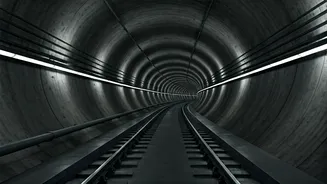
Recent advancements, particularly on the Golden Line, have pushed the boundaries of underground construction. The innovative use of modern tunnel boring machines has been crucial in navigating the challenges of creating an underground world, especially in areas with dense populations and historically significant structures. These machines are engineered to create tunnels with minimal disruption to the surface, maintaining a low profile while they carve their way through the earth. This has enabled the metro to expand its reach without causing excessive noise or disruption above ground. This intricate engineering underscores the city's commitment to modernization while preserving its heritage.
The New Deepest Point
Previously, Hauz Khas station held the title of the deepest station in the Delhi Metro, reaching a depth of nearly 30 meters. However, the metro has outdone itself with the Golden Line, currently under construction. A specific stretch of tunnel on this line between Chhatarpur and IGNOU now descends a staggering 39 meters below the surface. This accomplishment represents a significant step in Phase 4 of the Delhi Metro's development. This achievement is not just a measure of depth, it is a testament to the advanced engineering and technological prowess employed to construct underground infrastructure in a crowded urban environment. The Golden Line's deeper tunnel showcases the continuous innovation and the relentless pursuit of overcoming infrastructural constraints.
Golden Line Expansion
The Delhi Metro Rail Corporation (DMRC) has expanded the Golden Line, incorporating an elevated corridor that will extend from Tughlakabad to Kalindi Kunj. This expansion will feature several stations: Tughlakabad, Sarita Vihar, Madanpur Khadar, and Kalinda Kunj. This strategic extension aims to enhance connectivity between South Delhi and the Yamuna riverfront, providing an efficient transit route for commuters. The construction of the Golden Line represents a critical step in the ongoing development of the Delhi Metro, bringing enhanced services and facilities to the city. As the city continues to expand, this expanded line is set to play a key role in easing travel and boosting connectivity in key areas of Delhi.
TBMs: The Unsung Heroes
The construction of the Delhi Metro’s underground sections requires specialized techniques and equipment, particularly in areas with dense populations and historical structures. High-precision Tunnel Boring Machines (TBMs) are instrumental in this process. These machines are engineered to navigate challenging geological layers, which include hard rock and mica. They are crucial in minimizing surface disruption, ensuring that construction can proceed with minimal impact on the daily lives of residents and the structural integrity of the buildings above. The ability of the TBMs to carve through challenging terrains underscores the advanced engineering and commitment to responsible urban development, ensuring both safety and preservation of historical sites.