






Autonomous Navigation Revolution
The CES 2026 event highlighted significant leaps in autonomous navigation technologies, promising a future where self-driving capabilities are significantly
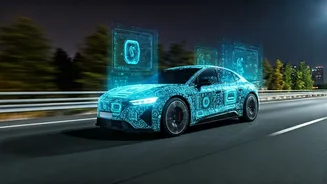
enhanced. Developers showcased advanced sensor integration, including upgraded lidar, radar, and camera systems, enabling cars to perceive their environment with unprecedented accuracy. These systems, combined with sophisticated algorithms, are designed to navigate complex urban and highway environments with improved safety and efficiency. The advancements also focused on enhancing the car's ability to respond to unexpected situations, such as pedestrians, obstacles, or changing weather conditions, reducing the need for human intervention. The demonstration of these advanced navigation systems suggests a move towards a seamless and reliable autonomous driving experience.
Location Intelligence Integration
Location intelligence was another critical area of focus at CES 2026, with the integration of advanced location-based services becoming more refined. The showcased vehicles were equipped with detailed mapping data and real-time traffic updates, enabling them to optimize routes, predict potential delays, and provide more accurate time-to-arrival estimations. Further, the vehicles were able to learn from driving patterns, recommending preferred routes and proactively adjusting to environmental factors. The inclusion of location intelligence extended beyond navigation, with applications in parking, charging station availability, and even personalized recommendations for nearby amenities. The convergence of these technologies promised to make journeys more efficient, enjoyable, and safer for all users, enhancing the overall driving experience.
Agentic AI Smart Assistants
Agentic AI took center stage at CES 2026, with demonstrations of AI systems designed to act as smart assistants within vehicles. These systems went beyond basic voice commands, providing proactive support and anticipating driver needs. The agentic AI integrated various functions, from controlling vehicle settings to managing communication and entertainment systems. It could also offer real-time information about driving conditions, suggest optimal rest stops on long journeys, and even take over certain tasks, like making phone calls or sending messages, freeing the driver from distractions. The goal was to create a more personalized and intuitive driving experience, transforming the car into a comprehensive hub for information, support, and connectivity. This technology marked a major step toward more interactive and user-centric vehicle design.