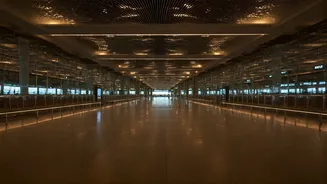







A New Era of Travel
Srinagar International Airport is on the cusp of a major transformation, poised to become a modern aviation hub for North India. This significant upgrade,
valued at Rs 1,677 crore, is set to dramatically enhance the passenger experience and the airport's operational capacity. The primary goal is to alleviate the chronic congestion that has plagued the airport, especially during peak tourist seasons and harsh weather conditions. Current issues like long queues, overcrowded waiting areas, and lengthy security checks are all slated for a major overhaul. The expansion project, managed by the Airports Authority of India (AAI), aims to boost the airport's annual passenger handling capability from its current 3 million to an impressive 10 million. This substantial increase in capacity will not only improve travel convenience for tourists, business travelers, and locals but also strengthen regional connectivity, foster tourism growth, and act as a catalyst for economic development across Jammu and Kashmir.
Expanding Terminal Space
The heart of this expansive project lies in the significant increase in terminal area. The existing terminal building, which currently covers approximately 20,659 square metres, has proven insufficient for the ever-growing passenger load. The ambitious new plan will see this area expanded to a sprawling 71,500 square metres. This substantial enlargement is crucial for easing current overcrowding. Presently, the airport can manage about 950 passengers per hour during its busiest periods. Post-expansion, this peak-hour capacity is projected to soar to 2,900 passengers per hour, a more than threefold increase. This enhanced throughput is expected to translate directly into shorter queues, more efficient check-in and security clearance processes, and a smoother overall flow for passengers arriving and departing. The expansion focuses solely on the terminal and associated ground infrastructure, with no modifications planned for the runway, which is already equipped to handle large aircraft.
Enhanced Facilities & Operations
Beyond the terminal's increased footprint, the expansion brings a suite of critical improvements to airport operations and passenger facilities. The airport's current complement of nine apron bays, comprising one Code E and eight Code C bays, will be augmented with six additional bays specifically designed for A-321 aircraft. This expansion of parking space will enable more aircraft to be parked simultaneously, thereby reducing aircraft turnaround times and improving overall operational efficiency. Complementing the aircraft parking enhancements, a multi-level car parking facility is slated for construction, designed to accommodate approximately 1,000 cars and 10 buses, addressing current parking shortages. For a more streamlined security process, a new modern gate security plaza, spanning 1,775 square metres, will be established at the airport's entry point. This dedicated area will handle vehicle and passenger checks, aiming to significantly reduce congestion within the terminal building and alleviate traffic bottlenecks outside the airport premises.
Reflecting Kashmiri Culture
The architectural vision for the new Srinagar Airport terminal is deeply rooted in celebrating and reflecting the rich cultural identity of Kashmir. The design will prominently feature spacious waiting lounges, state-of-the-art baggage handling systems, additional boarding gates, and meticulously planned passenger movement areas to ensure comfort and efficiency. Architecturally, the terminal is being designed to embody Kashmiri heritage, seamlessly incorporating traditional woodwork, showcasing local craftsmanship, and integrating regional design elements. The intention is for passengers to experience the distinct cultural essence of Kashmir from the moment they arrive. This commitment to cultural integration ensures that the airport serves not only as a modern gateway but also as a welcoming ambassador of Kashmir's unique artistic and architectural traditions, offering a visually engaging and culturally immersive introduction to the region.
Boosting Security & Economy
The expansion project also places a strong emphasis on bolstering security infrastructure, ensuring a safer and more reliable travel environment. Plans include the construction of modern barracks to accommodate both male and female CISF personnel, alongside a dedicated kennel facility for the K-9 unit. These enhancements are designed to significantly improve surveillance capabilities and enable quicker responses to any emergencies, thereby reinforcing the overall safety and security protocols. Beyond immediate travel benefits, the airport upgrade is projected to deliver a substantial economic impetus to Jammu and Kashmir. Tourism, which currently contributes around 7 per cent to the Union Territory's GDP, is expected to see its share rise to 10-12 per cent with improved connectivity. The influx of tourists, potentially growing from the current 17 million annually to 27-30 million by 2030, will stimulate growth in hotels, travel services, and related businesses, fostering employment and expanding economic opportunities across the region.
Strengthening Cargo & Industries
A crucial aspect of the Srinagar Airport expansion is the significant improvement to its cargo handling infrastructure, which will provide a vital boost to local industries and artisans. Enhanced cargo facilities will enable the swift transportation of prized Kashmiri products, including apples, saffron, dry fruits, handicrafts, and hand-knotted carpets, to both domestic and international markets. By reducing logistics times, the freshness and quality of these products will be better preserved, directly benefiting farmers, artisans, and small businesses. This streamlined supply chain is expected to amplify global demand for authentic Kashmiri goods, creating new avenues for economic growth and ensuring that the region's unique produce and crafts reach a wider audience efficiently and in pristine condition, thereby further diversifying the local economy.