







Strategic Software Alliance
A significant collaboration has been forged between a leading global automotive technology provider and a forward-thinking Chinese electric vehicle manufacturer.
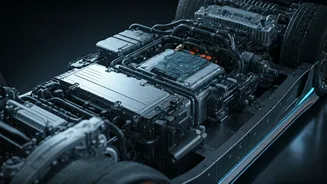
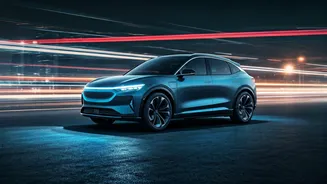
Their joint venture is dedicated to pioneering advanced technologies essential for software-defined vehicles (SDVs). The core objectives of this partnership revolve around enhancing critical components like sophisticated battery management systems, intuitive drive-by-wire chassis configurations, and highly accurate sensing modules. By concentrating on these areas, they aim to significantly elevate the performance benchmarks, safety standards, and overall operational efficiency of upcoming electric vehicle models. This alliance is particularly timely, as the automotive industry is undergoing a profound transformation driven by software architectures, which are fundamentally reshaping how vehicles are designed and how they function. The development of SDVs enables crucial features such as over-the-air updates, seamless integration of autonomous driving capabilities, and optimized energy consumption strategies, all vital for manufacturers striving to maintain a competitive edge in the dynamic Asian and broader global markets. The technological prowess of the established automotive giant, with its extensive history in powertrain systems, electronics, and sensor development, complements the EV manufacturer's specialized knowledge of battery-electric platforms and user-centric vehicle design philosophies. Together, they are poised to tackle complex challenges, including extending battery lifespan, improving thermal management, and processing real-time data streams necessary for advanced levels of autonomous driving, such as Level 3 and beyond.
Enhancing Vehicle Dynamics
This collaborative effort has profound implications for the physical architecture of electric vehicles. A key outcome will be the development of advanced drive-by-wire systems. These systems will replace traditional mechanical linkages with electronic controls, enabling functionalities like steer-by-wire, brake-by-wire, and throttle-by-wire. The adoption of these technologies promises to streamline the vehicle's internal complexity, leading to a reduction in overall weight. This not only contributes to better energy efficiency but also enhances vehicle dynamics, allowing for more precise and responsive handling. Furthermore, the partnership is focusing on sophisticated sensing modules, which will integrate various sensor technologies such as LiDAR, radar, and cameras. This multi-modal sensing approach is crucial for supporting advanced driver-assistance systems (ADAS). These systems are designed to improve safety and comfort by assisting the driver in various scenarios. Ultimately, the goal is to create a robust foundation that paves the way for achieving full autonomous driving capabilities, particularly within intricate urban environments. The supply chain impact of this alliance is also noteworthy, reinforcing the established technology provider's standing within the rapidly expanding Asian electric vehicle sector, with a particular emphasis on China, where the EV manufacturer is actively scaling up its production facilities. This strategic integration of software and hardware expertise is set to redefine automotive engineering and manufacturing.
Industry Impact and Future Trends
For executives leading automotive companies and for suppliers across the industry, this partnership serves as a clear indicator of a major shift occurring in vehicle development. The focus is increasingly moving towards integrated solutions that seamlessly combine hardware and software functionalities, especially within the realm of electric and hybrid vehicle technology. This alliance underscores the critical importance of international collaborations as a means to not only drive innovation but also to effectively mitigate risks associated with global supply chains. Such collaborations become even more vital considering current geopolitical discussions and ongoing challenges related to the availability of raw materials. The involvement of the established automotive technology giant also guarantees adherence to rigorous safety and regulatory standards. This includes compliance with ISO 26262, which pertains to functional safety in automotive systems, as well as meeting the evolving cybersecurity protocols essential for connected vehicles. This initiative aligns perfectly with widespread research and development trends across the industry, where significant investments are being channeled into digital transformation strategies aimed at accelerating the introduction of new products to market. Initial prototypes from this collaboration are anticipated within the next twelve months, with the potential for these advancements to be integrated into existing and upcoming models, including specific electric vehicle lines. This development could establish a new benchmark for similar cooperative ventures in the region, influencing the production and operational strategies adopted by other major vehicle manufacturers.