
Volcanic Heartbeat
Iceland's fiery temperament is a direct result of its position on active geological fault lines, leading to frequent volcanic events that shape its dramatic
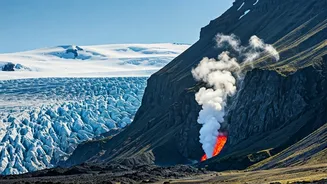
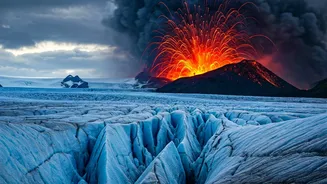
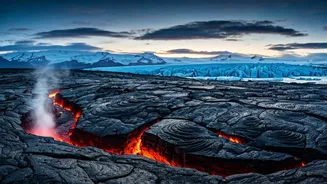
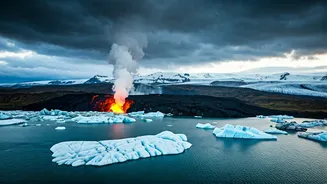
topography. The Reykjanes Peninsula is a prime example, where recent eruptions have painted the land with molten lava, creating stark contrasts against the often snow-dusted or barren surroundings. Historic eruptions, like the one at Eyjafjallajökull, serve as powerful reminders of the island's volatile nature. These fiery displays are not just geological phenomena; they are integral to Iceland's identity, manifesting as glowing rivers of magma that transform the landscape in real-time and provide a visceral connection to the planet's inner power. The constant geological activity ensures that Iceland is a living, breathing testament to the raw forces of nature, constantly rebuilding and reshaping itself through the ebb and flow of volcanic activity.
Glacial Embrace
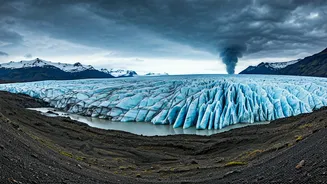
Complementing its volcanic intensity, Iceland is also a realm of colossal ice formations, most notably Vatnajökull, which stands as Europe's largest ice cap. This immense body of ice, sprawling across thousands of square kilometers, is a silent sculptor of the land, its slow, deliberate movement carving deep valleys and fjords over millennia. As these glaciers begin to melt, they give rise to breathtakingly beautiful lagoons, dotted with icebergs that drift serenely towards the ocean. The sheer scale of these ice masses creates a sense of awe and wonder, providing a stark yet beautiful counterpoint to the fiery subterranean forces. The presence of such extensive ice cover is a defining characteristic of Iceland, contributing significantly to its nickname and its unique visual appeal, a world of frozen grandeur.
Fire and Ice Duality
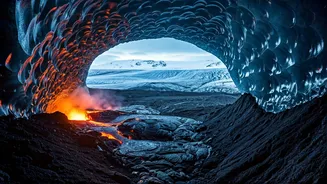
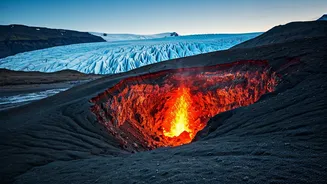
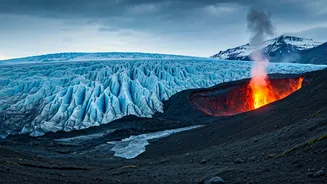
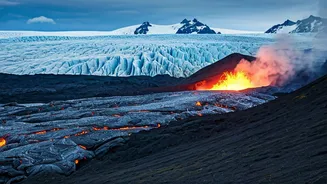
The most striking aspect of Iceland's geology is the intimate coexistence of fire and ice, often occurring in the same locations. Subglacial volcanoes are a prime illustration of this phenomenon; the immense pressure and heat from the ice caps can lead to explosive interactions when volcanic activity is triggered beneath them. This unique juxtaposition is where the 'Land of Fire and Ice' moniker truly shines. Witnessing a volcanic eruption beneath a glacier creates a spectacular, albeit potentially dangerous, display of nature's raw power. This constant interplay between extreme heat and intense cold is what makes Iceland such a visually captivating and geologically fascinating destination, a place where the Earth's most opposing forces meet and meld, creating unforgettable landscapes and phenomena.
Ethereal Wonders
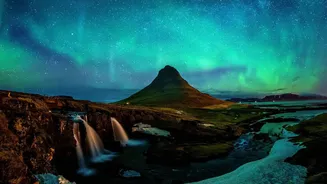
Beyond its geological marvels, Iceland is also renowned for its celestial spectacles. During the darker months, the skies frequently come alive with the mesmerizing dance of the aurora borealis. This natural light show, with its vibrant hues of green, purple, and pink, casts an ethereal glow over the already dramatic landscapes. Whether seen above the stark black sand beaches, the imposing glaciers, or the volcanic terrains, the Northern Lights add an otherworldly dimension to the Icelandic experience. This phenomenon further enhances the mystical allure of the island, offering visitors a chance to witness a truly magical display that complements the terrestrial beauty of fire and ice, making Iceland an unforgettable destination for both its earthly and celestial wonders.
Coastal Contrasts
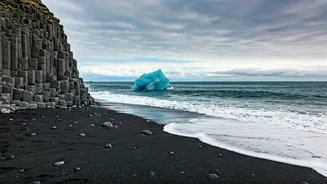
Iceland's coastlines offer a dramatic showcase of its volcanic origins, with black pebble beaches formed from ancient lava flows. These shores are often dramatically framed by striking basalt columns, testament to rapid volcanic cooling, and pounded by the powerful waves of the Atlantic Ocean. A particularly stunning example is Diamond Beach, adjacent to the Jökulsárlón lagoon, where shimmering ice chunks, calved from the Vatnajökull glacier, lie scattered across the dark volcanic sand like precious jewels. This juxtaposition of dark sand, glistening ice, and crashing waves creates a truly magical and photogenic scene. It's a powerful visual reminder of the island's dual nature, where the remnants of fiery geological events meet the frozen artistry of its glaciers, creating some of the most unique coastal landscapes on Earth.