





Understanding Coach Designations
Indian Railways offers various classes of travel to cater to different passenger needs and budgets. Two popular options within air-conditioned sleeper
categories are 3AC and 3E. The designation '3AC' stands for Third Air-Conditioned coach, representing a widely chosen class that aims to provide a good equilibrium between affordability and passenger comfort. On the other hand, '3E' signifies Third Air-Conditioned Economy. This class is a more recent introduction, designed by Indian Railways to present a more economical alternative for travelers seeking air-conditioned journeys. Essentially, 3E can be viewed as a more budget-conscious version of the standard 3AC experience, making AC travel accessible to a broader segment of passengers who might find the traditional 3AC fares a bit too steep for their travel plans.
Space and Berth Allocation
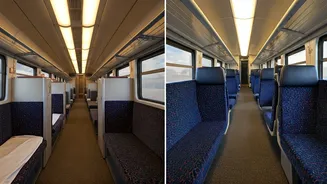
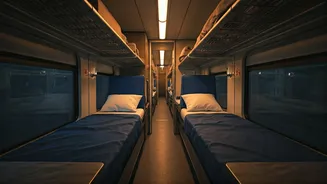
The most significant divergence between 3AC and 3E coaches lies in the allocation of space and berths. A typical 3AC coach is designed to accommodate approximately 72 berths. In contrast, the 3E configuration, within a coach of similar overall dimensions, can house a larger number of berths, typically ranging from 80 to 83. To achieve this increased capacity, Indian Railways implements a design that slightly reduces the width of each berth and consequently lessens the legroom available to passengers. Therefore, while both are air-conditioned sleeper classes, a 3E coach inherently feels more compact and can seem more crowded when compared to a 3AC coach. For travelers who prioritize ample personal space, particularly during extended overnight journeys, the 3AC coach generally offers a more generous and comfortable environment.
Fare Differences Explained
A primary motivator for many passengers opting for the 3E coach is its more economical pricing. Tickets for 3E are consistently priced lower than those for 3AC, thereby enhancing the accessibility of air-conditioned travel for individuals who are more mindful of their expenditure. While the monetary difference might not always be substantial on shorter routes, over the course of long-distance journeys, this saving can become quite noticeable and significant. Consequently, if the objective is to experience the convenience and comfort of air-conditioned travel without incurring additional costs, choosing a 3E coach presents itself as a financially prudent decision.
Assessing Comfort Levels
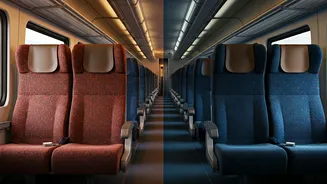
The perceived comfort between 3AC and 3E coaches is subjective and largely depends on individual priorities. 3AC coaches are generally characterized by their greater spaciousness, offering wider berths and more generous legroom, which contributes to a more relaxed travel experience. Conversely, 3E coaches typically feature berths that are somewhat narrower, with diminished headroom, and a higher density of passengers within the same coach space. Frequent travelers often express a preference for 3AC, especially for overnight trips, as the increased space makes it easier to settle in and achieve a more restful sleep. Online discussions and passenger feedback frequently indicate that taller individuals might find the 3E coaches to be somewhat restrictive. However, it's worth noting that many 3E coaches are newer installations, and some passengers appreciate the cleaner and more contemporary interiors they offer.
Facilities Provided
In terms of essential amenities, passengers can expect a largely similar experience across both 3AC and 3E coaches. Both classes typically provide standard facilities inherent to air-conditioned coaches, which include functioning air-conditioning systems to maintain a comfortable temperature throughout the journey. Additionally, charging points are usually available to power electronic devices, and reading lights are provided for individual use. Bedding, comprising sheets, blankets, and pillows, is generally supplied on most trains for both classes, enhancing sleeping comfort. Many coaches, depending on their specific configuration, also offer curtains or partitions to provide a degree of privacy for passengers. Therefore, the fundamental differences between 3AC and 3E primarily revolve around the spatial arrangement and ticket pricing, rather than a significant disparity in the range of basic facilities offered.