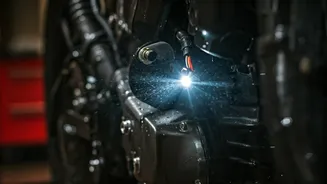








Chain Care is Crucial
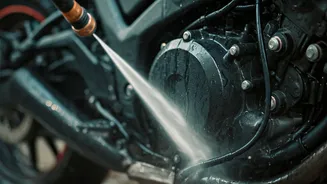
Your motorcycle's chain is a vital component, and it's surprisingly delicate when it comes to high-pressure water. When you blast the chain with a jet,
you risk forcing water and grit deep into its intricate links. This action strips away the essential lubrication, leaving the metal exposed to moisture and accelerating the onset of rust. The consequences of this can range from an irritatingly noisy ride to significantly reduced lifespan and performance. For optimal chain health, experts advocate for a gentler approach: use a dedicated brush to meticulously clean the chain, followed by a thorough application of appropriate chain lubricant after your bike has been washed.
Electricals: Handle With Care
One of the most significant errors motorcycle owners make is directing high-pressure water towards the bike's electrical systems. This includes wiring harnesses, various sensors, the battery compartment, and fuse boxes. Even a brief, direct spray can cause water to seep into connectors, leading to intermittent electrical faults or complete sensor failures down the line. With the increasing complexity of electronics in modern motorcycles, it's paramount to be extremely cautious and completely avoid aiming pressure washers anywhere near these sensitive components.
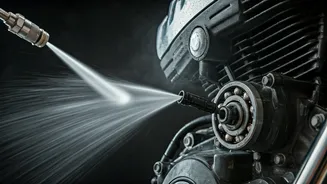
Protect Wheel Bearings
While wheel bearings are designed with seals to keep contaminants out, they are not impervious to the relentless force of a pressure washer. Over time, a strong jet can compromise these seals, allowing moisture to infiltrate the bearing assembly. Once water enters, bearings can begin to produce concerning noises and negatively impact the smoothness of the wheel's rotation. Mechanics frequently encounter premature bearing failures in motorcycles that are routinely subjected to high-pressure cleaning techniques near the wheel hubs and axles.
Exhaust Tip Caution
Directing a high-pressure spray straight into the motorcycle's exhaust tip is another common mistake that can lead to unwanted consequences. This forceful intrusion can push moisture further into the silencer system, and if this water gets trapped, it can contribute to internal rust formation over time. This, in turn, might subtly alter the characteristic sound of your exhaust. A safer method for cleaning the exhaust area involves a gentle wipe-down with a cloth, rather than attempting to force water into the opening with a pressure jet.
Dashboard Delicate Zone
The dashboard, housing sensitive digital instrument clusters and switchgear, requires a gentle touch. Exposure to high-pressure water can cause considerable damage. It can compromise the integrity of buttons, lead to condensation fogging up displays, or even affect the functionality of touch-sensitive controls found on newer bike and scooter models. To maintain the pristine condition of your dashboard and avoid potentially expensive repairs, it's advisable to use a soft cloth for cleaning around this area, rather than resorting to a pressure washer.