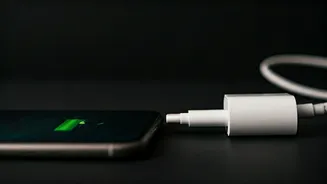








Battery Health Basics
Understanding your smartphone's battery is the first step towards maintaining it effectively. Modern smartphones typically use lithium-ion batteries, which
degrade over time. This degradation happens with each charge cycle, and external factors like heat can accelerate it. The battery's capacity gradually decreases, leading to shorter usage times. Therefore, knowing how to charge your phone properly can significantly extend its lifespan and performance. The battery's health is often measured as a percentage of its original capacity, and keeping that percentage high ensures the phone functions as intended for as long as possible. Choosing the right charger is critical to this process.
Charger Types Explained
Various chargers are available, and understanding their differences is vital. Standard chargers usually provide 5W of power, which is fine for slow charging. Fast chargers, on the other hand, deliver significantly more power, sometimes up to 65W or even higher. Fast charging can quickly replenish your battery but may generate more heat, which can negatively affect battery health if done excessively. USB-C Power Delivery (PD) is a popular fast-charging standard that adjusts the power output to match the device's needs. The choice of charger should consider both charging speed and battery health. Always check the specifications to make sure it is compatible with your device. Always prefer chargers from reputable brands.
Charging Habits Matter
Besides the charger itself, charging habits play a significant role in battery health. Avoid extreme charging practices, such as letting the battery drain completely to 0% regularly, as it can stress the battery. Similarly, repeatedly charging to 100% and keeping the phone plugged in for extended periods can also be harmful. Ideally, maintain the battery level between 20% and 80%. This range minimizes stress on the battery. Using a fast charger occasionally is fine, but avoid using it all the time to minimize heat exposure. Regular charging at moderate speeds is generally better for the battery's longevity. Observe how your device behaves and adjust your charging schedule accordingly.
Impact of Heat
Heat is a battery's nemesis. High temperatures can severely damage lithium-ion batteries, accelerating the degradation process. Avoid exposing your phone to direct sunlight or leaving it in a hot car. Charging your phone in a cool environment is best. Fast charging generates more heat, so use it sparingly, especially in warm conditions. If your phone feels hot during charging, consider switching to a slower charging method. Always ensure the phone has adequate ventilation during charging. Regularly check the temperature and take steps to cool down the phone if it feels excessively hot. Pay attention to the charging environment.
Best Charging Practices
To optimize your smartphone's battery health, use a charger designed for your device. If your phone supports fast charging, use the official charger or a reputable third-party charger that meets the specifications. Charge your phone regularly, avoiding deep discharges and full charges. Keep the battery level between 20% and 80%. Charge your phone in a cool place, away from direct sunlight and heat sources. If possible, consider using a smart charging feature that prevents the battery from charging to 100% overnight. Following these practices can help you extend your battery's lifespan and improve overall performance.