





Cosmic Birth of Lonar
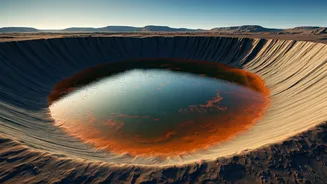
Approximately 50,000 years ago, a colossal meteorite, weighing a staggering two million tons and hurtling at immense speeds, impacted the Earth's crust.
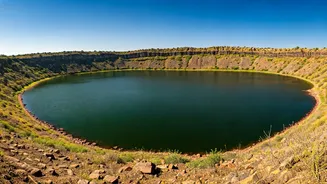
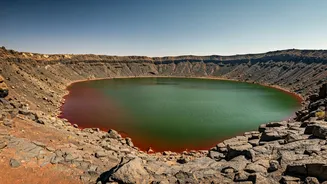
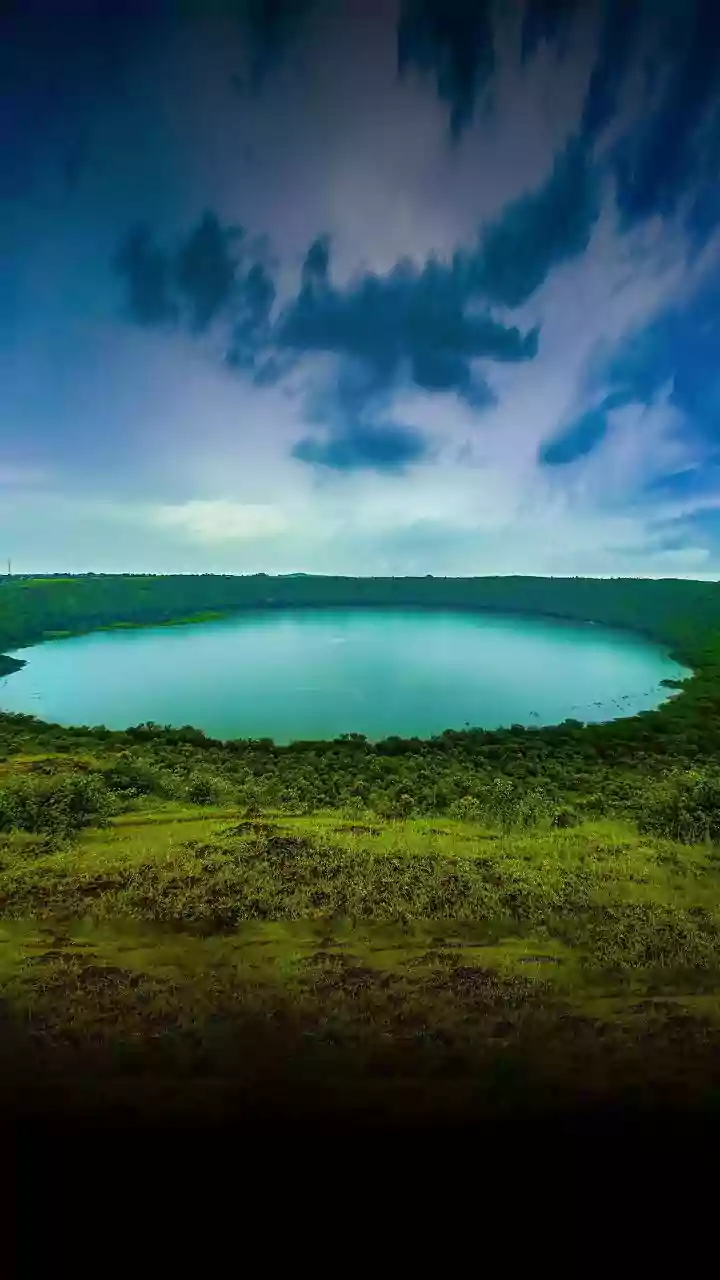
This cataclysmic event occurred on the basaltic landscape of the Deccan Plateau, carving out what is now known as Lonar Lake in Maharashtra. This impact created a profound geological scar, a lasting testament to an extraterrestrial visitor. The surrounding basaltic rock, similar in composition to the Martian surface, has led scientists to dub Lonar Lake as Earth's 'twin' to Mars. This unique characteristic makes it an invaluable site for NASA researchers, offering a tangible opportunity to study environments that might have once harbored water on the Red Planet, effectively bringing a piece of Mars to our own planet.
A World of Contrasts
Descending into the Lonar crater feels like entering a separate realm, where the ambient temperature noticeably drops and the dense, prehistoric-feeling jungle obscures the modern world above. This environment fosters a unique ecosystem with distinct natural phenomena. Most striking is the lake itself, which exhibits a remarkable duality: it is composed of two separate water bodies that resolutely refuse to mix. One portion is alkaline, while the other is saline, creating a fascinating chemical anomaly that has long intrigued scientists. This dual-natured lake, simultaneously salty and fresh, represents an ancient yet vibrant ecological system.
The Pink Phenomenon
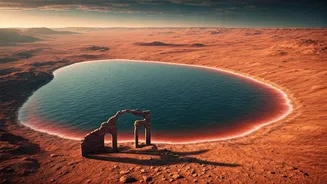
Lonar Lake is renowned for its ability to transform its appearance dramatically, acting as a 'master of disguise'. In 2020, the world was captivated as the lake's waters shifted from their usual emerald hue to a striking, luminous pink seemingly overnight. This stunning color change was not an anomaly but rather a vibrant display of biological activity. A surge in the lake's salinity levels triggered the proliferation of rare microorganisms known as Haloarchaea. These microbes, in response to the altered conditions, released pigments that imbued the water with a surreal, rose-colored glow. This event underscored Lonar's status as a dynamic, living entity rather than a static geological formation.
Echoes of the Past
The shores of Lonar Lake are adorned with the remnants of ancient structures known as 'Ghost Temples.' These are Hemadpanti ruins dating back to the 12th century, which are gradually being enveloped by the lake's silt and the encroaching vegetation. A profound sense of tranquility pervades these stone ruins. Having endured for nearly a millennium, these structures represent a comparatively recent chapter in the grand geological timeline of the crater. They serve as a poignant reminder that while human civilizations and their empires may rise and fall, the enduring presence of the crater itself, formed by an event of cosmic proportions, remains constant.
Geological Souvenirs
The very ground beneath your feet at Lonar Lake tells a story of immense geological transformation. The impact that formed the crater was so powerful that it created unique geological features. By examining the soil, one might discover 'maskelynite,' a form of glass formed under the extreme heat and pressure of the meteorite strike. Additionally, magnetic fragments are present, which can cause compasses to behave erratically, a phenomenon that appeals to space enthusiasts. Each fragment of rock and soil serves as a tangible memento from the stars, offering a direct connection to the moment the prehistoric Earth was irrevocably altered by an event from beyond our world.
Timeless Sunset Views
Witnessing a sunset over the rim of Lonar Lake offers more than just a picturesque scene; it provides a profound perspective on the vastness of time. As the sun dips below the horizon, casting elongated shadows across the water's surface, one recognizes Lonar as a place of immense significance, transcending its status as a mere tourist attraction or scientific curiosity. For 50,000 years, this crater has borne silent witness to the end of the Ice Age, the rise and fall of numerous civilizations, and the slow, majestic movement of the stars across the night sky. Standing at its edge evokes a feeling of being at a nexus between Earth and the cosmos, a powerful reminder of our planet's continuous evolution under celestial influences.