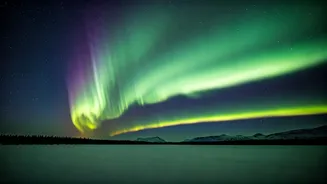

Solar Cycle's Peak
The prediction of a phenomenal year for the aurora borealis in 2026 is directly linked to the solar cycle, specifically its peak phase. Solar cycles, averaging
approximately 11 years, involve fluctuations in the Sun's activity, which in turn influences the occurrence and intensity of solar flares and coronal mass ejections (CMEs). As the Sun approaches its solar maximum, it becomes more active, increasing the frequency and intensity of these events. These solar events release vast amounts of charged particles that, when interacting with Earth’s magnetic field, are responsible for creating the auroras. Essentially, the more intense the solar activity, the higher the likelihood and brilliance of auroral displays.
Geomagnetic Storms
The enhanced solar activity expected in 2026 directly translates into more frequent and stronger geomagnetic storms. These storms occur when the solar wind, charged particles from the Sun, interacts with the Earth's magnetosphere. This interaction can cause a range of effects, including disruptions to satellite communications, power grids, and, most visibly, stunning auroral displays. The intensity of a geomagnetic storm is measured using the Kp index, which ranges from 0 to 9, with 9 indicating an extremely disturbed magnetic field. Increased solar activity will likely lead to higher Kp values, resulting in auroras visible at lower latitudes than usual. This means that regions that rarely experience the Northern Lights may have a chance to witness the spectacle.
Post-Solar Maximum
Interestingly, the most spectacular auroral displays might occur not only during the peak of the solar cycle but also in the years following the solar maximum. This is because the Sun's activity, while declining, may still exhibit a high level of instability, leading to energetic solar events. This post-maximum phase can create a ‘sweet spot’ for auroral viewing. The lingering effects of the intense solar activity can trigger particularly impressive displays. Solar flares and CMEs, though perhaps less frequent than at the peak, can be more energetic and thus produce stronger geomagnetic storms. This phenomenon creates the potential for some truly extraordinary auroral events, with brilliant colours and widespread visibility.
Skywatching Opportunities
The increased solar activity in 2026 offers exceptional opportunities for skywatchers around the globe. Those living in higher latitudes, such as those in Canada, Alaska, and Scandinavia, will likely have numerous chances to witness the aurora borealis. However, the possibility of seeing the lights is not limited to these regions. The increased intensity of the geomagnetic storms, linked with the solar maximum, could make the aurora visible at lower latitudes, potentially including parts of the northern United States, the UK, and other areas that typically don't see the Northern Lights. The best viewing conditions will likely occur on clear, dark nights, away from light pollution, when the Kp index indicates a geomagnetic storm. Skywatchers can monitor aurora forecasts and use online resources to increase their chances of witnessing this natural wonder.
Protecting Technology
While the increased solar activity in 2026 presents a stunning spectacle, it also poses challenges, particularly for modern technology. Geomagnetic storms associated with the solar maximum can disrupt satellite communications, GPS systems, and power grids. The charged particles released by solar events can interact with Earth's magnetic field, creating electrical currents that can overload power grids and damage infrastructure. Satellites can also experience increased drag and potential damage from exposure to radiation. Scientists and engineers are continuously working on strategies to mitigate these risks. These strategies include developing more resilient satellite technology and implementing measures to protect power grids, like early warnings and system adjustments. Although the auroras will be beautiful, it is also important to be aware of and prepare for the potential impacts of space weather.