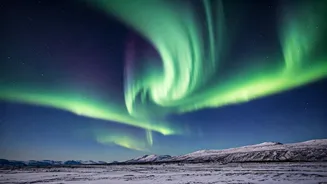

Solar Maximum's Role
The prediction for enhanced aurora activity in 2026 stems from the impending solar maximum, a period of heightened activity in the Sun's 11-year cycle.
During this phase, the Sun releases more solar flares and coronal mass ejections (CMEs). These events hurl massive amounts of energy and particles into space. When these particles encounter Earth's magnetic field, they interact with the atmosphere, exciting atmospheric gases and causing them to glow. The intensity of these solar events is directly linked to the strength of the aurora, and the year 2026 is expected to be near the peak of this cycle. Consequently, the chance to view more vibrant and widespread auroral displays will likely increase.
Understanding Aurora
The aurora borealis, or Northern Lights, is a natural light display most often seen in the high-latitude regions around the Arctic and Antarctic. It's formed when charged particles from the Sun collide with gases in the Earth's atmosphere. These collisions cause the atmospheric gases to emit light, creating the mesmerizing patterns of color we observe. The color of the aurora varies depending on the type of gas involved in the collisions and the altitude at which the event occurs. Oxygen produces green and red lights, while nitrogen creates blue and purple hues. The location and visibility of the aurora are also influenced by factors such as the strength of the solar storm, the Earth's magnetic field, and cloud cover. Clear, dark nights are crucial for optimal viewing.
Best Viewing Locations
To maximize your chances of witnessing the aurora in 2026, consider traveling to locations known for their clear skies and high latitude. Popular destinations include countries like Iceland, Norway, and Canada. Within these countries, specific regions offer higher probabilities for auroral sightings. For example, in Iceland, the northern part of the country, away from city lights, is ideal. In Norway, the area around Tromsø and the Lofoten Islands is renowned. In Canada, the Yukon and Northwest Territories are favored locations. The best viewing periods generally align with the winter months when long hours of darkness and clear skies are more common. Checking aurora forecasts and alerts will help pinpoint the optimal viewing times.
Impacts on Technology
While the increased solar activity promises stunning auroral displays, it also carries potential risks to technology. Intense solar storms can disrupt satellite communications, GPS navigation, and even power grids. The charged particles can interfere with the electronic components of satellites, leading to data loss or even damage. Additionally, strong geomagnetic storms can induce currents in long power lines, causing blackouts. Experts constantly monitor solar activity and issue warnings when potentially disruptive events are detected. Understanding these risks will allow for preventative measures to mitigate potential impacts. For instance, grid operators may take actions to protect infrastructure during periods of high solar activity.
Forecasting Auroras
Aurora forecasts are essential for planning and maximizing your chances of seeing the lights. Scientists use various tools and data sources to predict auroral activity. The Space Weather Prediction Center (SWPC), run by the National Oceanic and Atmospheric Administration (NOAA), provides a wealth of information, including real-time solar wind data, geomagnetic indices, and aurora forecasts. These forecasts are usually presented as a Kp index, which ranges from 0 to 9, indicating the expected intensity of the aurora. Higher Kp values indicate a greater likelihood of visible auroras. Additionally, several websites and mobile apps offer aurora alerts, allowing users to receive notifications when auroral activity is predicted in their area. These resources help stargazers plan their viewing experiences.