
Battery Life Challenges
The persistent demand for enhanced battery life has spurred an ongoing quest for innovative solutions. Today's reliance on portable devices and electric
vehicles underscores the critical need for power sources that last longer and perform more efficiently. Traditional battery technologies face constraints, including limited energy density and extended charging times. As device functionalities evolve and energy requirements increase, the industry must develop new methods to meet these demands. Meeting these growing needs is essential for advancing technological progress and improving user experience. Continuous improvement in this area remains a key driver for progress.
Advanced Material Research
Exploring new materials is fundamental to progress in battery technology. Research focuses on advanced materials such as solid-state electrolytes and high-capacity cathodes. Solid-state electrolytes promise increased safety, since they eliminate the risk of leaks, while offering enhanced stability. Meanwhile, innovative cathode materials like lithium-rich compounds can significantly boost energy density, enabling longer runtimes. The integration of graphene and other nanomaterials improves conductivity, reducing internal resistance and allowing faster charging. The exploration and use of such advanced materials are pivotal for achieving breakthroughs in battery capacity, performance, and operational safety.
Optimized Battery Designs
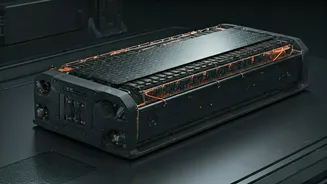
Beyond materials, design is critical. Innovative battery designs are emerging that address limitations of existing layouts. This includes exploring novel cell architectures, such as stacked or folded designs, to maximize space utilization and energy density. Thermal management is also evolving with enhanced cooling systems that are more efficient at controlling battery temperature, preventing premature degradation. Smart battery management systems are gaining importance; these systems use advanced algorithms to optimize charging cycles, conserve energy, and improve overall longevity. The integration of advanced design elements is a fundamental strategy for improving the efficacy and lifespan of batteries, which promotes improved user satisfaction.
Future Innovation Paths
The future of batteries is rich with emerging research areas and potential breakthroughs. Solid-state batteries, offering greater safety and energy density, are showing significant potential. Research into lithium-sulfur and lithium-air batteries promises even higher energy densities, possibly leading to longer runtimes. Furthermore, exploration of new concepts, such as wireless charging and energy harvesting, could transform how we use and manage power. Progress in these areas could drastically reshape consumer electronics and transportation. Innovation is essential to overcome current constraints and fulfill the future requirements for efficient, durable, and sustainable energy sources.