


Inside Flesh Hue
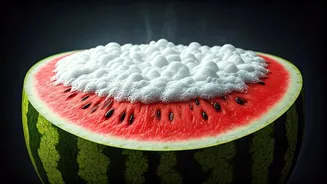
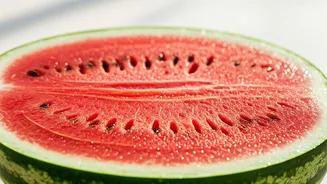
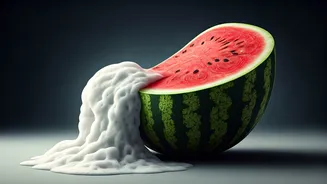
When you slice open a watermelon, pay close attention to the color of its flesh. A genuine watermelon typically displays a natural, slightly varied red
or pink hue, often interspersed with fine white fibers. If the flesh appears an unnaturally vibrant, uniformly bright red, almost as if painted, it could be an indicator of artificial coloring. These synthetic dyes, like Red No. 3 and Red No. 40, have been linked to health concerns, including potential carcinogenicity and behavioral issues in children. Vigilance regarding unnaturally intense colors can help you steer clear of such substances.
Tissue Paper Smudge
A simple yet effective way to check for artificial coloring involves a tissue paper test. Take a small piece of the red watermelon flesh and gently rub it against a clean white tissue or cotton cloth. If the tissue immediately picks up a strong, vibrant red or pink stain, it strongly suggests the presence of artificial dyes. The natural juices from a real watermelon will only leave a very faint trace on the tissue, providing a clear distinction from adulterated fruits.
Surface Texture Check
Feel the exterior of the watermelon before you buy it. A naturally grown watermelon usually has a firm yet slightly grainy texture on its surface, indicative of its organic growth. Conversely, watermelons that have been tampered with, perhaps injected with substances, might feel overly soft, excessively moist, or even mushy. Also, be wary of any unusual cracks or gaps within the flesh, as these can be telltale signs of chemical intervention.
Cautious Taste Test
Before consuming a significant portion, it's wise to cautiously taste a small bit of the watermelon. A real watermelon should offer a mildly sweet and refreshing flavor. If the taste is overwhelmingly sweet, surprisingly bland, or carries a faint bitter or chemical undertone, it's a significant red flag. Such unusual taste profiles can suggest that the fruit has been treated with chemicals to enhance its sweetness or appearance, and it's best to discard it.
Seed Examination
Examine the seeds inside the watermelon. Naturally ripened watermelons typically contain well-formed seeds that are dark brown or black in color. If you notice seeds that are pale, unusually small, or uneven in appearance, it might indicate that the fruit has undergone artificial ripening processes or has been subjected to other chemical treatments to speed up its development.
Exterior Appearance
Before making a purchase, take a moment to inspect the watermelon's rind. A healthy, natural watermelon usually features a dull green skin with a distinct creamy yellow patch on one side – this is the spot where it rested on the ground during growth. If the rind appears excessively shiny, has a waxy sheen, or looks unnaturally polished, it could have been treated with chemicals to enhance its outward appeal.
Quick Water Immersion
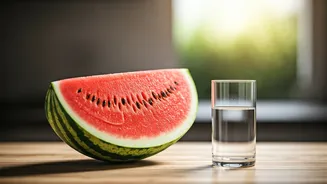
A rapid test for watermelon purity can be conducted by submerging a small piece in a glass of clear water. If the water quickly transforms into a deep red color, it's highly probable that artificial coloring is leaching out, indicating the watermelon is adulterated. Natural fruit juices do not typically disperse color so intensely or rapidly in water.
Avoid Pre-Cut Pieces
It is generally advisable to steer clear of pre-cut watermelon slices, particularly those sold by roadside vendors. These exposed fruit pieces are more susceptible to contamination and handling issues. Opt for whole watermelons, ensuring you thoroughly wash the exterior under running water before cutting it yourself at home. Store any leftovers properly in an airtight container in the refrigerator and consume within two days.