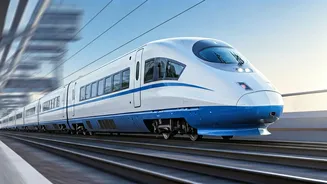








Unlocking Rapid Transit
The Telangana government is advancing a monumental high-speed rail corridor designed to link Hyderabad and Mumbai, a project anticipated to be a significant
catalyst for economic development and enhanced mobility. Officials have indicated that this ambitious route could dramatically reduce the travel duration between these two major cities to a mere three hours, thereby fostering new avenues for commerce, improved personal transit, and robust regional economic expansion. This initiative is not just about faster trains; it's about creating a vital artery for growth and connectivity across a substantial part of western and southern India, positioning Hyderabad as a key node in this evolving transport landscape.
Corridor Details & Scope
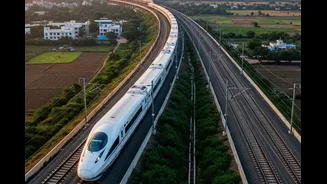
This proposed high-speed railway line will span an impressive 761 kilometers, connecting Hyderabad and Mumbai. The infrastructure is being engineered to accommodate trains operating at speeds between 320 and 330 kilometers per hour, ensuring swift and efficient travel. Along its extensive route, the project plans for approximately 10 to 12 stations, catering to various passenger needs. The track design will incorporate a mix of elevated sections, at-grade portions, and underground segments to navigate diverse terrains, including a notable 4-5 kilometer tunnel planned near Vikarabad. Should this project come to fruition as planned, it will stand as one of India's most significant high-speed rail undertakings outside of the existing Ahmedabad-Mumbai bullet train project.
Investment and Timeline
The estimated cost for this ambitious high-speed rail corridor is pegged at approximately Rs 2 lakh crore, based on initial detailed project reports and comparative analyses with similar large-scale rail ventures. While this figure provides an early benchmark, the final expenditure will be confirmed upon receiving necessary approvals, finalizing funding mechanisms, and completing further in-depth technical assessments. This substantial investment underscores the project's magnitude and its strategic positioning as a foundational piece of long-term economic infrastructure. With the detailed project report now finalized, the focus is shifting towards securing central government clearances and coordinating with the state of Maharashtra and other relevant parties. If all statutory approvals and funding arrangements are secured as anticipated, construction could commence by late 2027 or early 2028, with an estimated execution period of six to eight years, potentially leading to the corridor's operational launch in the early to mid-2030s.
Economic Growth Engine
Beyond significantly enhancing passenger and freight movement, this high-speed rail corridor is envisioned as a powerful engine for economic growth. Officials believe it will streamline trade flows, drastically reduce travel times for business professionals, and bolster industrial development across the regions it serves. Telangana's Roads and Buildings Minister, Komatireddy Venkat Reddy, highlighted Hyderabad's strategic geographical advantage as a natural connector for numerous growth corridors, and this high-speed rail link is expected to amplify that role. Experts suggest that such an infrastructure project could effectively integrate emerging industrial zones and logistics hubs spread throughout Telangana, Maharashtra, and adjacent areas, fostering greater economic synergy.
Hyderabad's Rail Hub
The Hyderabad-Mumbai corridor is merely one component of a broader, more ambitious high-speed rail network that Telangana is actively pursuing. The state is also in the process of developing proposals for other high-speed train links originating from Hyderabad, including routes to Chennai via Amaravati and to Bengaluru. Discussions are reportedly ongoing with neighboring states to finalize alignments and advance these proposals. Collectively, these projects aim to establish Hyderabad as a central nexus within a future high-speed rail grid, connecting key economic centers and significantly enhancing inter-state connectivity across southern and western India. This strategic vision emphasizes positioning Hyderabad at the heart of a transformed transportation landscape.