







Drone Engagement
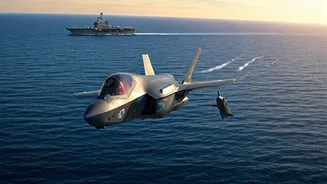
A significant escalation occurred in the Arabian Sea on Tuesday when a United States F-35 fighter jet successfully intercepted and downed an Iranian drone.
This drone, identified as a Shahed-139, was observed flying in an aggressive manner and approaching the USS Abraham Lincoln aircraft carrier. According to Captain Tim Hawkins of US Central Command, the F-35C fighter jet, operating from the carrier itself, took defensive action to ensure the safety of the vessel and its personnel. Fortunately, the incident resulted in no injuries to US service members and caused no damage to American equipment. This event unfolded as diplomatic channels were being explored for nuclear talks between Iran and the US, with President Donald Trump issuing a warning about potential negative outcomes if an agreement wasn't reached, especially as US naval assets were being moved closer to Iran's coast.
Regional Tensions
The interception of the Iranian drone near the Abraham Lincoln carrier strike group is situated within a broader context of increased US military presence in the Middle East. This buildup was prompted by Iran's forceful response to anti-government protests that occurred the previous month, marking the most severe unrest since the 1979 revolution. While President Trump had previously refrained from direct intervention in Iran's internal crackdown, he is now seeking nuclear concessions from Tehran and has deployed warships to its shores. Recent statements from the President indicated that Iran was engaging in serious discussions, a sentiment echoed by an official Iranian representative who confirmed that negotiations were in the planning stages. This period of fragile diplomacy was punctuated by direct confrontations, suggesting a complex interplay between de-escalation attempts and provocative actions.
Further Harassment
Adding to the day's heightened tensions, Iran's Revolutionary Guard engaged in further aggressive actions in the Strait of Hormuz. Shortly after the drone incident, two IRGC boats and a Mohajer drone were reported to have approached the US-flagged merchant vessel M/V Stena Imperative. These Iranian craft allegedly threatened to board and seize the ship, as detailed by Captain Hawkins of US Central Command. These incidents underscore the simmering animosity between the US and Iran, a situation fueled by the stalled nuclear talks and Iran's assertive regional activities. The White House Press Secretary, Karoline Leavitt, corroborated the drone downing, emphasizing that the unmanned Iranian craft's aggressive behavior towards the USS Lincoln necessitated the decision by CENTCOM. President Trump's administration reiterated its commitment to diplomacy, though acknowledging that such efforts require mutual engagement.