





Journey Time Transformed
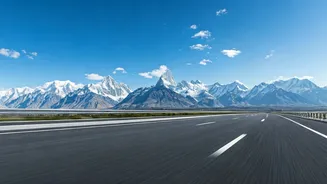
The Delhi-Dehradun Expressway has fundamentally altered the commuting experience between the national capital and the scenic city of Dehradun. Previously,
this journey could consume as much as six hours of a traveler's time. However, with the operationalization of this new arterial route, the duration has been dramatically reduced to an impressive 2 hours and 55 minutes. This significant time saving, confirmed through test drives between the ISBTs of both cities, underscores a new era of convenience and efficiency for passengers. The primary focus has been on enhancing both speed and passenger comfort, making the trip to the hills a far more manageable undertaking.
Fare Reductions Detailed
Complementing the drastic cut in travel time, the economic benefits of the Delhi-Dehradun Expressway are equally noteworthy. A direct consequence of the reduced distance and improved fuel efficiency on this modern highway is a substantial decrease in public transport fares. For premium Volvo services, the ticket price has dropped from Rs 945 to Rs 709, offering a saving of Rs 236 per passenger. Those opting for AC class will now pay Rs 557, down from the previous Rs 704, a saving of Rs 147. Even the ordinary bus services have seen a price adjustment, with fares falling from Rs 420 to Rs 355, resulting in a saving of Rs 65. These fare adjustments make the journey significantly more affordable for all categories of travelers.
Engineering Marvels Unveiled
The Delhi-Dehradun Expressway is not merely a testament to enhanced connectivity but also a remarkable feat of engineering, designed for optimal speed and safety. The highway features a substantial length, spanning 6 to 12 lanes depending on the specific stretch, initiating from Akshardham in Delhi and traversing through Loni, Baghpat, Baraut, Shamli, and Saharanpur before reaching Dehradun. A crucial addition is a 50.7 km spur that provides rapid access to Haridwar, cutting down the travel time from Delhi to the holy city to approximately 2 hours. Perhaps its most ecologically significant feature is the 12 km overhead bridge, recognized as the longest wildlife corridor in Asia, passing through Rajaji National Park to facilitate safe passage for animals.