







The True Apex
While many associate high-altitude rail travel with India's Ghum Station, a beautiful UNESCO World Heritage site at 2,258 meters, the actual record holder
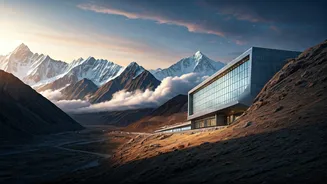
for the world's highest railway station is none other than Tibet's Tanggula Railway Station. This engineering feat, part of the Qinghai-Tibet Railway, soars to an astonishing 5,068 meters (16,627 feet) above sea level, a staggering height that dwarfs Ghum and earns it a place in the Guinness World Records. Perched at this extreme elevation, Tanggula presents a unique set of challenges and showcases remarkable human ingenuity in overcoming geographical extremes. The stark landscape, dominated by peaks like Geladandong, the source of the Yangtze River, and the surrounding Tanggula Mountains, provides a breathtaking backdrop to this unparalleled railway achievement. The station's strategic location was chosen to offer these panoramic vistas, making the journey itself a spectacle.
'Death Zone' Engineering Marvel
Operating at an altitude where the air is approximately 40% thinner than at sea level, Tanggula Railway Station is a testament to advanced engineering. This environment is so extreme that it's often dubbed the 'Death Zone' of rail travel. The very ground beneath the station, permafrost, poses a significant challenge. To ensure stability, engineers implemented a sophisticated passive cooling system. This involves extensive networks of ammonia-based cooling rods buried in the soil, acting like 'refrigerators' to keep the permafrost perpetually frozen. This prevents the tracks from shifting due to the cyclical thawing and freezing of the ground, a critical measure for maintaining the integrity of the railway infrastructure. The trains themselves are equally specialized, featuring pressurized cabins and dual oxygen systems. This includes a main distribution for the entire carriage and individual ports for passengers experiencing the onset of altitude sickness, ensuring a safer and more comfortable journey.
A Glimpse, Not a Stroll
For the vast majority of travelers, visiting Tanggula Railway Station is a fleeting, visual experience, more akin to a photo opportunity than a traditional stop. Due to the extreme altitude and its potential to induce severe altitude sickness, trains typically halt for mere minutes. Passengers are generally barred from disembarking onto the platform, transforming the experience into a 'look-but-don't-touch' encounter. The train windows serve as a crucial barrier, shielding visitors from the harsh, thin air and preserving their well-being. This deliberate approach prioritizes passenger safety and health, allowing them to witness the grandeur of the world's highest railway station without succumbing to its challenging environment. Furthermore, in recognition of the local ecosystem, the railway's construction included 33 animal passages near the Tanggula pass, specifically designed to accommodate the migratory paths of the endangered Tibetan Antelope, ensuring their ancient routes remained uninterrupted by this colossal human endeavor.