







A New Skyway
Visualize a future where electric air taxis effortlessly navigate the skies of Delhi-NCR, drastically reducing travel durations across the region. The
Confederation of Indian Industry (CII) is spearheading a pioneering plan to establish India's inaugural air taxi corridor. This ambitious project envisions connecting key urban centers like Gurugram, the bustling Connaught Place in Delhi, and the soon-to-be-operational Jewar International Airport in Noida. The primary objective is to forge an aerial transit system that bypasses the gridlock of road networks, thereby easing the strain on existing highways and metro lines. Should this pilot initiative prove successful, it is anticipated that a similar model could be replicated in other major metropolitan areas across the country, heralding a significant transformation in urban mobility.
Vertiports on Rooftops
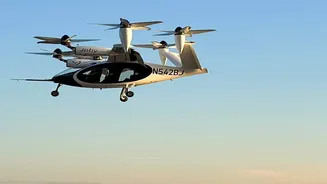
These advanced air taxis are designed as compact, electric aircraft engineered for vertical takeoff and landing (VTOL), negating the requirement for extensive runways. Instead, their operations will be centered around specially designated landing zones, referred to as vertiports. Authorities are actively exploring the utilization of rooftops on tall buildings as prime locations for these vertiports. Commercial establishments, large hospital complexes, and sprawling tech parks are being identified as ideal candidates for hosting these aerial transit hubs. The strategic decision to leverage existing rooftops stems from the prohibitive costs and logistical complexities associated with acquiring new land in densely populated urban areas like Delhi and Gurugram. This approach not only offers a cost-effective solution but also makes air taxi services more accessible to a wider population, particularly for urgent needs.
Phased Service Rollout
Initially, the deployment of these air taxis is not slated for general passenger travel. Instead, they are projected to commence operations by serving critical emergency services. This phased introduction is intended to meticulously assess safety protocols and operational efficiencies before a broader public rollout. The early stages will likely focus on high-priority missions such as the rapid transportation of organs for transplant procedures, the swift delivery of essential medical supplies, and the urgent transfer of patients in critical conditions. Concurrently, trials for drone-based deliveries are also on the agenda for this initial phase. This methodical, step-by-step strategy will empower authorities to gain invaluable insights and fine-tune the system, ensuring a secure and effective service for eventual widespread use.
Tackling Congestion
A primary impetus behind this visionary project is the escalating problem of road congestion that plagues the Delhi-NCR region. Daily commutes are marred by significant delays and contribute substantially to air pollution. Air taxis present a compelling alternative, offering both enhanced speed and a reduced environmental footprint. As electric flying vehicles, they promise to significantly cut down carbon emissions compared to traditional fuel-dependent transportation. This initiative aligns with the government's broader objectives of fostering smarter urban mobility solutions for its increasingly crowded cities, aiming to create a more sustainable and efficient transportation ecosystem for the future.
Regulatory Framework
The Directorate General of Civil Aviation (DGCA) is poised to play a pivotal role in the regulation and oversight of the air taxi system. It is anticipated that a dedicated new body might be established within the DGCA specifically to manage and govern this emerging sector. In line with this, Civil Aviation Minister Rammohan Naidu Kinjarapu has already unveiled a comprehensive report on Advanced Air Mobility. This document meticulously outlines the strategic pathways for the safe and systematic integration of air taxis into India's existing airspace infrastructure over time, laying the groundwork for future operations.
Investment & Expansion
The financial aspect of this ambitious endeavor is recognized as a significant undertaking. The CII report strongly advocates for robust support from banking and public financial institutions to fuel the development of air mobility infrastructure. Proposals include the establishment of specialized funds and accessible loan schemes tailored for companies engaged in air taxi development. Furthermore, government agencies may extend grants to mitigate financial risks, thereby incentivizing private sector investment in this nascent technology. If the initial pilot corridor between Gurugram, Connaught Place, and Jewar Airport proves successful, it is envisioned to serve as a replicable blueprint for other major cities. Aspirants like Mumbai, Bengaluru, and Hyderabad are expected to follow suit in the subsequent years, signaling a nationwide shift in urban air travel.