





Delhi's Pollution Woes
Delhi, a city known for its vibrant culture and history, has consistently battled with some of the worst air quality levels globally. This persistent issue
poses significant health risks to its millions of residents. The presence of particulate matter (PM2.5), which includes tiny particles that can deeply penetrate the lungs, is particularly high during certain seasons, leading to respiratory illnesses and other health complications. Various factors contribute to this pollution, including vehicular emissions, industrial activities, construction, and seasonal events like crop burning. Government initiatives and public awareness campaigns have been implemented to address the problem, but finding effective solutions remains an ongoing challenge for the city, necessitating innovative approaches and technologies.
HEPA Filter: The Tech
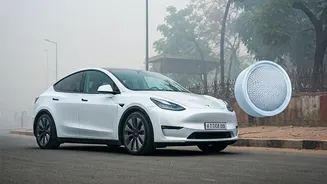
The Tesla Model Y distinguishes itself from other vehicles through the integration of a High-Efficiency Particulate Air (HEPA) filter. This advanced filtration system is designed to trap and eliminate a broad spectrum of airborne contaminants. The HEPA filter boasts the capability to remove up to 99.97% of airborne particles, including dust, pollen, bacteria, and other pollutants. The technology's efficiency stems from a complex matrix of fine fibers that capture these particles as air passes through it. In the Model Y, the filter is integrated into the vehicle's climate control system, ensuring that the air within the cabin is considerably cleaner than the external environment. This functionality is particularly beneficial for individuals prone to allergies or respiratory issues, as it creates a more hygienic and comfortable atmosphere inside the car, providing a safe haven from outside pollutants.
Filtering Out Pollutants
The remarkable effectiveness of the Model Y's HEPA filter offers a practical solution to the persistent air pollution challenges faced in cities like Delhi. The filter's design allows it to trap nearly all airborne particles, including the particularly hazardous PM2.5 pollutants prevalent in the city's air. By significantly reducing the presence of these harmful particles, the vehicle helps create a cleaner breathing environment for its occupants. Moreover, this filtration system has the potential to benefit the broader community. As the Model Y circulates on roads, the vehicle actively cleans the air around it, contributing towards improved air quality. This contributes to reducing the exposure to harmful pollutants for those inside and outside the car. The positive impact extends to public health.
Impact and Future
The introduction of the Tesla Model Y and its HEPA filter could signal a positive shift in how cities manage air quality. While this technology alone cannot solve the complex issue of air pollution, it represents a valuable tool in the battle against it. As more vehicles with advanced filtration systems hit the roads, the cumulative effect could lead to a noticeable improvement in air quality. This shift may also encourage other car manufacturers to adopt similar technologies. As awareness of air quality grows, consumers may prioritize vehicles that offer superior air filtration capabilities. Consequently, the trend could drive innovation in air purification and contribute to a healthier environment for everyone. This could lead to a broader implementation of these technologies in public spaces, further enhancing air quality.