







AI for Train Integrity
Indian Railways is actively deploying advanced technologies to ensure the safety and efficiency of its vast network. A key innovation highlighted is the Machine
Vision Inspection System (MVIS), which leverages artificial intelligence and machine learning. This sophisticated system is designed to meticulously scan moving trains and identify any components that are loose, missing, or hanging precariously. Currently, three MVIS units are operational on a pilot basis within the Northeast Frontier Railway, two with the Dedicated Freight Corridor Corporation of India Limited (DFCCIL), and one in the South East Central Railway, specifically focusing on freight stock. Furthermore, Indian Railways has formalized an agreement with DFCCIL to introduce an additional four MVIS units across its network, further enhancing the monitoring of freight rolling stock. The Research Designs and Standards Organisation (RDSO) is also collaborating with industry partners to advance MVIS technology for a broader application in rolling stock.
Detecting Wheel Defects
Ensuring the integrity of rolling stock is paramount for railway safety, and the Wheel Impact Load Detector (WILD) plays a crucial role in this regard. This system is engineered to pinpoint defective wheels by precisely measuring the impact they generate as they interact with the tracks. This early detection capability helps prevent potential derailments or other track-related incidents. To date, a substantial number of these systems, totaling 24, have been strategically installed across the Indian Railways network, providing continuous monitoring and safeguarding operations. This proactive approach to identifying mechanical issues with wheels is a significant step in maintaining the reliability of train services.
Monitoring Rolling Stock
The condition of critical components like bearings and wheels on rolling stock is continuously being monitored through the Online Monitoring of Rolling Stock (OMRS) system. This technology provides real-time data on the health of these essential parts, allowing for timely interventions and preventive maintenance. A total of 25 OMRS systems have been installed throughout the railway network, including a notable installation at Sirpur Kaghaznagar in the Secunderabad Division of the South Central Railway. The widespread deployment of OMRS signifies a commitment to maintaining the operational readiness and safety of the entire fleet of trains by keeping a close watch on their fundamental mechanical aspects.
Track and OHE Vigilance
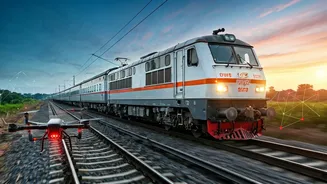
Maintaining the track infrastructure is equally vital for safe train operations. The Integrated Track Monitoring Systems (ITMS) have been implemented to meticulously detect any flaws in rails, sleepers, and fastenings, utilizing advanced machine learning and image processing techniques. Beyond track integrity, Indian Railways is also exploring drone-based solutions for monitoring the Overhead Equipment (OHE). A pilot project involving drone surveillance with thermal imaging capabilities has commenced in the Raipur division. This dual approach to track and OHE monitoring ensures comprehensive oversight of the critical infrastructure that supports train movement, enhancing overall network safety.
Fog Navigation Aid
To combat challenges posed by adverse weather conditions, particularly fog, the RDSO is developing an innovative system known as TRI-Netra. This technology aims to significantly assist loco pilots in navigating safely during periods of reduced visibility. TRI-Netra is designed as a sophisticated sensor suite, integrating optical cameras, infrared cameras, and ranging devices such as radar or lidar. By combining these different sensing modalities, the system provides enhanced situational awareness, allowing the train driver to perceive the track and its surroundings more clearly, even in dense fog or other challenging weather scenarios, thereby drastically improving safety for train operations.
New Rail Tech Policy
In a move to foster innovation and accelerate the adoption of new technologies, the Indian government has officially embraced a new Rail Tech Policy. This policy, enacted on February 26, serves as a strategic framework to encourage research, development, and the swift integration of emerging technologies within the railway sector. By providing a clear roadmap and supportive environment, the policy aims to drive continuous technological improvement across Indian Railways, ensuring that the national transporter remains at the forefront of modern rail transportation and can efficiently leverage advancements for enhanced performance and passenger safety.