






Rethinking Road Access
The Brihanmumbai Municipal Corporation (BMC) is undertaking a significant transformation of Mumbai's road infrastructure, particularly focusing on the
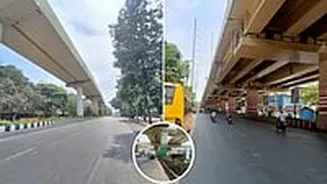
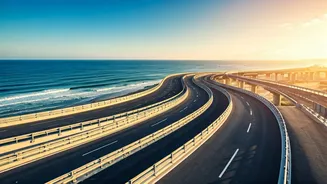
Versova to Dahisar stretch of the Coastal Road Project. Instead of relying on limited entry and exit points, which could funnel traffic into bottlenecks, the BMC is strategically planning a multitude of access routes. This approach aims to distribute the vehicular load more evenly across the corridor, preventing congestion at key junctions and ensuring the overall efficiency of the coastal road itself. By integrating at least 10 crucial routes, including new connections and realigned pathways from the JVPD flyover towards the Mrunaltai Gore bridge in the western suburbs, the project seeks to create a more fluid and accessible transportation network for residents. The initiative moves beyond the concept of a linear, singular pathway, embracing a more distributed model for traffic management to enhance connectivity and reduce strain on existing major arteries like the Western Express Highway and Linking Road.
Strategic Interconnections Unveiled
The Versova-Dahisar coastal corridor is designed as a vital alternative to the heavily trafficked Western Express Highway, Linking Road, and SV Road. While the main stretch promises signal-free travel, the BMC recognized that congestion could still occur at entry and exit points if supporting road infrastructure wasn't simultaneously upgraded. To counter this, the civic body is implementing a strategy of multiple access points. For instance, a key intervention involves a flyover near the local government office over the Juhu-Vile Parle Development Scheme (JVPD). This flyover will connect to the Versova Link Road, subsequently linking to the Versova-Bandra Sea Link connector and the main coastal road. This provides a direct route for commuters from the Gokhale Bridge to access the CD Barfiwala Flyover and continue towards the Western Express Highway via the JVPD flyover. Further enhancing connectivity, the upcoming Versova-Madh Bridge will integrate with the coastal road via the Madh interchange near Lokhandwala, offering access to the Western Express Highway. Additionally, the Mumbai Metropolitan Region Development Authority (MMRDA) is constructing an extended corridor towards the Jogeshwari-Versova Link Road (JVLR).
Expanding Connectivity Network
The BMC's traffic management strategy extends to several other significant connectivity upgrades. The coastal road will be linked near the Lokhandwala interchange to an arm of the Mrunaltai Gore Flyover, providing a route towards the Western Express Highway. Furthermore, the upcoming Ramchandra Nullah bridge in Malad is planned to connect to the coastal road through the Mindspace interchange. The project also includes proposed connections at the Charkop Interchange (Sector 8) with SV Road near Poisar junction, and at the Gorai Interchange along Link Road. Connections at the Dahisar connector and the Kandarpada rotary are also part of this comprehensive plan. Beyond these coastal road integrations, the BMC is also developing a new 5.5-km high-speed corridor between Goregaon and Magathane. This route will run parallel to the Western Express Highway, effectively linking the coastal road with the Goregaon-Mulund Link Road (GMLR), thereby offering direct access to the GMLR twin tunnels and improving east-west connectivity across the city.
Phased Development & Vision
The northern arm of the Mumbai Coastal Road Project spans a total of 22.9 km and is being developed in several distinct phases. Phase 1 covers 4.5 km from Versova to Bangur Nagar, followed by Phase 2, a 3.12 km stretch from Goregaon to Mindspace. Phase 3 includes 3.9 km of twin tunnels between Mindspace and Charkop, while Phase 5 encompasses 3.78 km from Charkop to Gorai. The final phase will extend from Gorai to Dahisar. Approvals for these realignments were submitted concurrently with those for the northern coastal road works. While some components have already secured Coastal Regulation Zone (CRZ) clearances and are in the construction phase, others are awaiting environmental permits. Some interventions are directly integrated into the coastal road's alignment, while others are being developed as standalone infrastructure projects. Once administrative approvals are finalized, the pending projects will proceed to the tendering stage. The overarching objective of this extensive development is to establish an interconnected road network capable of efficiently distributing traffic and significantly reducing the burden on Mumbai's primary arterial roads.