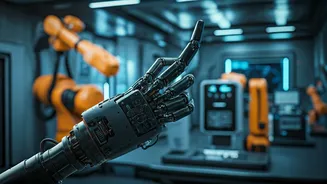

Dance Meets Robotics
Scientists exploring the realms of robotics have turned to the elegant movements of Indian classical dance, specifically the mudras, or symbolic hand gestures.
These mudras, each with a unique meaning and precise execution, could provide the key to enhancing the dexterity and control of robotic hands. The goal is to develop robotic hands capable of more nuanced movements, mimicking the finesse of human hands. This innovative approach is expected to lead to more adaptable and effective robotic systems, opening new possibilities in various sectors.
Mudras: The Secret Weapon
Indian classical dance mudras, used for centuries to communicate stories and emotions, are providing inspiration for robotic hand movements. Each mudra, a specific positioning of the hands and fingers, conveys a specific meaning or action. These gestures, which involve intricate and well-defined movements, could offer a framework for instructing robots. By incorporating these precise hand positions, researchers aim to equip robotic hands with a wider range of motion and an improved capacity to interact with and manipulate their surroundings.
Improving Robotic Dexterity
The application of mudras in robotics focuses on improving the robots’ ability to perform complex tasks. By programming robotic hands to replicate mudras, engineers can refine their dexterity, enabling them to grasp and manipulate objects with greater precision. This would be a significant advancement in robotics. These improved hand movements will also lead to enhanced robot capabilities in industries like manufacturing, healthcare, and exploration, where human-like dexterity is crucial for success. Further research in this area seeks to improve the robots’ versatility.
Impact on Various Fields
The integration of mudras into robotic systems could have far-reaching effects across multiple sectors. In healthcare, robotic hands modeled on mudras could enable more intricate surgical procedures, resulting in greater precision. Within manufacturing, these advanced hands would handle delicate tasks with improved efficiency, decreasing error rates. Moreover, in dangerous or remote environments, robots guided by mudras could perform operations that are unsafe or inaccessible for humans. The research has the potential to transform numerous areas, by creating more capable and adaptable robotic solutions.
Future Research and Development
Current research is focused on translating the wide range of mudras into robotic instructions. Experts are creating algorithms and programming languages capable of interpreting and executing these complex gestures. Future progress will likely require the advancement of sensors and actuators to mimic the delicate motions of human hands. Collaborations between dancers, robotics engineers, and computer scientists will be essential for realizing the full potential of this interdisciplinary approach. Continuous improvements in this area will contribute to the creation of even more sophisticated and versatile robotic hands.