








Rafale Acquisition Nears
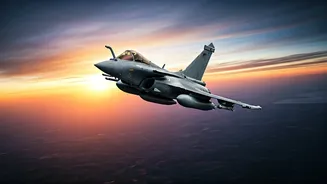
The Indian Air Force is nearing the completion of its Request for Proposal (RFP) for the acquisition of 114 new Rafale fighter jets. This crucial development
is timed to coincide with upcoming high-profile visits to France, including that of Prime Minister Narendra Modi and Air Chief Marshal AP Singh. This initiative represents a significant advancement in India's defense strategy, aiming to enhance aerial combat capabilities and solidify its strategic alliance with France. The plan involves the procurement of a substantial number of aircraft, underscoring India's commitment to modernizing its air force and reinforcing its position in regional security. This process is a testament to the ongoing, robust defense cooperation between the two nations, paving the way for a new era in aerial defense for India. The finalization of the RFP signifies a critical step towards strengthening the nation's air superiority and technological prowess.
Manufacturing and Localisation
A key component of this ambitious procurement is the emphasis on indigenous manufacturing. Of the 114 Rafale jets, 22 will be delivered in fly-away condition directly from France, including specialized trainer variants. The remaining 92 aircraft are slated for production within India, involving a collaborative effort between Dassault Aviation and a private Indian enterprise. This arrangement positions India as the first nation outside of France to locally manufacture the Rafale, marking a significant achievement for its aerospace sector. This strategic decision aims to foster technological transfer, enhance manufacturing skills, and create substantial employment opportunities within the country. The 'Make in India' initiative is central to this deal, promoting self-reliance in defense production and reducing dependence on foreign suppliers for advanced military hardware, thereby building a more robust domestic defense industrial base.
Key Partners and Timelines
Several prominent Indian companies, including Tata Advanced Systems Limited, Mahindra, and the Adani Group, are being considered as potential partners for the manufacturing collaboration. The agreement anticipates granting manufacturing licenses to at least two Indian firms, after which Dassault Aviation will select a primary collaborator, likely through a joint venture. Preparations are already underway, with Indian engineers and technicians undergoing training alongside Dassault teams in France. The potential sites for the final assembly line include Nagpur, where Dassault already has a presence, or Hyderabad, reflecting the government's intent to distribute aerospace manufacturing opportunities across the nation. India is actively pursuing a localization target of 55-60% in phases, along with a push for accelerated timelines and a higher proportion of indigenous content than initially proposed. Groundwork for producing fuselage sections has begun, with initial parts expected by FY2028 and a capacity to produce up to two complete fuselages per month.
Impact on Air Force
This new acquisition will significantly augment the Indian Air Force's operational capabilities, building upon the successful integration of the initial 36 Rafale jets procured in 2016. These existing aircraft are also scheduled for an upgrade to the advanced F4 standard, which will introduce enhanced connectivity, improved data sharing, and modern communication systems, ensuring their readiness for future technological advancements. The addition of new Rafale squadrons is critical at a time when the Indian Air Force has been operating with fewer units than ideally required. This expansion will bolster combat strength and deterrence capabilities, especially in the context of prevailing regional security challenges. The program underscores India's dedication to modernizing its defense apparatus while maintaining strong strategic ties with its international partners, aligning with broader national objectives for defense self-sufficiency.