
Battery Challenges Explored
For years, battery technology has wrestled with a crucial dilemma: how to increase energy capacity while ensuring safety. Traditional lithium-ion batteries,
while powerful, have always carried the risk of thermal runaway, a condition that can lead to overheating and potential explosions. This safety concern has limited the widespread adoption of high-capacity batteries in various devices and applications. Furthermore, the inherent instability of lithium metal at the anode and the formation of dendrites pose significant challenges, reducing battery life and making them less reliable over time. The search for a safer, more efficient alternative has been an ongoing endeavor, pushing researchers to explore innovative approaches to overcome these limitations and unlock the full potential of battery technology.
Magnetic Control Explained
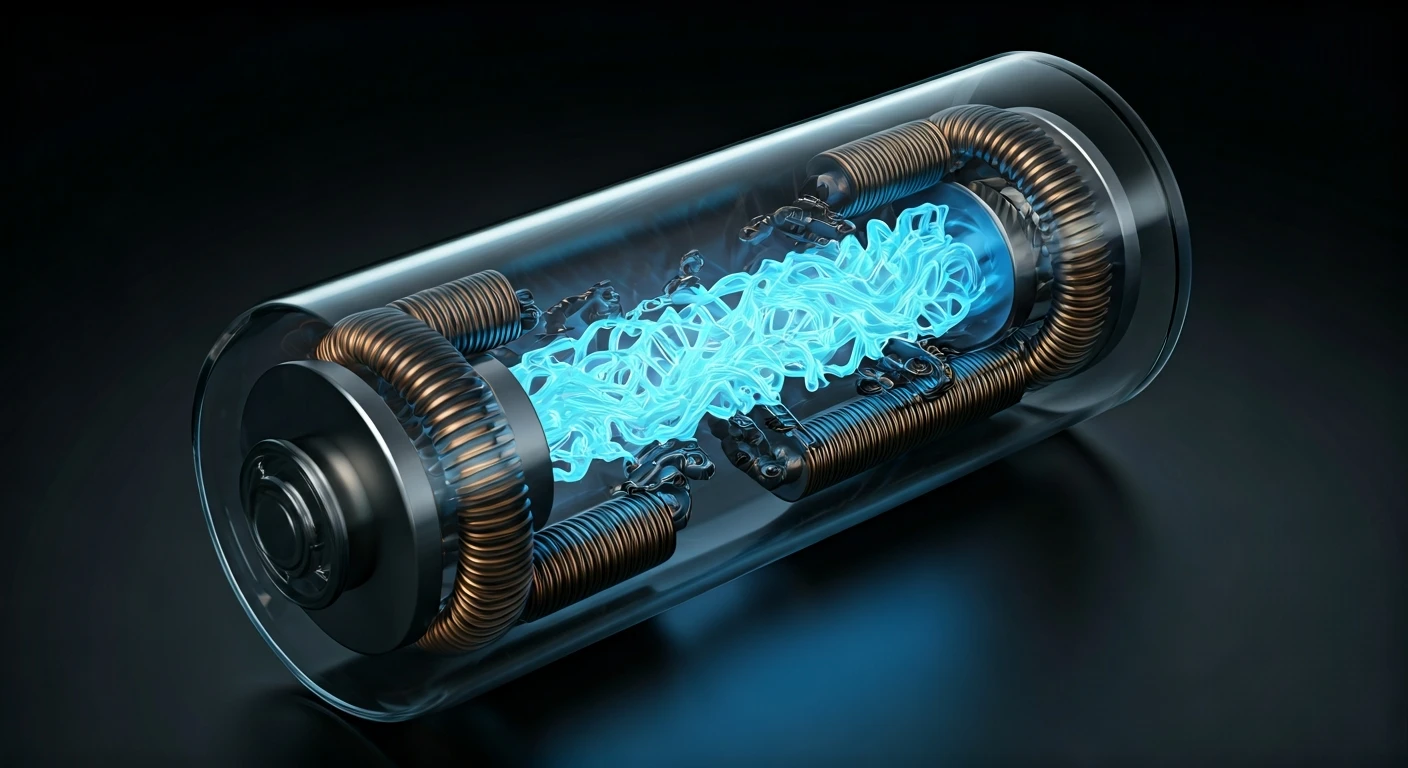
A team of researchers developed a groundbreaking approach to battery design: the application of magnetic control. By manipulating lithium, they achieved a significant leap forward in battery safety and performance. The core principle revolves around using magnetic fields to precisely guide and control the movement of lithium ions within the battery. This precise control mitigates the problems associated with dendrite formation, which are tiny, needle-like structures that can cause short circuits and battery failure. By preventing dendrite growth and managing lithium deposition, the magnetic field significantly increases the safety profile of the battery, eliminating the risk of thermal runaway and explosion. The magnetic control method also allows for higher energy density, providing more power in a smaller form factor, opening doors for its use in portable electronics and electric vehicles.
Dream Battery Advantages
The 'dream battery' has several advantages, setting it apart from current battery technologies. The enhanced safety feature is one of its primary benefits, which offers protection against the risk of explosions and related hazards. The design allows for higher energy density, meaning the battery can store more power in the same or smaller physical space. It makes the battery ideal for applications where space is a critical factor, like smartphones and other portable devices. Moreover, the enhanced control of the lithium ions improves the battery's lifespan, enabling it to go through more charge and discharge cycles before degrading. The improved stability and durability offer economic advantages, lowering the cost of ownership and making it a more practical solution. This new battery also offers an opportunity for faster charging times, allowing users to charge devices more quickly compared to existing technologies.
Future Applications Explored
The implications of this 'dream battery' are far-reaching across different industries. The enhanced safety and high-capacity features position it as a game-changer for electric vehicles (EVs), addressing concerns regarding range and safety. It can lead to the development of EVs with longer driving ranges and faster charging times, promoting mass adoption of electric vehicles. In the consumer electronics sector, the technology has the potential to transform devices like smartphones, laptops, and other portable electronics. The increased energy density would permit manufacturers to create smaller, more lightweight devices without compromising battery life, enhancing user experience. Moreover, this innovation has prospects in grid-scale energy storage, paving the way for more efficient and sustainable energy management solutions. The magnetic control technology's versatility can open new avenues for advancements in various technological fields.
Challenges & Considerations
Despite its promising potential, the 'dream battery' faces certain challenges before large-scale adoption. The initial development and implementation of this technology may be expensive, necessitating significant investment in research and manufacturing. The integration of magnetic control systems into existing battery designs poses challenges, requiring modifications to manufacturing processes and equipment. Moreover, the long-term reliability and performance of these batteries under diverse operational conditions must be thoroughly tested. Another aspect to consider is the scalability of production, ensuring the technology can be mass-produced to meet the high demand across various industries. To fully realize the potential of this technology, it is essential to address these challenges. It can be achieved through continuous research, strategic partnerships, and ongoing refinement of manufacturing processes.