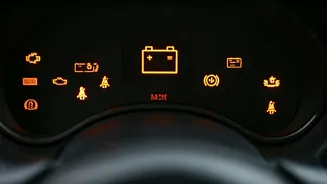

Engine Check Light
The engine check light, often resembling an engine, is a general indicator of a problem within the engine system. It can illuminate for various reasons,
from a loose gas cap to a more serious issue like a misfiring cylinder. If the light is on, it's wise to get your car inspected by a mechanic as soon as possible. Ignoring this light can potentially lead to reduced fuel efficiency, increased emissions, and even major engine damage over time. The seriousness of the situation dictates your immediate action. If the light is flashing, pull over when safe, and seek professional help immediately. A steady light warrants a checkup at your earliest convenience.
Oil Pressure Warning
The oil pressure warning light, commonly an oil can, is critically important. It indicates that the engine's oil pressure is too low. Low oil pressure means inadequate lubrication, which can cause severe engine damage due to friction between moving parts. If this light appears, it is imperative to stop driving immediately and check the oil level. If the oil is low, add the recommended type and quantity. If the light persists after topping up the oil, or if the oil level is normal, there is likely a mechanical fault, such as a malfunctioning oil pump, and a professional diagnosis is essential. Continuing to drive with this light on can quickly lead to catastrophic engine failure, resulting in costly repairs.
Battery Warning Light
This warning light looks like a battery and indicates a problem with the car's charging system. The issue could be a faulty alternator, a failing battery, or a problem with the charging circuit. When this light illuminates, the battery is not receiving charge properly, and the car's electrical systems are running on battery power alone. This will drain the battery relatively quickly. You might notice dimming headlights, sluggish electrical accessories, or even the engine stalling. If the light comes on, it's a good idea to turn off unnecessary electrical systems like the AC and radio. Get your car to a service station for diagnostics to avoid being stranded.
Brake System Alert
This light often looks like an exclamation point inside a circle, or sometimes it says 'BRAKE.' This light can signify a few things, the most common being the parking brake is engaged. However, it can also indicate a low brake fluid level or a problem within the braking system itself. If the parking brake is not engaged and the light is on, immediately check the brake fluid level. Low brake fluid could mean a leak in the brake lines, which reduces braking effectiveness. If the brake fluid level is normal and the light persists, or if the brakes feel spongy or perform poorly, get the braking system inspected. Ignoring this warning can significantly compromise your safety and the safety of others on the road.
Temperature Warning
The temperature warning light, usually a thermometer, alerts the driver to an overheating engine. Overheating can be caused by various issues, such as low coolant levels, a faulty thermostat, a malfunctioning water pump, or a leak in the cooling system. If this light turns on, pull over in a safe place immediately and turn off the engine to allow it to cool down. Do not open the radiator cap until the engine has cooled completely, as the system is under pressure, and you can get burned. Check the coolant level after the engine cools. Ignoring an overheating engine can cause severe engine damage, including warped cylinder heads and cracked engine blocks. A professional diagnosis is crucial.
Anti-lock Brake System (ABS)
The ABS warning light typically displays 'ABS' inside a circle or similar symbol. This light signals a problem with the anti-lock braking system. While the regular brakes will still function, the ABS system, which helps prevent wheel lockup during hard braking, is not working. This means that, in an emergency, you might have less control over the vehicle. The ABS warning light often illuminates along with the brake warning light. A malfunction within the ABS system can be caused by various factors, including sensor issues or problems with the control module. Get the ABS system inspected by a qualified mechanic to ensure proper functioning and maximize braking safety.
Tire Pressure Warning
The tire pressure monitoring system (TPMS) warning light looks like an exclamation mark inside a horseshoe (tire cross-section). This light indicates that one or more of your tires are significantly underinflated. Underinflated tires can reduce fuel efficiency, cause uneven tire wear, and affect handling and control. They can also increase the risk of a tire blowout. When this light illuminates, check the tire pressures as soon as possible using a tire pressure gauge and inflate them to the recommended pressure found on a sticker usually located on the driver's side doorjamb or in your owner's manual. After inflating the tires, the TPMS light may take some driving time to turn off. If it doesn't, there may be a problem with the TPMS sensors, which will need to be checked by a mechanic.