


A Safer Commute
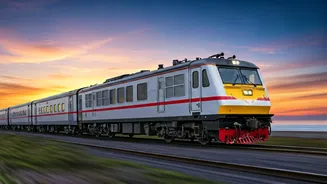
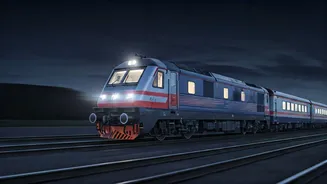
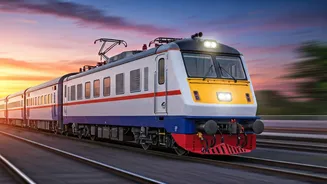
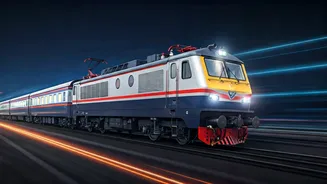
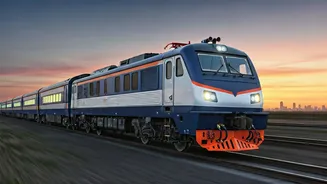
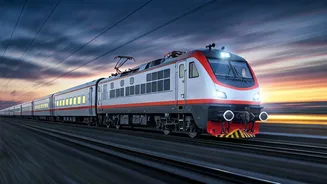
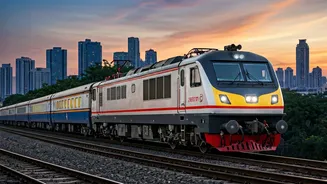
Indian Railways has unveiled a groundbreaking innovation for Mumbai's extensive suburban railway system: the nation's inaugural closed-door, non-air-conditioned
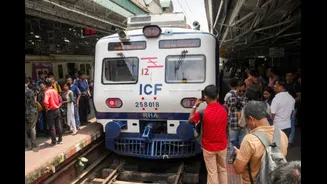
local train equipped with automatic doors. This development is a direct response to the persistent danger posed by overcrowding, which has tragically led to numerous fatalities and injuries. The prototype, a 12-car rake manufactured by the Integral Coach Factory, has been introduced at the Kurla Carshed and is awaiting mandatory certification trials by the Research Designs and Standards Organisation (RDSO). This rigorous testing process is expected to take approximately three months before the train is deemed ready for public service. The urgency for such safety enhancements was underscored by the devastating Mumbra tragedy in June 2025, where five commuters lost their lives after falling from overcrowded trains, prompting the Railway Board to mandate automatic doors for all new non-AC suburban rakes. Statistics reveal a grim reality: between January 2014 and May 2025, a staggering 6,760 commuters died and 14,257 were injured from falls, incidents overwhelmingly linked to open-door non-AC coaches. In stark contrast, AC local trains, already equipped with automatic doors, have recorded zero such fall-related deaths, highlighting the efficacy of this crucial safety feature. However, the affordability gap remains a significant consideration, with non-AC tickets costing a fraction of AC fares, making the non-AC locals indispensable for the vast majority of Mumbai's daily commuters.
Inside the Innovation
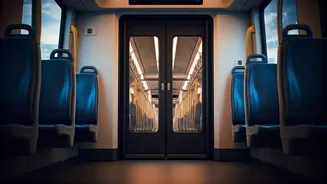
The newly presented train, designed to merge safety with cost-effectiveness, boasts a 12-car configuration with a total passenger capacity of 5,698 individuals, including 1,003 seats. It comprises 19 compartments, incorporating dedicated luggage sections. The rake is thoughtfully laid out with 8 second-class and 4 first-class coaches, featuring specific provisions for women and passengers with disabilities, ensuring accessibility and comfort. The core of this safety upgrade lies in its fully automated door mechanism, engineered to eradicate dangerous footboard travel, a primary cause of fatalities. These doors operate efficiently, opening in approximately 3 seconds and closing in 4 seconds, synchronized with a 30-second dwell time at stations to match scheduled halts. An integrated obstruction detection system is in place to prevent accidents during door closure, and a crucial interlocking mechanism ensures the train cannot depart until all doors are securely shut. Furthermore, anti-drag features are incorporated to prevent passengers from being inadvertently pulled along by closing doors. This non-AC Electric Multiple Unit (EMU) represents a substantial advancement over traditional open-door EMUs, promising to eliminate unsafe boarding and alighting practices and instill greater discipline among passengers.
Ventilation and Comfort
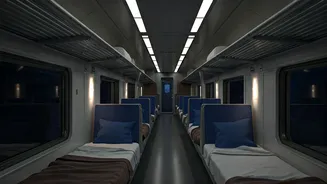
A significant challenge in developing a closed-door non-AC train has been maintaining adequate ventilation, as earlier prototypes indicated a concerning rise in carbon dioxide levels, sometimes up to 2.5 times higher within sealed coaches. To surmount this obstacle, the Railways have implemented a redesigned airflow system. This includes the integration of louvred doors, featuring angled slats that facilitate continuous air circulation. The windows have also been enlarged, nearly doubling their width compared to older coach designs, and offer three distinct types to promote airflow diversity, with up to two-thirds of the window area being openable. Complementing these features are upgraded roof-mounted ventilation units that now have a higher capacity, moving 10,000 cubic metres of air per hour compared to the previous 6,000. These collective modifications are intended to ensure that passengers do not experience suffocation, even during periods of peak-hour crowding, thereby enhancing overall travel comfort. Beyond these primary innovations, the rake is equipped with a suite of modern amenities, including fire detection systems, modified alarm mechanisms designed to reduce misuse, passenger information display systems, and emergency talk-back units strategically placed near the doors. Additionally, sealed gangways facilitate seamless movement between coaches, while internal sliding doors serve as backup exit routes. The seating layout has also been improved to offer better legroom, contributing to a more pleasant journey for all passengers.
Future of Commuting
The introduction of this new closed-door, non-AC train prototype marks a significant step in improving safety on Mumbai's incredibly busy suburban railway network, which spans 376 route kilometers across Central and Western Railways, handling over 3,200 services daily. While this prototype undergoes extensive testing, including stability and obstruction checks, by the RDSO, a larger transition towards air-conditioned trains is already in motion. Under projects like the Mumbai Urban Transport Project (MUTP)-III and IIIA, a total of 238 AC trains have been sanctioned, with an estimated cost of Rs 19,293 crore, expected to begin rolling out from 2028. These future services aim to eventually replace the entire suburban fleet with fully air-conditioned trains. For the immediate future, however, this closed-door non-AC local represents a vital interim solution. It successfully bridges the gap between the enhanced safety features of AC trains and the crucial affordability of traditional locals, offering a practical and much-needed upgrade for millions of daily commuters who rely on these services.