







Market Overview
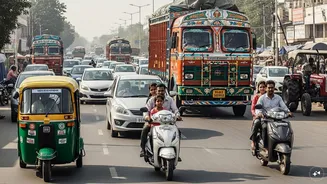
India's automotive industry stands as one of the world's fastest-growing markets. The sector's expansion is fueled by a confluence of factors, including
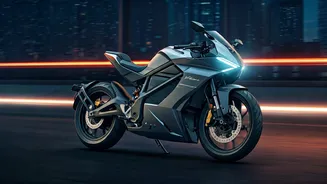
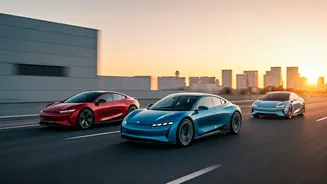
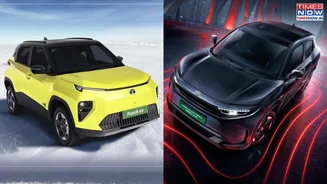
a burgeoning middle class, increasing urbanization, and favorable government policies. The demand for both passenger and commercial vehicles has surged, resulting in substantial investment and development. Moreover, this growth is further supported by a robust ancillary industry, which provides crucial components and services. The market is highly competitive, with a mix of established global players and domestic manufacturers vying for market share. Key trends include the rising popularity of SUVs, increasing adoption of electric vehicles (EVs), and a focus on safety and emission standards. The government's initiatives to promote domestic manufacturing and infrastructure development also play a significant role in shaping the industry's trajectory. Despite some fluctuations in sales figures influenced by economic cycles and external factors, the overall outlook for the Indian automotive market remains positive, with a sustained focus on technological innovation and sustainable practices expected to drive future growth.
Key Market Players
The Indian automotive market is characterized by a diverse array of companies, each contributing significantly to the sector's dynamics. Prominent players include both international giants and domestic powerhouses, creating a competitive environment. These companies compete for market share by offering diverse vehicle models, innovative technologies, and extensive service networks. Their strategies are shaped by consumer preferences, regulatory requirements, and the need for sustainable practices. The market's overall performance is influenced by these players' decisions and investments, making their presence central to its evolution. Their ability to adapt to changing consumer demands and emerging technologies determines their future success. The interplay among these players fuels innovation, which is the driving force of the Indian automotive industry's progress.
Emerging Technologies
Technological advancements are rapidly transforming the Indian automotive sector. Electric vehicles (EVs) are gaining momentum, driven by environmental concerns and government initiatives. Autonomous driving features are also emerging, promising enhanced safety and convenience. The integration of connected car technologies offers improved in-vehicle experiences and data-driven services. These technologies are leading to significant shifts in the industry, impacting manufacturing processes, consumer expectations, and the overall mobility ecosystem. The adoption of these innovations presents both opportunities and challenges for automakers and consumers alike. The success of these technologies depends on supportive infrastructure, clear regulations, and consumer acceptance.
Government Initiatives
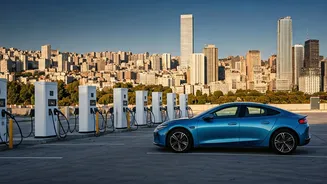
The Indian government plays a key role in supporting and shaping the automotive sector through various policies and initiatives. Programs to promote electric vehicle (EV) adoption, such as subsidies and tax incentives, are significant. Regulations aimed at improving safety standards and reducing emissions also have a substantial impact. Infrastructure development, including the expansion of charging stations and improved road networks, is crucial. These government actions are designed to boost the sector's growth, encourage innovation, and ensure sustainable development. The success of these policies depends on effective implementation and ongoing evaluation. The government's collaboration with industry stakeholders is essential for achieving desired outcomes, which can lead to a more robust and sustainable automotive industry.
Future Outlook
The Indian automotive market is poised for continued growth. Factors such as increasing disposable incomes, rising urbanization, and government support are contributing to a positive outlook. Technological advancements, particularly in electric vehicles (EVs) and connected car technology, will drive innovation. Challenges, including economic fluctuations and regulatory changes, will need to be navigated. The industry is projected to experience substantial expansion in the coming years, creating opportunities for both existing players and new entrants. The automotive sector's future will depend on adaptability, innovation, and a focus on sustainability, ensuring its long-term viability and competitiveness in the global market.