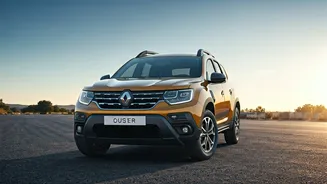

Duster's Competitive Landscape
The 2026 Renault Duster enters a highly competitive market, necessitating a deep analysis of its positioning against rivals. Comparing dimensions is crucial,
as overall size directly affects interior space and maneuverability, impacting the vehicle's practicality. Price comparisons are equally vital. Understanding the Duster's price range relative to competitors reveals its market value proposition and how it stacks up in terms of affordability. Examining powertrain options sheds light on performance and fuel efficiency. This includes factors such as engine type (petrol, diesel, or hybrid), engine capacity, horsepower, and torque. These elements greatly affect the driving experience and total running costs. A thorough comparison of specifications, including features like infotainment systems, safety technologies, and exterior design elements, provides a complete view of the Duster's technological advancements and its features compared to alternatives. The Duster is expected to compete with vehicles like the Skoda Kushaq, Maruti Suzuki Vitara Brezza, Hyundai Creta, Tata Sierra, and Harrier.
Dimensions and Size
Comparing the dimensions of the 2026 Renault Duster with its rivals involves measuring the length, width, height, and wheelbase of each vehicle. These measurements give important information about the vehicle's overall size and design. The Duster's dimensions will be key to understanding how spacious its interior is and how easy it is to park and maneuver in city environments. Evaluating the width allows for a comparison of shoulder room and cabin space. Height impacts the headroom for passengers and the cargo capacity. The wheelbase, the distance between the front and rear wheels, greatly affects ride stability and rear passenger legroom. The Duster needs to balance overall size with practical usability to compete effectively. For example, a slightly longer wheelbase could increase rear passenger comfort while potentially decreasing the turning radius. Therefore, an in-depth comparison of these dimensions will offer insights into how the Duster is designed to meet different consumer needs, such as space for passengers, cargo, and ease of use in everyday driving scenarios.
Price and Value
The 2026 Renault Duster's pricing strategy will be critical in the Indian automotive market, requiring a thorough analysis of how it compares to its rivals. Competitive pricing reflects the manufacturer's goal to attract customers and capture market share. The price of the Duster will need to align with its features, technology, and overall value. For instance, if the Duster offers advanced safety systems and premium interior materials at a competitive price, it would enhance its appeal significantly. Analyzing the price of key competitors, such as the Creta, Kushaq, Vitara Brezza, Sierra, and Harrier, allows for an understanding of the price brackets in which the Duster will compete. Consumers often consider factors such as brand reputation, after-sales service, and resale value when making purchasing decisions, and these aspects also influence their price expectations. By examining the value proposition, comparing features with price tags, and observing market trends, we can understand the potential success of the 2026 Duster in the Indian market.
Powertrain Options
Examining the 2026 Renault Duster's powertrain options is critical to understanding its performance and efficiency. Potential powertrains could involve petrol, diesel, and possibly hybrid variants, each impacting how the vehicle performs under different driving situations. Petrol engines may focus on offering a balanced performance, with a good mix of power and fuel efficiency. Diesel engines have a reputation for better fuel economy and high torque, suitable for longer drives and heavier loads. Hybrid options could combine both petrol and electric power, increasing fuel efficiency while reducing emissions. The selection of transmission choices, such as manual or automatic, also needs consideration, as automatic transmissions often provide convenience, especially in city driving. Engine capacity, measured in litres, also influences performance and fuel consumption. Factors like horsepower and torque also contribute to overall driving dynamics, with higher figures often indicating quicker acceleration and stronger pulling power. The choice of powertrain options therefore directly affects the Duster's appeal to various buyers, from those prioritizing fuel efficiency to those seeking strong performance or wanting a blend of both.
Specifications Compared
A detailed comparison of the 2026 Renault Duster's specifications with those of its rivals is essential for assessing its competitiveness in the market. The comparison should include important areas like fuel efficiency, acceleration times, and top speeds. Fuel efficiency, measured in kilometers per litre (kmpl), is a key factor, particularly considering the rising fuel costs and environmental concerns. Acceleration times, such as the 0-100 kmph time, show the vehicle's performance from a standstill. Top speed also indicates its potential on highways. Beyond performance, a specification comparison involves evaluating the Duster's features. These can include advanced driver-assistance systems (ADAS), infotainment systems with touchscreen displays and smartphone integration, and connectivity options like Bluetooth and navigation. The safety features, such as airbags, anti-lock braking systems (ABS), electronic stability control (ESC), and structural integrity, also greatly influence the vehicle's appeal. By comparing these specifications, potential buyers can make informed decisions. These factors, taken together, provide a clear picture of the Duster's strengths and weaknesses against its competitors.