







The Dual Powertrain Challenge
The automotive world is at a pivotal juncture, with battery electric vehicles (BEVs) steadily gaining traction and market share. However, this doesn't
signal an immediate demise for traditional internal combustion engine (ICE) vehicles. Instead, many industry experts and car manufacturers anticipate a prolonged period where both technologies coexist. This 'multi-fuel' future presents a significant logistical and engineering puzzle for automakers. They must devise strategies that cater to the growing demand for zero-emission transport while also continuing to serve markets and consumer preferences that still favor ICE technology, whether for reasons of infrastructure, cost, or personal choice. The challenge lies in developing production capabilities and product portfolios that can adapt to these diverging yet simultaneously relevant trends without making prohibitive investments in segregated development paths.
Flexible Platforms: The Solution
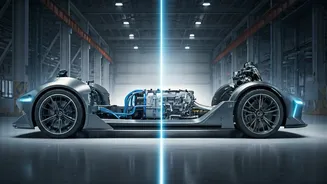
In response to the complex demands of a dual-powertrain automotive market, carmakers are increasingly placing their bets on the concept of flexible vehicle platforms. These are not rigid, single-purpose chassis designs but rather adaptable architectures engineered to accommodate a variety of propulsion systems. This means a single platform could, in theory, be the foundation for a fully electric model, a hybrid variant, or even a traditional gasoline or diesel-powered car. The advantage of this approach is significant. It allows manufacturers to leverage economies of scale by sharing a common underbody, suspension components, and much of the structural engineering across a wider range of vehicles. This not only reduces development costs and time-to-market but also provides greater agility in production. When demand shifts, or new powertrain technologies emerge, manufacturers can retool and reconfigure production lines more efficiently, integrating different drivetrains onto the same assembly lines.
Strategic Adaptability in Production
The adoption of flexible platforms is a strategic masterstroke for navigating the uncertainties of the automotive industry's transition. It empowers car manufacturers to respond with unprecedented agility to evolving consumer preferences and regulatory landscapes. For instance, if the market for electric vehicles surges unexpectedly in a particular region, production can be quickly ramped up for the electric variants built on that flexible platform. Conversely, if demand for ICE vehicles remains robust, those configurations can continue to be prioritized without requiring entirely separate manufacturing facilities or R&D teams. This inherent adaptability minimizes the risk associated with massive capital investments in specialized production lines that might become obsolete or underutilized. It's about building a resilient operational framework that can pivot between different technological demands, ensuring sustained competitiveness and profitability throughout this multifaceted period of automotive evolution.