





Speedy New Route
A significant development in Indian infrastructure, the Delhi-Dehradun Expressway, recently inaugurated, promises to drastically cut down travel duration
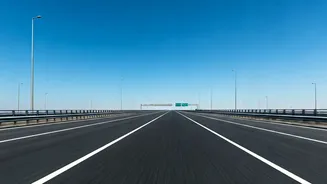
between the capital and the Uttarakhand capital. Spanning an impressive 213 kilometers, this state-of-the-art six-lane corridor connects Delhi's Akshardham to Dehradun. The impact on commute times is transformative, reducing the journey from over six hours to a mere 2.5 hours. This advanced route is designed to facilitate high-speed travel, supporting speeds of up to 100 kmph, and aims to provide a smoother, quicker passage for commuters. Its path meanders through key Uttar Pradesh districts, including Baghpat, Shamli, and Saharanpur, before reaching its destination in Uttarakhand. For the protection of local wildlife, a crucial 12-kilometer elevated section has been incorporated over the Rajaji National Park, minimizing environmental impact. While the expressways' planned amenities like fuel stations and rest areas are still coming online, the core infrastructure is ready to serve the public.
Navigating Tolls
Commuters using the new Delhi-Dehradun Expressway will find a clear and structured toll system in place. For a single journey from Delhi to Dehradun, the estimated toll charge for cars is approximately Rs 675, calculated across the five toll plazas situated along the route. To encourage frequent travel, a special return fare is offered for journeys completed within a 24-hour period; the total cost for a round trip is Rs 1,010, meaning the return leg incurs an additional charge of Rs 335. These charges are in line with industry estimates, falling within the Rs 2 to Rs 3 per kilometer range for light motor vehicles. Importantly, the expressway mandates the use of FASTag for all toll payments, ensuring a seamless and cashless transaction experience for all users. While the National Highways Authority of India (NHAI) reserves the right to update these rates, the current structure provides a predictable cost for this expedited route.
FASTag Pass Query
A common question for frequent travelers is the applicability of the FASTag Annual Pass on the new Delhi-Dehradun Expressway. Given that this expressway is managed by the National Highways Authority of India (NHAI), it is highly probable that the annual pass will be accepted. NHAI rules typically stipulate that annual passes are valid across all National Highways and Expressways operated by the authority. The annual pass, priced at Rs 3,075, offers a significant benefit by covering up to 200 trips or one full year, whichever limit is reached first. This effectively reduces the per-toll cost to about Rs 15.37. Considering the Delhi-Dehradun Expressway has five toll plazas, a round trip would theoretically cost around Rs 76.85 if using the annual pass, offering substantial savings for regular commuters compared to the standard one-way and return fares.
Connectivity & Design
The Delhi-Dehradun Expressway is not an isolated project but is intricately linked with a network of existing national highways. It integrates segments of National Highway 709B, National Highway 307, and National Highway 344G, and also connects to the crucial Eastern Peripheral Expressway. Furthermore, it significantly enhances connectivity to the Char Dham highway network, originating from Haridwar. The current design features a robust six-lane configuration, with provisions for future expansion to eight lanes to accommodate increasing traffic volumes. Access is made convenient through a total of 16 entry and exit points strategically placed to serve the cities and towns along its corridor. Unique engineering aspects include several elevated sections designed to mitigate traffic congestion and, critically, to safeguard wildlife. The 14-kilometer wildlife corridor within Rajaji National Park, situated just south of Dehradun, has already demonstrated successful animal usage, with observations confirming its effectiveness. A 340-meter tunnel, located at the southern end of this elevated corridor, further supports the ecological preservation efforts along the route.