




Overnight Airport Ordeal
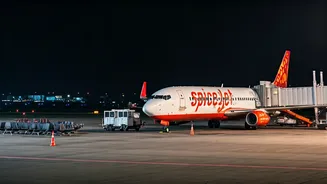
Mumbai Airport's Terminal 1 transformed into a scene of significant disruption on a recent Wednesday night. Numerous SpiceJet flights experienced substantial
delays or were outright cancelled, trapping hundreds of travellers and igniting protests within the terminal building. The situation intensified when SpiceJet flight SG 631, destined for Delhi from Mumbai, was initially delayed by nearly four hours before being completely cancelled. This sudden turn of events triggered vocal dissent from passengers, who voiced their frustrations and demanded explanations from the airline. Flights bound for major cities like Bengaluru, Delhi, and Ahmedabad were among those severely impacted, amplifying the growing unease and anger among those stranded, many of whom were compelled to spend the entire night at the airport without clear information regarding their travel or any alternative arrangements, turning what should have been a straightforward journey into a gruelling ordeal.
Passenger Plight and Costs
The impact on passengers was multifaceted, extending beyond mere inconvenience. Many were forced to endure exceptionally long waiting periods, with one late-night Mumbai-Bengaluru flight reportedly departing a staggering nine hours behind its scheduled time. Passengers for a 1:55 am red-eye service arrived at midnight, only to face repeated postponements before finally departing in the morning. The disruption wasn't limited to just one route; a Mumbai-Delhi flight scheduled for 11:15 pm was cancelled after hours of delay, and a daytime service to Gorakhpur was also scrapped. Even a Mumbai-Ahmedabad flight, initially delayed by approximately three hours, eventually took to the skies. Social media platforms became a conduit for passengers to share their harrowing experiences. One traveller described waiting since midnight as their flight time was continuously pushed back, while others recounted heated arguments between stranded travellers and airline personnel. The financial burden was also significant; one passenger reported incurring approximately Rs 15,000 for an alternative ticket after her flight was cancelled, citing a severe lack of support and communication from the airline.
Airline's Official Explanation
In the aftermath of the passenger outcry, SpiceJet provided an official statement to clarify the reasons behind the extensive disruptions. The airline confirmed the cancellation of three specific departures from Mumbai on April 29: SG 631 (Mumbai-Delhi), SG 553 (Mumbai-Gorakhpur), and SG 669 (Mumbai-Bengaluru). These cancellations were attributed to 'operational reasons.' The statement detailed that the grounding of an aircraft was a primary factor. Additionally, adverse weather conditions encountered at Bagdogra, the preceding location of the operating aircraft, had a cascading effect, leading to Flight Duty Time Limitation (FTDL) constraints for the crew members. The airline also explained that two flights bound for Ahmedabad from Mumbai experienced delays due to unfavourable weather conditions at their respective previous stations, Varanasi and Bagdogra, ultimately departing after significant delays. While ground staff initially cited technical issues, the prolonged and widespread nature of the disruptions led passengers to question these explanations throughout the night.
Return to Normalcy and Concerns
As the situation escalated, security personnel from the Central Industrial Security Force intervened to manage the agitated crowds and restore order within the airport premises. Although the immediate unrest was successfully controlled, the substantial inconvenience experienced by the passengers remained a significant issue. In response to the backlog and the stranded passengers, SpiceJet announced its intention to operate additional flights. The airline also issued an apology for the disruptions and expressed gratitude for the passengers' patience and understanding. By the morning of Thursday, airport operations had largely returned to their normal rhythm, with flights resuming their schedules and passenger traffic normalizing. However, this incident has undeniably reignited broader discussions and concerns regarding the dependability of airline services, the effectiveness of passenger communication during crises, and the overall capability of airlines in managing unexpected operational disruptions.