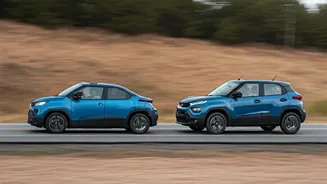

Powertrain and Performance
The heart of the matter lies in what powers each Punch variant. The ICE version relies on a gasoline engine, a tried-and-true technology. This usually
means quick refueling at any gas station, but it also means dealing with emissions. Conversely, the EV version is propelled by an electric motor, drawing power from a battery pack. This provides instant torque, leading to brisk acceleration and zero tailpipe emissions. Acceleration times will differ significantly; the EV will likely feel quicker off the line. Furthermore, the nature of electric motors offers smooth and quiet operation, distinguishing it from the traditional engine's characteristic sounds and vibrations. Driving dynamics change as well, with the EV's battery placement often lowering the center of gravity, potentially enhancing stability and handling around turns. The primary performance indicators to consider are 0-60 km/h acceleration, top speed, and overall responsiveness during daily driving scenarios, with the EV generally providing superior performance in the initial acceleration. However, the ICE version can still be a good option for certain users because of the easier refueling options and lower price point when buying the car.
Range and Refueling
Range and refueling present a stark contrast between the two Punch models. The ICE Punch offers a range dependent on its fuel tank capacity and fuel efficiency. Refueling is quick and readily available at numerous gas stations across the country. Conversely, the EV Punch's range is limited by its battery capacity. While the range is increasing with newer models, it still requires more planning when it comes to long journeys. Refueling the EV takes longer; you must recharge the battery. Charging times depend on the charging infrastructure available. Public charging stations offer faster charging, but home charging is usually slower and requires an overnight charge. Range anxiety, the fear of running out of charge, can impact EV owners, but ongoing improvements in battery technology and charging infrastructure are steadily alleviating this concern. Careful consideration of daily driving needs and access to charging facilities is essential when deciding between these two models.
Features and Technology
Both Punch models provide a comparable suite of features, but the EV integrates some EV-specific technology. The ICE Punch likely offers features such as a touchscreen infotainment system, smartphone connectivity, and safety features like airbags and ABS. The EV version may have an upgraded infotainment system with EV-specific information displays, showing battery charge status, range estimates, and charging station locations. The EV may also offer advanced driver-assistance systems (ADAS) or over-the-air software updates, enhancing the driving experience. The presence of connected car technology allows for remote vehicle monitoring and control through a mobile app. The features available could vary depending on the trim levels; however, both aim to provide a modern and functional in-cabin experience. The specific features, however, will differ across the range of the vehicle in the future.
Cost of Ownership
The overall cost of ownership includes the purchase price, fuel/electricity costs, maintenance, and insurance expenses. The initial cost of the EV is typically higher than the ICE due to battery pack costs. However, the running costs of the EV are usually lower because of the cheaper electricity compared to petrol. Maintenance for EVs is generally less expensive due to fewer moving parts. Government incentives, like subsidies or tax benefits, can reduce the upfront cost of EVs, making them more attractive. The resale value of both models can vary, influenced by market demand and technological advancements. Potential buyers should consider the long-term cost implications of each model, considering their budget and driving habits.
Environmental Impact
The environmental footprint is a crucial differentiator. The ICE Punch, burning fossil fuels, produces greenhouse gas emissions, contributing to air pollution and climate change. The EV, with zero tailpipe emissions, has a much lower environmental impact, particularly when powered by renewable energy sources. The production of the EV's battery pack and the electricity generation process still have an environmental impact, but this is usually lower compared to the complete life cycle of an ICE vehicle. The life cycle assessment includes the manufacturing of components, use, and disposal. EV ownership promotes cleaner air quality and contributes to mitigating climate change.