


A Modern Makeover
Indian Railways is making waves by transitioning from conventional liquid painting to sophisticated high-grade vinyl wrapping for its train fleet. This
modern approach is significantly faster, cleaner to implement, and ultimately more budget-friendly. The initiative recently captured widespread attention when a video showcasing railway personnel applying a striking red vinyl film to a train's exterior began circulating rapidly across social media platforms. This clip, which garnered considerable attention after being shared extensively on X (formerly Twitter), vividly illustrates the meticulous process undertaken by workers. They are seen skillfully stretching and smoothing adhesive-backed polyvinyl chloride (PVC) sheets onto the train's coach surfaces, ensuring a seamless and uniform final appearance. This visual demonstration has sparked conversations and curiosity about the efficiency and appeal of this contemporary method of train refurbishment and branding.
Whispers of the Past
Following the viral dissemination of the train wrapping video, a notable claim emerged from a social media user attributing the inception of this practice to the tenure of Mamata Banerjee during her second term as Railway Minister, spanning from 2009 to 2011. The user's post posited that during her leadership, the Duronto Express trains were introduced, and the intricate liveries required for these services were not easily achievable through traditional painting methods. Consequently, vinyl wrapping was adopted as a more practical and effective solution. The post further highlighted that the visual distinction between wrapped and painted trains is negligible, emphasizing the cost-effectiveness, accelerated application, and reduced mess associated with vinyl wrapping. This perspective suggests a potentially foundational role for her ministry in pioneering this innovative approach within Indian Railways.
What is Vinyl Wrapping?
Vinyl wrapping is a technique that involves affixing a thin, pliable layer of PVC film, which comes with its own adhesive backing, onto the exterior of a vehicle. This application serves to dramatically alter the vehicle's colour, introduce new textures, or apply specific branding. While widely adopted in industries like automotive and aviation, this method is now gaining significant traction in the realm of rail transportation. The available finishes for vinyl wraps are diverse, ranging from high gloss and sophisticated matte to metallic sheens and smooth satin. Beyond merely enhancing the visual appeal, the protective qualities of the vinyl layer are noteworthy. It provides an additional shield against harmful UV radiation, guards against minor scuffs and scratches, and helps to mitigate surface wear over time, thus contributing to the longevity of the train's exterior appearance.
Origins and Evolution
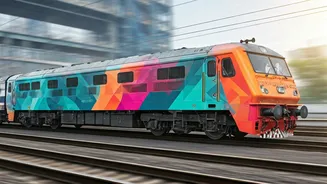
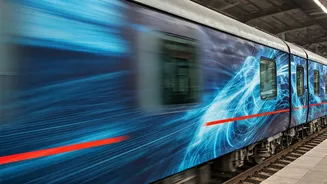
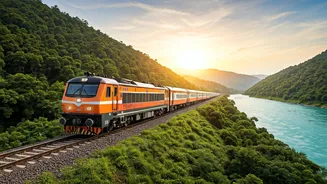
The history of high-grade vinyl wrapping on Indian trains is strongly linked to the period when Mamata Banerjee served as the Union Railway Minister. Her impactful tenure, particularly her second term from 2009 to 2011, is widely cited as the starting point for this innovative practice. It's worth noting that she also held this ministerial portfolio earlier, from 1999 to 2001. As the current Chief Minister of West Bengal, Banerjee is credited with introducing the vibrant and eye-catching vinyl wraps for the Duronto Express trains, with the initiative commencing around September 2009. These early wraps utilized advanced cast polymeric vinyl films, designed with abstract patterns symbolizing speed and dynamism. Executed using an ultraviolet technique for digital embossing, these wraps delivered a lustrous and enduring finish, a concept conceived under her direct guidance. Over time, the application of vinyl wraps has expanded, notably for advertising purposes, with examples like branded trains in 2017 and a specific wrap in 2019. More recently, the focus has shifted towards using high-grade PVC sheets primarily for rapid maintenance and enhanced protection, though the iconic yellow-green livery of the Duronto trains, a product of this era, remains a memorable design.
Advantages Over Paint
Compared to the laborious and time-consuming process of traditional liquid painting, which necessitates steps like sanding, priming, applying multiple coats, and extensive drying periods, vinyl wrapping offers a substantial reduction in turnaround time. Furthermore, it significantly minimizes the emission of paint fumes and curtails environmental waste, positioning it as a considerably cleaner and more eco-conscious alternative. The cost-effectiveness and speed of vinyl wraps are striking; typically, a team of just 2-3 workers can complete the wrapping of an entire coach within a single day. This is achievable without the need for curing time or the generation of hazardous fumes, which are inherent drawbacks of conventional painting. Vinyl wrapping also boasts superior gloss retention over time. An added advantage is the possibility of conducting interior train work concurrently while the exterior is being wrapped. Since vinyl wraps eliminate the requirement for primers, multiple paint layers, or clear coats, the overall expenditure is reduced due to savings on both labor and materials. For Indian Railways, the cost of wrapping a single coach of the Duronto trains proved to be considerably more economical than undertaking a complete paint job.
Application and Care
The application process for vinyl wrapping an entire train is remarkably efficient. With a small crew of 2-3 individuals, a single coach can be fully wrapped in just one to two days. This rapid deployment bypasses the lengthy drying or curing times associated with painting, which can extend project timelines by days or even weeks. This reduction in time is critically important for busy railway networks where minimizing train downtime is paramount. Regarding upkeep, vinyl wraps are exceptionally low-maintenance. They do not require regular waxing and can be cleaned easily using simple soap and water. Their surface is resistant to stains, and they possess an inherent ability to conceal minor scratches, making them look better for longer. Moreover, the vinyl layer serves to protect the original paintwork beneath from the damaging effects of UV fading and minor abrasions or chips.
Design Freedom
Vinyl wraps liberate designers from the constraints often imposed by traditional painting techniques. Intricate and vibrant designs, such as the dynamic speed motifs featured on the Duronto Express trains, can be digitally printed and then precisely applied to the train's surface. One of the most compelling advantages is their removability; these wraps can be taken off without causing any damage to the underlying paintwork, which is exceptionally beneficial for rebranding initiatives or updating advertisements. This flexibility allows for creative expression and easy adaptation to evolving visual requirements, making them an ideal solution for modern transportation aesthetics and marketing.
Durability and Safety
High-quality vinyl wraps are engineered for longevity, consistently retaining their sheen for upwards of 18 months. A significant safety advantage is their freedom from the hazardous paint fumes that are a byproduct of traditional painting methods. Additionally, these wraps can be incorporated with reflective elements, thereby enhancing the train's visibility, particularly during nighttime or in adverse weather conditions. Another practical benefit is their lighter weight compared to paint, which can contribute to improved fuel efficiency. This combination of aesthetic appeal, practical advantages, and safety considerations makes high-grade vinyl wrapping a compelling choice for modern rail transport.