






Bridging East and West
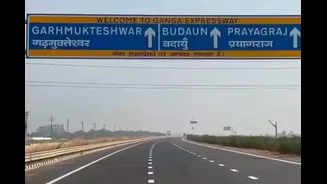
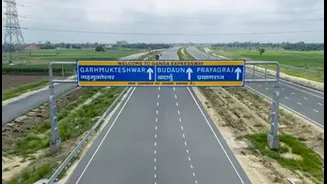
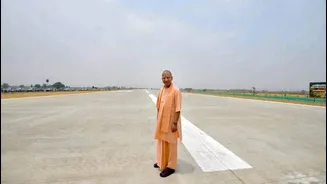
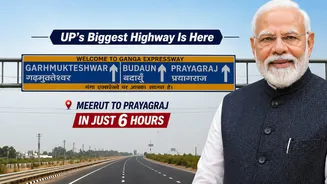
A significant milestone in Uttar Pradesh's infrastructure development has been reached with the official inauguration of the 594-kilometer-long Ganga Expressway.
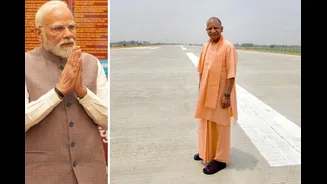
This ambitious corridor, stretching from Meerut to Prayagraj, was formally launched by Prime Minister Narendra Modi. The inauguration event, held near the Sadarpur interchange in Hapur district, saw a substantial gathering of approximately 5,000 individuals, including ministers, elected representatives, and senior administrative officials. This marks the commencement of traffic flow on an expressway designed to fundamentally alter travel dynamics across the state, connecting the eastern and western regions of Uttar Pradesh through a high-speed artery.
Swift Journeys for All
The extensive 594-kilometer Ganga Expressway is poised to dramatically enhance connectivity between the western parts of Uttar Pradesh and the holy city of Prayagraj. This new route is anticipated to offer significantly quicker travel for both devout pilgrims and everyday commuters. Specifically, travellers hailing from Delhi, Noida, Ghaziabad, Baghpat, and adjoining areas of Haryana are expected to experience the most substantial benefits. The expressway makes same-day round trips to Prayagraj a practical reality, allowing devotees to potentially depart in the morning, partake in a sacred dip at the Triveni Sangam, and return home by evening – a feat that was previously considerably more arduous and time-consuming. This improved accessibility also simplifies travel for administrative tasks, business engagements, and personal visits to Prayagraj, thereby reducing travel-related fatigue and overall expenses.
Hapur's Gateway Boost
In a strategic move to bolster regional accessibility, the Ganga Expressway features two crucial interchanges within Hapur district. These entry and exit points have been meticulously designed to improve connectivity for travelers originating from nearby urban centers and adjacent states. These interchanges are envisioned as vital access hubs, making the expressway more readily available to residents of the Delhi-NCR region and western Uttar Pradesh. Authorities anticipate that this enhanced connectivity will provide considerable relief, particularly during the busy periods of religious festivals when a multitude of pilgrims make their way to the Sangam. The integration of these local access points ensures that the benefits of the expressway are not confined to long-distance travel but also extend to facilitating easier journeys within the immediate vicinity.
Catalyst for Growth
Beyond its primary function as a transportation artery, the Ganga Expressway is being promoted as a significant driver for regional economic advancement. The opening of this corridor is expected to accelerate development initiatives in the surrounding areas. Hapur district, for instance, has already identified three distinct zones designated for industrial development. Officials are optimistic that the improved connectivity will attract new investments and create substantial employment opportunities along the expressway's path. The project's impact is anticipated to extend far beyond simply facilitating mobility, playing a crucial role in fostering industrial expansion and stimulating economic activity throughout the regions it traverses.