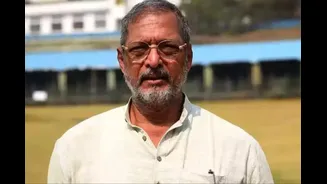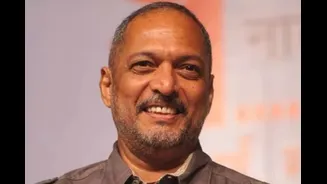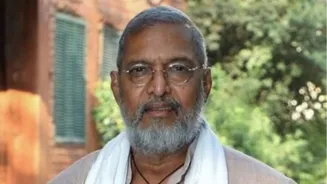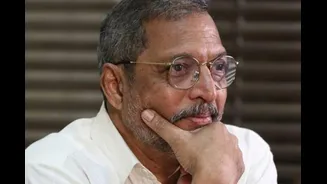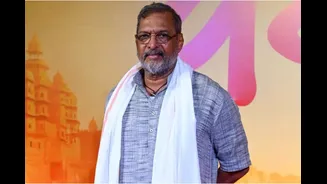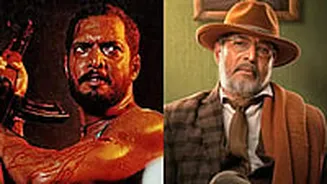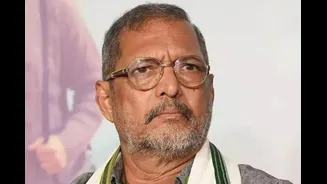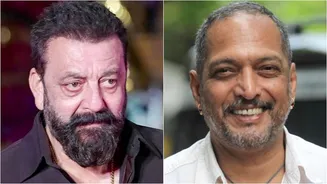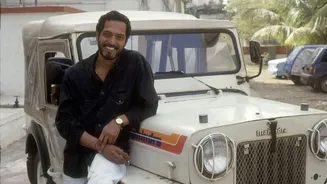





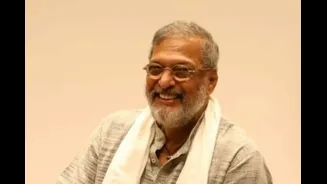
New Delhi: From the menacing Anna in Vidhu Vinod Chopra’s Parinda to the hilarious Uday Shetty in Anees Bazmee’s Welcome, Nana Patekar has built a career
on characters who are difficult to forget.
Nana Patekar has never been the kind of actor who needed a romantic song, a stylish entry or a carefully choreographed fight to make his presence felt. Give him a good scene, and he could turn it into the most talked-about moment of a film. Sometimes all it took was an angry outburst. At other times, a pause or a disapproving look did the job.
His dialogue delivery has inspired mimicry artists, become part of everyday conversations and, more recently, found a new audience through internet memes. But there is more to Patekar than his famous lines. His filmography includes men who are cruel, principled, insecure, affectionate, eccentric and occasionally downright funny.
Here are 15 films and roles that show why Nana Patekar continues to occupy a distinctive place in Indian cinema.
1. Anna in Parinda (1989)
Anna was not the sort of gangster audiences were accustomed to seeing. He could be terrifying one moment and strangely vulnerable the next. In Vidhu Vinod Chopra’s Parinda, Patekar gave the underworld don an unpredictable personality that made even ordinary conversations seem dangerous. The performance won him a National Film Award and helped establish him as an actor capable of dominating a film without playing its conventional hero.
2. Major Pratap Chauhan in Prahaar: The Final Attack (1991)
With Prahaar, Patekar took charge both in front of and behind the camera. His Major Chauhan believes in discipline, honesty and personal courage, but discovers that the world outside the army operates by a very different set of rules. The film allowed Patekar to explore a subject that has surfaced repeatedly in his work: the frustration of an individual confronting a society unwilling to change.
3. Inspector Shivajirao Wagle in Tirangaa (1993)
Put Raj Kumar and Nana Patekar in the same film and there was bound to be a battle of personalities. Tirangaa gave audiences exactly that. As Inspector Wagle, Patekar was aggressive, outspoken and ready to take on anyone standing in his way. The film’s unapologetically dramatic treatment and colourful dialogue helped it acquire a following that has endured for decades.
Remembered dialogue: “Pehle laat, phir baat, uske baad mulaqat.”
4. Pratap Narayan Tilak in Krantiveer (1994)
If there is one film that demonstrated Patekar’s ability to hold an audience through sheer dialogue delivery, it is Krantiveer. His character, Pratap Narayan Tilak, becomes the voice of a man fed up with corruption, injustice and divisions in society. The film gave Patekar several lengthy speeches, but the anger rarely appeared mechanical. He delivered the words as though the grievances belonged to him. The performance earned him the National Film Award for Best Actor.
Remembered dialogue: “Aa gaye meri maut ka tamasha dekhne?”
5. Vishwanath in Agni Sakshi (1996)
Not every memorable character needs to be likeable. Patekar proved that with Agni Sakshi. His Vishwanath is a controlling husband whose obsession with his wife takes a frightening turn. The actor made the character’s possessiveness uncomfortable to watch, particularly when his seemingly ordinary behaviour gave way to sudden aggression. It remains one of his most disturbing screen portrayals.
6. Joseph Braganza in Khamoshi: The Musical (1996)
In Khamoshi, Patekar had to do something unusual for an actor celebrated for his voice: convey his character’s feelings without spoken dialogue. Playing Joseph, a deaf father who struggles with his daughter’s choices, he communicated affection, disappointment and helplessness through gestures and facial expressions. The performance revealed a quieter side of Patekar and remains among the most emotionally affecting roles of his career.
7. Mustafa in Ghulam-E-Mustafa (1997)
Mustafa is a man whose profession demands ruthlessness, yet whose personal relationships expose a very different personality. Patekar played the contract killer with the authority audiences expected from him, but the film’s more interesting moments came when Mustafa began to question the life he had accepted. It was another role that allowed the actor to move between intimidation and tenderness.
8. Inspector Yeshwant Lohar in Yeshwant (1997)
Few actors could turn a complaint about a mosquito into a full-blown expression of social frustration. Patekar managed it in Yeshwant. As a short-tempered police officer, he delivered one of the most frequently repeated monologues of his career. The speech became more famous than many of the film’s other scenes.
Remembered dialogue: “Ek machhar saala aadmi ko hijda bana deta hai.”
9. Sadhu Agashe in Ab Tak Chhappan (2004)
After years of playing characters known for their explosive temper, Patekar took a different approach in Ab Tak Chhappan. His encounter specialist Sadhu Agashe speaks about violence with the casualness of someone discussing his daily routine. There is little need for dramatic speeches. The unsettling quality comes from how ordinary his character makes extraordinary acts appear. The performance showed that Patekar could command attention even when he deliberately lowered the intensity.
10. Tabrez Alam in Apaharan (2005)
In Prakash Jha’s Apaharan, Patekar plays a man who has turned kidnapping into a business with political connections. Tabrez Alam does not depend entirely on muscle power. He understands how influence works and how fear can be used to maintain control. Patekar gave the character an authority that came less from shouting and more from his ability to make others listen.
11. Uday Shetty in Welcome (2007)
For audiences familiar with Patekar’s angry policemen and ruthless gangsters, Welcome was an unexpected treat. Uday Shetty may be a gangster, but his problems are surprisingly domestic. He wants a suitable husband for his sister, worries about respectability and constantly struggles to keep his temper in check. His scenes with Anil Kapoor’s Majnu Bhai became a major attraction. Years later, clips from the film continue to circulate widely online.
Remembered dialogue: “Control, Uday, control!” A comic line that found a second life in memes and everyday banter.
12. Brij Gopal in Raajneeti (2010)
Patekar’s Brij Gopal in Raajneeti is a man who understands that political battles are not always won by those who speak the loudest. He watches, calculates and intervenes when necessary. His influence comes from experience and his understanding of the ambitions of those around him. It was a performance built on restraint, a quality that sometimes gets overlooked when discussing Patekar’s work.
13. Dr. Prakash Amte in Dr. Prakash Baba Amte: The Real Hero (2014)
This Marathi biographical drama gave Patekar an opportunity to portray a real-life humanitarian rather than a fictional larger-than-life personality. As Dr. Prakash Amte, who devoted his life to working with underserved communities, Patekar kept the performance measured and free of unnecessary theatrics. The role stood apart from many of the confrontational characters for which he had become famous.
14. Ganpatrao Belwalkar in Natsamrat (2016)
Natsamrat brought together Patekar’s command over language and his ability to portray emotional collapse. His Ganpatrao Belwalkar is a celebrated stage actor who discovers that applause and professional success offer little protection against loneliness in old age.
The film demanded theatrical speeches as well as deeply personal moments of disappointment and grief. Patekar moved between the two with remarkable ease. For many viewers, it remains one of his most accomplished performances.
15. Dr. Balram Bhargava in The Vaccine War (2023)
In The Vaccine War, Patekar portrayed Dr Balram Bhargava, who led the Indian Council of Medical Research during the pandemic. The film placed him in the world of scientific research, institutional decision-making and the race to develop a vaccine. The character was another example of Patekar playing a man whose convictions shape his decisions, even under considerable pressure.
What makes Patekar’s career interesting is not simply the number of memorable characters he has played, but how different those characters have been. He has not always chosen commercially successful films, nor has every performance received the same appreciation. But when a character has given him something substantial to work with, he has often made it difficult for audiences to look elsewhere. That, more than any single dialogue, explains why Nana Patekar remains an actor people continue to discuss.