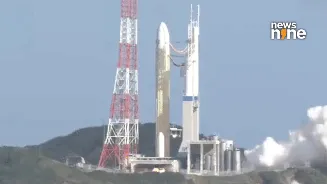








New Delhi: Japan faced a tense space moment this week after its H3 rocket failed to place a navigation satellite into orbit. I followed the launch updates
with that mix of excitement and worry many space watchers know too well. The mission was important because it was meant to strengthen Japan’s regional navigation network, something the country has been building for years to reduce dependency on GPS. Instead, the conversation turned to what went wrong.
Officials confirmed that the rocket suffered a problem soon after liftoff.
[プレスリリース]
H3ロケット8号機の打上げ失敗及び対策本部の設置#JAXA https://t.co/rOrSjFd747— JAXA(宇宙航空研究開発機構) (@JAXA_jp) December 22, 2025
Japan’s H3 rocket fails to place navigation satellite, investigation underway
Japan’s science ministry confirmed that the H3 rocket, carrying the sixth satellite in its Quasi Zenith Satellite System (QZSS), could not deliver the payload into orbit. The Japan Aerospace Exploration Agency said it is looking into the issue. According to the update, “The Japan Aerospace Exploration Agency is assessing the situation and investigating the cause of the second-stage engine’s premature cutoff.”
The launch took place from the Tanegashima Space Center in Kagoshima Prefecture. This particular satellite was meant to add more stability to Japan’s independent navigation service. The system helps provide accurate positioning for smartphones, vehicles, and many industries. JAXA notes the satellites aim at “covering close to 100 percent of Japan, including urban canyons and mountain terrain.”
What this navigation system means for Japan
Japan has slowly built this satellite navigation programme over years.
Here is what the plan looks like:
- It began operating with four satellites in 2018
- The aim is to build a seven-satellite constellation
- The long term goal is to expand to eleven satellites for extra safety
One of the satellites, Michibiki No. 6, was launched earlier this year. The mission that failed now was the sixth in the planned seven-satellite lineup. The agency earlier said, “The agency ultimately plans to have 11 geolocation satellites orbiting the Earth to ensure that the system has redundancy in the event of technical problems, and to expand coverage.”
Delays before launch and why this matters
This launch had already faced delays. It was first planned for December 7, then moved twice because of rocket and ground system issues. From a science journalist perspective, it shows how fragile rocket systems still are, even for experienced space nations like Japan.
Japan wants its navigation system not only for home use but to support Asia and Oceania too. JAXA says that with seven satellites, at least one remains above Japan at all times, which strengthens reliability.