







New Delhi: Chennai is witnessing a fresh rise in dengue cases, with mosquito-control inspections across the city finding Aedes larvae in more than 3,300
houses in just one week. The Greater Chennai Corporation (GCC) has intensified its vector-control operations after identifying 3,326 houses and 4,029 water-holding containers positive for Aedes larvae across its 15 zones.
The development comes as dengue cases in the city continue to climb. According to data compiled by the GCC, 302 dengue cases were recorded during the first three weeks of August, compared with 282 cases in July and 137 in June. In August last year, Chennai reported 363 dengue cases during the entire month.
Thiru. Vi. Ka. Nagar records highest number of affected houses
The latest surveillance has flagged several parts of the city as mosquito-breeding hotspots. Thiru. Vi. Ka. Nagar recorded the highest number, with Aedes larvae detected in 610 houses. Tondiarpet, Royapuram, Adyar, Perungudi and Sholinganallur also reported a significant number of houses with Aedes breeding.
The situation has also raised concerns in Korattur. Ward 84 councillor J John said dengue cases had been reported in the TNHB Layout, including 14th and 27th Streets, in recent days.
John also pointed to a shortage of personnel for vector-control work in the ward, saying only 10 workers were currently available against the usual requirement of around 18.
The GCC has stepped up door-to-door surveillance to identify and eliminate mosquito-breeding sources.
GCC Commissioner G S Sameeran said 2,076 domestic breeding checkers had been deployed for anti-larval activities across the city. The civic body is also operating 470 portable fogging machines every day to control adult Aedes mosquitoes.
Officials have been carrying out source-reduction drives at residential premises as well as construction sites, schools, parks and other public spaces. Special drives are also being conducted on Sundays, particularly at new construction sites, to identify and remove potential breeding spots.
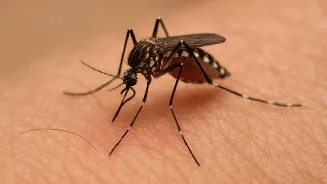
Aedes mosquitoes are particularly difficult to control because they can breed in relatively small quantities of stagnant water around homes and other built-up areas. Water stored in containers, discarded items and other receptacles can become potential breeding sites if left unattended.
The GCC has therefore urged residents to remove small water-retaining structures and regularly inspect their premises for stagnant water. The civic body has also been creating awareness among residents about preventing mosquito breeding at the household level.
Why dengue risk rises during the rainy season
The increase in breeding sites comes as Chennai enters a period when intermittent rain can leave water accumulated in containers, construction material and other household or public spaces.
Unlike mosquitoes that are primarily active at night, Aedes mosquitoes are day-biting, making personal protection and elimination of breeding sites particularly important throughout the day.
Health authorities have also stepped up fever surveillance amid an increase in seasonal fever cases following rains in Tamil Nadu. Government hospitals have been directed to strengthen fever-management arrangements and monitor illnesses including dengue, chikungunya, typhoid and leptospirosis.
Civic body intensifies anti-dengue drive
With thousands of breeding-positive houses identified, the latest figures underline the importance of source reduction alongside fogging and surveillance.
For Chennai residents, health officials’ message remains straightforward: eliminate stagnant water, keep water-storage containers covered, check terraces and outdoor areas regularly, and report mosquito-breeding sites to civic authorities.
The GCC’s latest intervention comes at a critical point in the season, with the rise in dengue cases and widespread detection of Aedes larvae highlighting the continuing challenge of keeping mosquito populations under control.