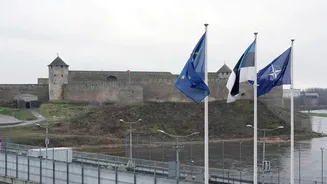




New Delhi: Estonia has decided to close all its road border crossing points with Russia for at least six months, citing growing security concerns and what
it describes as hostile activities by Moscow. The restrictions will come into effect on December 1, the Estonian government announced on November 20.
The decision covers all five road checkpoints along the Estonia-Russia border. The government will review the situation after six months and decide whether the restrictions should be extended or modified.
Russia has strongly criticised the move. Russian Foreign Ministry spokesperson Maria Zakharova accused Estonia of attempting to create a new ‘Iron Curtain’ under what she described as the false pretext of a threat from the East. Moscow also warned that it would respond with political and diplomatic measures.
Why is Estonia closing its border with Russia?
Estonia, a member of both NATO and the European Union, said the decision was necessary to protect national security and prevent further hostile activities by Russia.
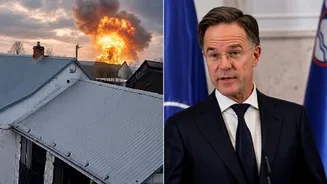
The move comes amid growing tensions over alleged Russian-backed sabotage operations in Estonia and other European countries. Tallinn has accused Russian security services of being involved in an attempted arson attack targeting Estonian defence company Threod Systems.
The incident took place at the company’s facility near Tallinn in November. Estonian authorities said it was part of a wider pattern of attacks against the country’s defence industry. They have also accused Russian intelligence services of being behind another such incident earlier this year.
Estonian Interior Minister Igor Taro said Russian security services were attempting to intimidate and recruit Estonian citizens travelling through border checkpoints. He said closing the crossings would make it harder for Moscow to organise further attacks.
Estonian Prime Minister Kristen Michal said Russia’s hostile activities showed no signs of slowing down. Foreign Minister Margus Tsahkna also maintained that the decision was not a response to one isolated incident but part of a broader effort to address Russian aggression and sabotage operations across Europe.
Moscow has denied involvement in the alleged attacks
The closure will affect the movement of people and vehicles through road checkpoints. However, rail freight services will continue under existing restrictions and strict customs checks. Reacting to Estonia’s announcement, Zakharova accused the country of trying to create a new divide between Russia and Europe. “Such moves are tantamount to attempts to erect a new Iron Curtain under the false pretence of some sort of threat from the East,” she said.
She warned that Russia would take necessary political and diplomatic measures to protect its national interests if Tallinn went ahead with the restrictions.
The decision could also affect thousands of people who have family connections on both sides of the border, many of which date back to the Soviet era. The crossing at Narva, a predominantly Russian-speaking city in Estonia, is an important route for people travelling between the two countries and towards Russia’s St Petersburg.
According to Estonian police data, around 760,000 people crossed the Estonia-Russia border this year. They included 307,000 Russian nationals and 175,000 Estonian citizens.
Estonia’s decision comes as several European countries tighten restrictions along their borders with Russia following the Ukraine war. Finland shut its land border crossings with Russia in December 2023 and has kept them closed since. Latvia, Lithuania and Poland have also introduced restrictions at their eastern borders.