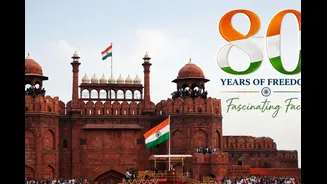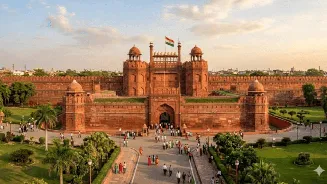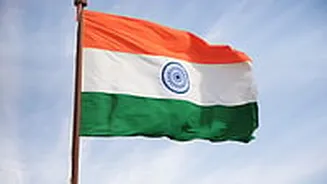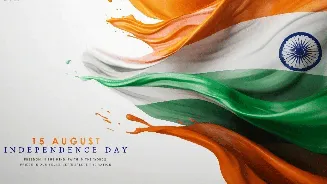


New Delhi: As India prepares to celebrate its 80th Independence Day on August 15, the tricolour will once again rise above homes, schools and the Red Fort.
But behind that familiar sight lies a story written by thousands of men and women, some celebrated in history books, others remembered only in their villages, who challenged colonial rule, endured imprisonment and persecution, and, in many cases, gave their lives for a free India.
August 15, 1947, marked the end of British rule and the beginning of India’s journey as an independent nation. In 2026, India marks its 80th Independence Day celebration, although 79 years have passed since independence. The distinction is simple: the first Independence Day was celebrated in 1947, making 2026 the 80th observance.
Yet Independence Day is more than a commemoration of a date. It is a reminder of the extraordinary breadth of India’s freedom movement – from mass movements led by Mahatma Gandhi to revolutionary resistance, tribal uprisings and the determined participation of women across the country.
1. Mahatma Gandhi – The architect of mass resistance
Mahatma Gandhi transformed India’s freedom struggle into a mass movement through Satyagraha, non-violence and civil disobedience. He led the Non-Cooperation Movement, the historic Dandi March in 1930 and the Quit India Movement in 1942. His strategy brought millions of ordinary Indians into the struggle against British rule.
2. Subhas Chandra Bose – The leader who raised the INA
Subhas Chandra Bose pursued a more militant route to independence and became the most prominent leader of the Indian National Army (INA). On October 21, 1943, he proclaimed the Provisional Government of Azad Hind in Singapore, seeking to liberate India through armed struggle against British rule.
3. Bhagat Singh – The revolutionary icon
Bhagat Singh became one of India’s most enduring symbols of revolutionary nationalism. He helped establish the Naujawan Bharat Sabha and was a leading figure in the Hindustan Socialist Republican Association. His revolutionary activities and execution in 1931, alongside Rajguru and Sukhdev, made him an enduring symbol of youthful sacrifice and resistance.
4. Chandrashekhar Azad – The revolutionary who refused surrender
Chandrashekhar Azad was a key revolutionary leader who helped reorganise the Hindustan Republican Association into the Hindustan Socialist Republican Association (HSRA) in 1928. He became its military commander and supported an organised armed struggle against British rule, working alongside Bhagat Singh and other young revolutionaries.
5. Rani Lakshmibai – The warrior queen of Jhansi
Rani Lakshmibai emerged as one of the defining leaders of the 1857 uprising. Her resistance in Jhansi made her a powerful symbol of courage against British expansion. Even after her death, resistance continued in the region, demonstrating the influence her leadership had on the people of Bundelkhand.
6. Sarojini Naidu – The voice that mobilised women
Sarojini Naidu combined political leadership with powerful oratory and poetry during the freedom struggle. Known as the “Nightingale of India,” she played an important role in mobilising women and promoting national unity. She also became the first Indian woman to preside over the Indian National Congress.
7. Alluri Sitarama Raju – The face of tribal resistance
Alluri Sitarama Raju led the Rampa or Manyam Rebellion in the tribal regions of present-day Andhra Pradesh in 1922. He united tribal communities against British policies, trained fighters in guerrilla warfare and challenged colonial authority. He was captured and martyred in 1924.
8. Birsa Munda – The tribal leader who challenged British rule
Birsa Munda became a powerful leader of tribal resistance in present-day Jharkhand. He fought British domination and worked to restore dignity and rights to the Munda community. Arrested after an encounter in 1900, he died in British custody, leaving behind a lasting legacy of tribal resistance.
9. Aruna Asaf Ali – The woman who raised the flag of Quit India
Aruna Asaf Ali created one of the defining images of the Quit India Movement when she hoisted the Indian National Congress flag at Bombay’s Gowalia Tank Maidan on August 9, 1942, after major Congress leaders had been arrested. She went underground and continued supporting the movement before later serving as Delhi’s first mayor.
10. Matangini Hazra – The Gandhiburi who marched with the tricolour
Matangini Hazra, affectionately called Gandhiburi, was a determined participant in Bengal’s freedom movement. During a 1942 protest at Tamluk, she continued advancing with the national flag despite being shot by British Indian police. She died on September 29, 1942, becoming a symbol of extraordinary courage and sacrifice.
India’s independence was not the achievement of a single leader, movement or region. It was shaped by non-violent protesters, revolutionaries, tribal leaders, women activists and countless ordinary Indians who resisted colonial rule in different ways. As the tricolour rises on August 15, remembering these heroes is also a reminder of the enormous human sacrifice behind India’s freedom.