





New Delhi: Every August 15, the Indian Tricolour transforms ordinary spaces into powerful symbols of freedom – fluttering from rooftops, government buildings,
schools and streets. Yet behind its familiar three colours and the navy-blue Ashoka Chakra lies a carefully evolved national identity, shaped by India’s freedom struggle and formally adopted just weeks before Independence. As India prepares to celebrate its 80th Independence Day, here is what the Tiranga’s colours and the 24-spoked Chakra signify and why every detail of the flag matters.
Tiranga: The flag India chose before Independence
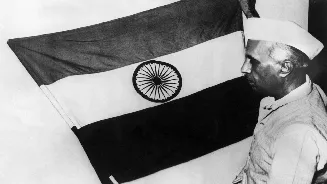
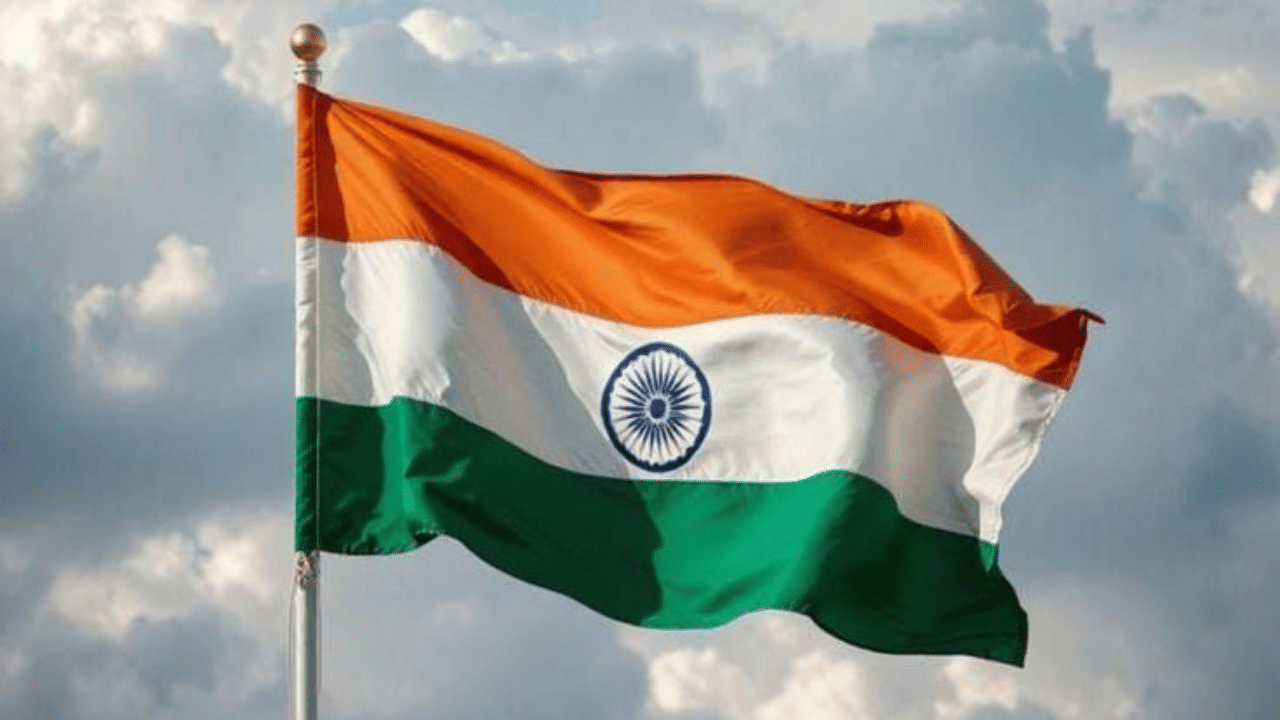
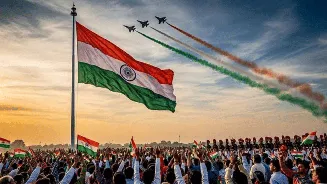
The present design of India’s National Flag was adopted by the Constituent Assembly on July 22, 1947, less than a month before India became independent on August 15. It consists of three equal horizontal bands: deep saffron at the top, white in the middle and dark green at the bottom. The flag’s width-to-length ratio is 2:3.
The flag’s evolution is closely associated with freedom fighter Pingali Venkayya, whose designs formed the basis of the Tricolour. Government records note that Venkayya worked on several flag designs and, at Mahatma Gandhi’s request, developed a national flag design during the freedom movement. The design evolved over time before the Constituent Assembly approved the present flag in 1947.
Saffron: Courage, strength and sacrifice
The top saffron band represents the strength and courage of the nation, according to the National Portal of India. Saffron is also widely associated with sacrifice and valour in official descriptions of the Tricolour.
Its position at the top gives the colour a striking visual prominence – a reminder of the courage and sacrifices that accompanied India’s struggle for independence.
White: Peace, truth and the moral centre
At the heart of the flag is the white band, representing peace and truth. It also provides the visual field for the Ashoka Chakra, making the middle section more than simply a transition between saffron and green.
The white band can therefore be read as the flag’s moral centre: a call toward peace and truth amid the courage symbolised above and the growth represented below.
Green: Growth, fertility and prosperity
The green band at the bottom represents the fertility, growth and auspiciousness of the land, according to the National Portal of India. Official government descriptions have also associated green with prosperity.
Together, the three colours create a symbolism that extends beyond Independence Day: courage, peace and truth, and the continuing growth of the nation.
Why is there an Ashoka Chakra in the middle
The most distinctive feature of the Indian flag is the navy-blue Ashoka Chakra, positioned at the centre of the white band.
It is based on the Dharma Chakra, the Wheel of Law, appearing on the abacus of the Lion Capital of Ashoka at Sarnath, dating to the 3rd century BCE. The Chakra has 24 spokes.
Its symbolism is especially striking. The National Portal explains the Chakra through the idea that there is life in movement and death in stagnation. The wheel therefore represents continuous movement, progress and the pursuit of righteousness rather than remaining static.
Why the flag’s details matter
The Tricolour is not merely a decorative symbol of patriotism. Its display and handling are governed by the Flag Code of India, 2002, along with the Prevention of Insults to National Honour Act, 1971. The Ministry of Home Affairs continues to issue guidance on strict compliance with these provisions.
Among other requirements, the flag should not intentionally touch the ground or floor, trail in water, or be displayed with the saffron band down. The law also prohibits acts that burn, mutilate, deface, destroy, trample upon or otherwise show disrespect to the National Flag.
For Indians, then, the Tiranga is more than three colours and a wheel. Saffron recalls courage, white calls for peace and truth, green looks towards growth, while the 24-spoked Ashoka Chakra keeps the idea of movement at the centre.
On Independence Day 2026, when the Tricolour rises against the morning sky, its message remains remarkably simple: a free nation must not merely remember its past – it must keep moving forward.