






New Delhi: There are some places in India where patriotism is not something you simply see – you feel it. It is there in the silence of a memorial, in the bullet
marks on an old wall, in the names of soldiers carved in stone and in the sight of the Tricolour rising against a historic skyline.
As India prepares to mark Independence Day on August 15, 2026, travellers looking to make the national holiday more meaningful can go beyond flag-themed celebrations and visit places that tell the story of the country’s long, complicated and often painful journey to freedom. From the ramparts of Delhi’s Red Fort, where the Prime Minister addresses the nation every Independence Day, to the Cellular Jail in the Andamans, where freedom fighters endured brutal imprisonment, these destinations offer a deeply immersive way to spend the country’s most important national holiday.
Independence Day 2026: Patriotic places in India to visit
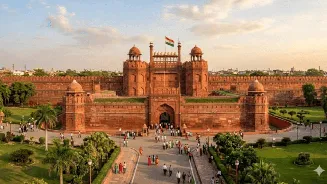
1. Red Fort, Delhi: The address that defines August 15
If there is one monument inseparable from India’s Independence Day, it is the Red Fort.
Every August 15, the Prime Minister hoists the national flag from the ramparts of the historic fort and addresses the nation. The tradition goes back to India’s first Independence Day in 1947, making the monument one of the most powerful symbols of independent India.
2. National War Memorial, Delhi: Where the stories of soldiers take centre stage
For those who want to connect Independence Day with India’s post-Independence military history, the National War Memorial near India Gate is an obvious stop.
The memorial honours Indian armed forces personnel who made the ultimate sacrifice, while its Param Yodha Sthal features bronze statues of the 21 recipients of the Param Vir Chakra, India’s highest military decoration for gallantry.
The experience is markedly different from the celebratory atmosphere surrounding Independence Day. Instead of crowds and ceremony, visitors encounter names, memorial architecture and stories of individual courage — a reminder that independence is not simply a historical event but something that generations of Indians have been called upon to defend.
3. Jallianwala Bagh, Amritsar: A place where silence says more than slogans
Few places make the cost of colonial rule feel as immediate as Jallianwala Bagh.
On April 13, 1919, British troops under Brigadier-General Reginald Dyer opened fire on a gathering at the enclosed garden in Amritsar. The site is now a national memorial commemorating those killed or wounded in the massacre. The Ministry of Culture’s legislation formally defines the Jallianwala Bagh National Memorial as a memorial to those killed or wounded there.
4. Wagah-Attari Border, Punjab: Patriotism with a front-row seat to the border
Few Independence Day experiences are as visually dramatic as watching the evening ceremony at the India-Pakistan border.
At the Wagah-Attari border near Amritsar, the daily Beating Retreat and Change of Guard ceremony features elaborate drill by Indian and Pakistani personnel, culminating in the lowering of the national flags. The District Amritsar administration describes the ceremony as the day’s highlight, with the spectacle traditionally drawing an enthusiastic audience.
5. Cellular Jail, Sri Vijaya Puram, Andaman and Nicobar Islands: Walk through the story of ‘Kala Pani’
If the Red Fort represents the public face of India’s freedom, the Cellular Jail represents one of its darkest chapters.
The former colonial prison in present-day Sri Vijaya Puram was completed in 1906 and was designed around solitary confinement. Its seven wings radiated from a central tower, deliberately preventing prisoners from communicating with one another. Only three of the original seven wings survive today.
The prison became synonymous with the exile and incarceration of Indian freedom fighters, earning the dreaded association with Kala Pani. Today, the Cellular Jail is a national memorial and one of the most important freedom-struggle sites in the country.
6. Raj Ghat, Delhi: A quieter Independence Day pilgrimage
Not every patriotic destination needs marching bands and giant crowds.
At Raj Ghat, the mood is deliberately restrained. The memorial marks the site where Mahatma Gandhi was cremated on January 31, 1948, following his assassination. The black marble memorial, surrounded by gardens and an eternal flame, reflects the simplicity associated with Gandhi’s life and philosophy.
7. Netaji Bhawan, Kolkata: Step into the world of Subhas Chandra Bose
Kolkata offers a different window into India’s freedom movement at Netaji Bhawan, the ancestral home of Subhas Chandra Bose.
The building, now associated with the Netaji Research Bureau, preserves Bose’s memories, belongings and historical legacy. The official Incredible India portal describes it as a museum dedicated to his life and work, while the Netaji Research Bureau identifies it as Netaji’s ancestral house at 38/2 Lala Lajpat Rai Sarani, formerly Elgin Road.
For anyone interested in the more revolutionary strands of India’s freedom movement, the museum provides an intimate counterpoint to the large public monuments of Delhi.
8. Pradhanmantri Sangrahalaya, Delhi: From Independence to the making of modern India
For a broader look at what happened after August 15, 1947, head to the Pradhanmantri Sangrahalaya in New Delhi.
The museum traces India’s democratic journey through the lives and tenures of the country’s Prime Ministers. Rather than focusing solely on the freedom struggle, it helps answer a larger question: what did India do with the freedom it won?
The most memorable Independence Day journeys may not be the ones with the biggest crowds or the most elaborate decorations. They are the ones that connect a traveller to the many chapters of India’s freedom story. This August 15, the Tricolour will fly across India once again. But for those willing to travel a little farther, or simply walk a little more slowly through a memorial, the country’s history can feel remarkably close.