

New Delhi: Onam, the iconic harvest festival of Kerala, is here again with all its glory and grace. This year, the 10-day festivity began on August 16
and will end on August 26. Falling in the Malayalam month of Chingam, Onam celebrates food prosperity, the New Year and the return of the famous and kind-hearted Demon King Mahabali. For Kerala’s agricultural communities of the past, this was the time to reap their most cherished crop — rice. The festival is an identity and a heritage for Malayalis worldwide.
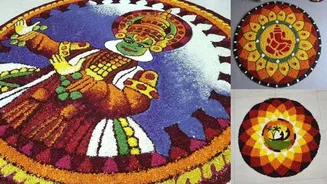
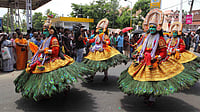
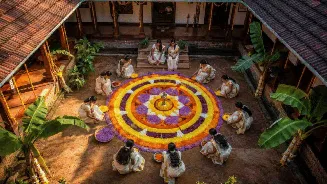
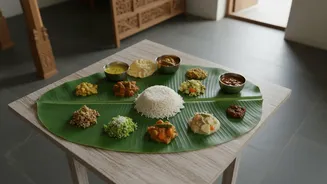
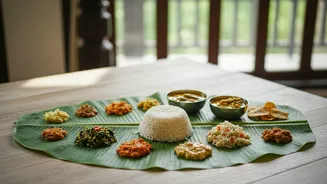
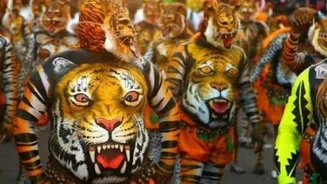
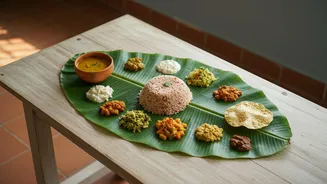
The celebrations include feasting on Onam Sadhya, making Pookalam, performing dances and other cultural and sports activities. On the fourth day of the festivity, one of Kerala’s most mesmerising indigenous art forms is performed: Pulikali, the tiger dance where performers dress up as puli or tiger. It is also known as Kaduvakali in some places. Here we will explore how this dance form came into existence.
Pulikali’s origin and preparation
It is said that Pulikali was introduced by Cochin King Rama Varma Sakthan Thampuran over 200 years ago. Thrissur is renowned for keeping alive the oldest style of the dance.
For the tiger dance, performers known as pulikalikkar paint their bodies with dark yellow and black colours, and they move like one. The dance is performed to the rhythm of vadyamelam.
To resemble the tiger, it is crucial to begin with big spots on the back of the body. The spots become smaller as they reach the front of the body to the belly.
One of the major characteristics of a pulikalikkar is their big belly, for which they begin preparations two or three months before Onam and eat a lot.
The tiger can have up to six types of stripes. The paint is applied only after removing body hair. Today, performers use face masks to resemble a tiger.
Other cultural activities during Onam
Kummattikali
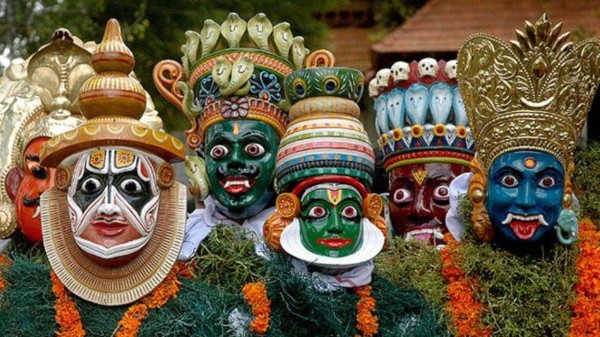
This colourful mask dance is popular in Thrissur and Palakkad districts, along with parts of South Malabar. Artistes go from house to house from the first day of Uthradam to the fourth day of Onam. The performers act as Shiva, Brahma, Rama, Krishna, Ganesha, Kirathamoorthy, Dhaarikan, Kali, as well as humans and animals. The kummatti, who wears the mask of a motherly figure, leads the performance.
Thiruvathirakali
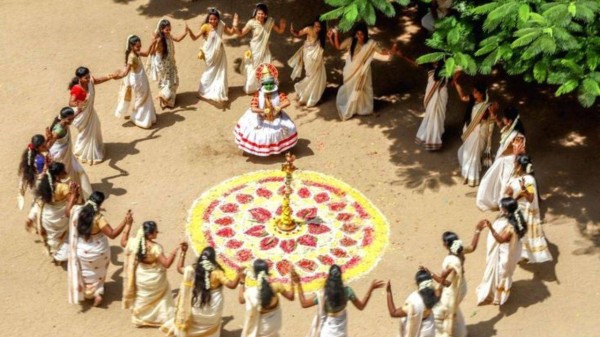
This is a unique dance by small groups of women that takes place around a traditional wick lamp called the nilaviḷakku. A container or kindi filled with water, an arippara or barrel of rice and ashtamangalayam or a set of eight auspicious elements are arranged near the lamp. Women are dressed in a mundum neriyatum or a sari. Hair is tied in a bun and decorated with jasmine flowers and a small bunch of dasapushpam, or 10 sacred flowers. Thiruvathirakali usually begins in praise of Lord Ganesh, followed by a prayer to Saraswati. Songs in praise of Shiva and Vishnu, folk tales, and Kathakali songs are also performed by singers in the background.
Onathallu
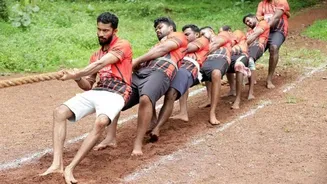
Onathallu, one of the oldest games of the Onam festival, is believed to have originated in central Kerala. It is a form of martial arts that makes use of one’s hands and body. It is learnt during the month of Karkidakam. The performance is mostly held in the Thrissur district and is most popular in Pallassana.
For people who have never visited Kerala during the Onam festival, it has lots of cultural experiences to offer. It is beyond any religion or region in today’s time! So, do visit the state once in your life during such an occasion.