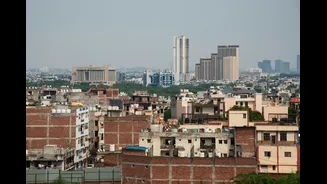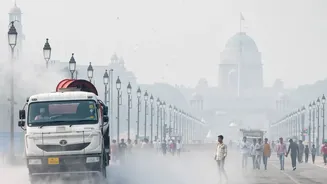








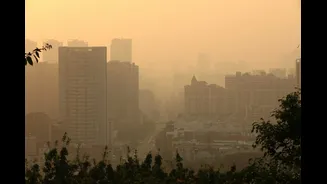
New Delhi: Delhi on Friday emerged as the world’s most polluted major city, surpassing Lahore, with worsening air quality blanketing India’s national capital
in dense smog. Pollution levels reached hazardous limits, reducing visibility across several areas and raising fresh concerns about public health.
According to Swiss air quality monitoring organisation IQAir, Delhi recorded an Air Quality Index (AQI) of 334, placing it ahead of Pakistan’s city of Lahore, in the global pollution rankings. Meanwhile, India’s Central Pollution Control Board (CPCB) reported a significantly higher AQI of 403, categorising the city’s air quality as ‘severe’.
The difference in readings is attributed to the distinct AQI scales and measurement methodologies followed by the two organisations.
Delhi AQI enters ‘Severe’ category for the first time this season
CPCB data showed that Delhi’s average AQI stood at 403 at 6:05 am on Friday and remained unchanged at 8 am and 9 am. The city’s final 24-hour average was scheduled to be recorded at 4 pm.
Out of 58 air quality monitoring stations reporting at 8 am, 33 recorded severe pollution levels, while 24 were categorised as very poor. Only one monitoring station reported moderate air quality.
IIT Delhi recorded the highest AQI at 488, followed by Chandni Chowk at 479 and Delhi University’s North Campus at 478. Burari Crossing registered 456, while ITO and Jawaharlal Nehru University recorded 451 each. Other severely polluted locations included Jahangirpuri (430), Wazirpur (427), Anand Vihar (419), Rohini (413) and IGI Airport Terminal 3 (403).
Why is Delhi’s air pollution worsening?
Air pollution typically intensifies across northern India during winter. Low temperatures, stagnant winds, and atmospheric conditions trap pollutants close to the ground. Vehicle emissions, construction dust, industrial activities, and smoke from agricultural residue burning contribute to the deteriorating air quality. With visibility declining and pollution levels remaining severe, Delhi’s worsening air quality highlights the growing need for effective pollution-control measures and greater public awareness.