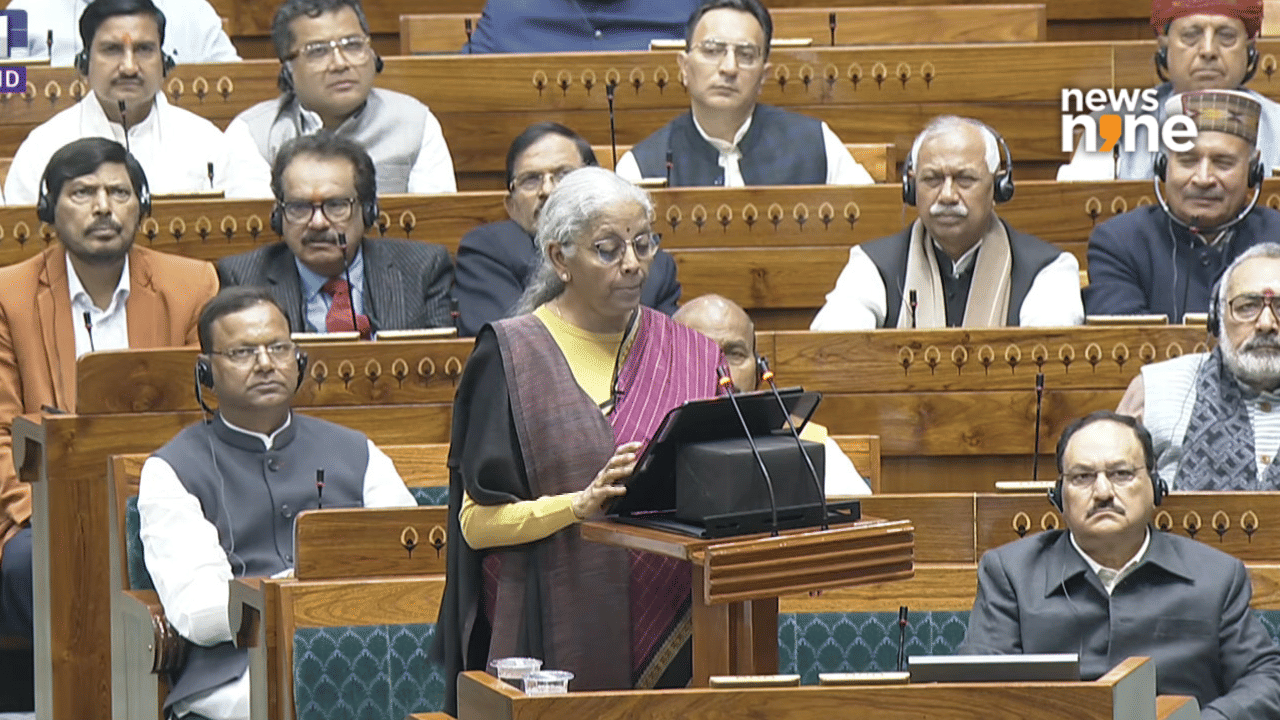

New Delhi: Finance Minister Nirmala Sitharaman on Sunday used her ninth Union Budget speech to place data centres and cloud infrastructure firmly at the
centre of India’s technology and digital economy plans. The announcements came alongside proposals for semiconductors, electronic components, MSMEs, and creative technology sectors, giving the budget a clear technology and manufacturing tilt.
The government wants more large-scale data centre capacity, deeper local manufacturing, and stronger domestic supply chains. From tax incentives for foreign cloud firms to fresh funding for chip and electronics production, Budget 2026 sets the stage for a busy few years ahead.
Budget 2026: Tax holiday till 2047 for cloud firms using India data centres
The headline announcement for the cloud sector was a long-term tax incentive.
“I propose to provide tax holiday till 2047 to any foreign company that provides cloud services to customers globally by using data centre services from India,” the minister said in her Union Budget 2026-27 speech.
She added that there is a need to enable critical infrastructure and boost investment in data centres.
In a push to data centres, the government will give a tax holiday till 2047 to any foreign companies that provide cloud services, provided they do so via Indian resellers.
To avail the tax holiday, companies need to provide services to Indian customers through an Indian reseller entity.
For many in the industry, this could shift how global cloud companies structure their India operations. A Bengaluru-based startup founder once told me that hosting overseas workloads in India often runs into cost and compliance questions. A policy like this aims to make India a more natural choice.
Budget 2026: Semiconductor mission 2.0 and electronics funding expanded
Budget 2026 also renewed focus on chips and components.
FM Sitharaman announced the rollout of the second phase of the India Semiconductor Mission (ISM). The government has nearly exhausted the Rs 76,000 funding available to it under the ISM, officials had said last August.
At the same time, the Centre will nearly double the allocation under the electronic component manufacturing scheme (ECMS) to Rs 40,000 crore in budget 2026. The scheme was approved with an initial allocation of Rs 22,919 crore last year, and opened to applications in May.
These steps target the backbone of smartphones, telecom gear, and consumer electronics.
Budget 2026: MSMEs and creative tech sectors get support
Small businesses remain a big part of the technology supply chain.
The Self-Reliant India Fund will be topped up by Rs 4,000 crore in 2026-27 to support MSMEs. The fund was announced in 2023 to infuse Rs 50,000 crore in equity funding into MSMEs with the potential and viability to grow into large units.
The government also announced support for India’s AVGC sector.
The government said the AVGC (Animation, Visual Effects, Gaming, and Comics) sector will require two million professionals by 2030. The Indian Institute of Creative Technologies, Mumbai, will set up AVGC labs in 15,000 secondary schools and 500 colleges.
Taken together, Budget 2026 sketches a clear direction. India wants to be a serious base for cloud infrastructure, data centres, chips, and digital services. The tax holiday for cloud firms stands out as one of the strongest signals in that direction.