



New Delhi: US President Donald Trump has said that regime change in Iran was never a priority for his administration, insisting that his primary objective
is to prevent Tehran from acquiring nuclear weapons through a permanent agreement.
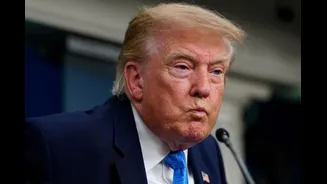
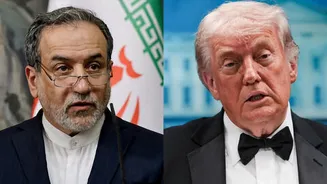
Speaking to Fox News in a phone interview on Saturday, Trump said he had ‘never cared too much’ about the regime governing Iran. He added that the United States was currently dealing with Iranian officials who were ‘very difficult’ to negotiate with.
Trump said he wanted an agreement that would remain in force even after he leaves office. He argued that a future US president should not be able to reverse the arrangement and allow Iran to develop nuclear weapons. “I’m going to make it so that if we have an incompetent president in four years or 15 years or 20 years, I’m going to make a deal that is going to be permanent,” Trump said.
He reiterated that he would not allow Iran to acquire nuclear weapons, regardless of who occupies the White House in the future.
Trump says regime change was never the goal
Trump’s remarks mark a clarification of his administration’s stated objectives in the ongoing conflict with Iran. He said he was not particularly concerned about who governed the country, suggesting that preventing it from developing nuclear weapons remained the central US objective.
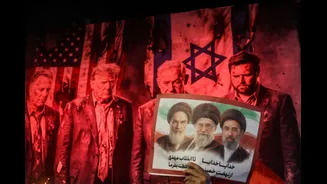
The comments come against the backdrop of a conflict that began with US-Israeli strikes against Iran in February 2026. The initial attacks killed Iran’s then-Supreme Leader Ali Khamenei. His son, Mojtaba Khamenei, subsequently assumed the position.
Trump had also indicated earlier that he was in no hurry to decide Washington’s next move against Tehran. Speaking to Israeli television network Channel 12 on Thursday, he said he could wait until 2027 before making a decision.
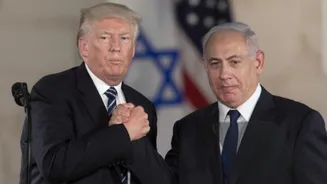
However, a fresh military escalation remains a possibility. According to a CBS News report, the United States and Israel are considering another military assault on Iran in the near term. Israeli Prime Minister Benjamin Netanyahu’s administration is reportedly concerned about the speed at which Tehran is rebuilding its weapons production capabilities.
Nuclear negotiations remain stalled amid rising tensions
Efforts to reach an agreement between Washington and Tehran have faced repeated setbacks. Trump has accused Iran of failing to honour previous agreements, claiming that Iranian officials agree to deals only to violate them later.
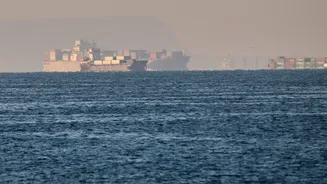
The conflict has also affected shipping and energy supplies in the region. Iran’s restrictions on the Strait of Hormuz and the US naval blockade of Iranian ports have added to tensions.
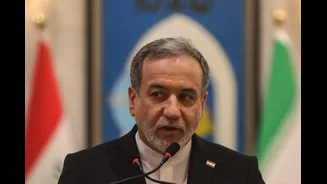
Meanwhile, Iran has rejected Washington’s allegations that it could be pursuing chemical or biological weapons. Its Foreign Ministry accused the US of changing its allegations against Tehran and compared the claims to the arguments used to justify the 2003 US invasion of Iraq.
Despite the continuing standoff, diplomatic efforts have not completely stopped. Qatar has been involved in mediation, with Iranian officials holding discussions with Qatari representatives.
Trump’s latest comments suggest that Washington is keeping the possibility of a negotiated settlement open, even as military and economic pressure on Iran continues.