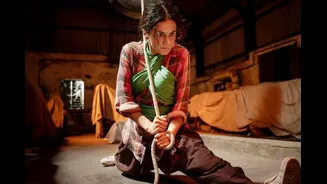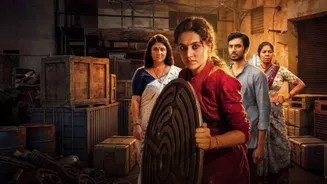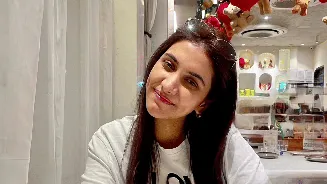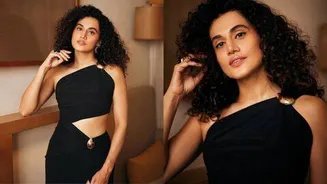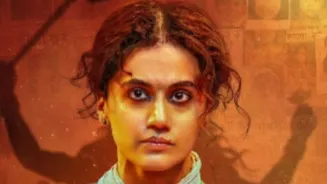


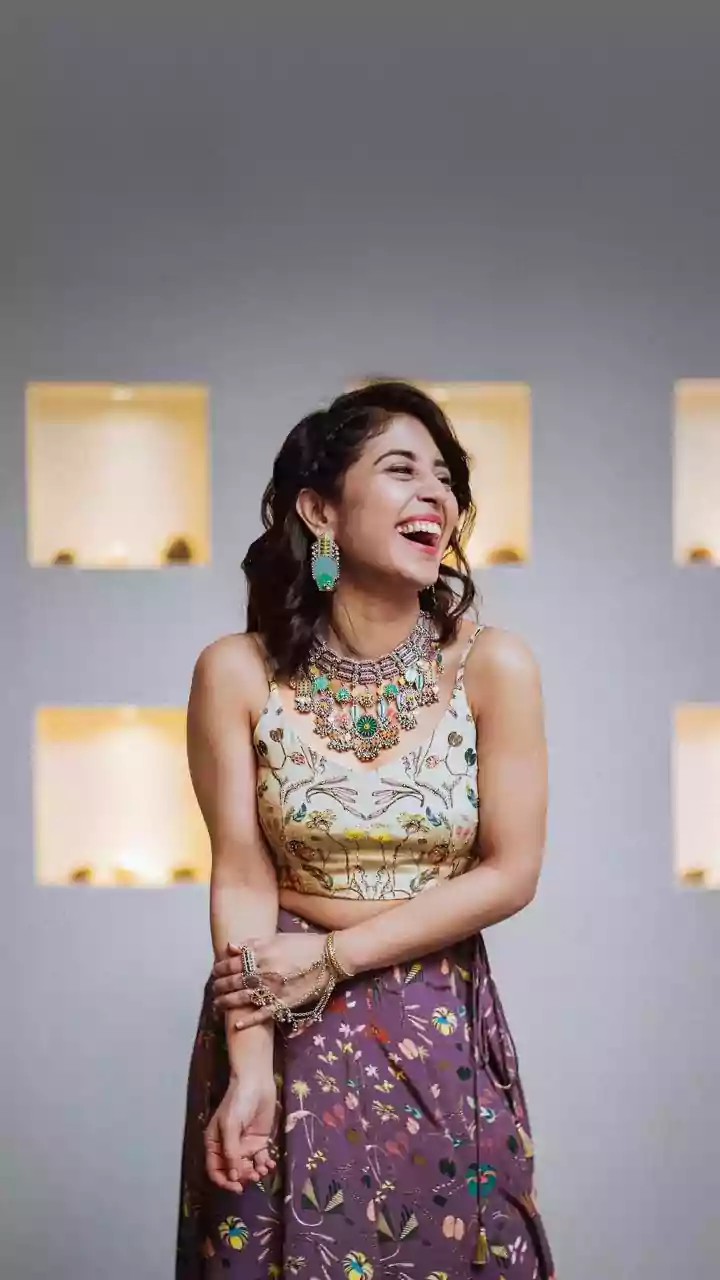

New Delhi: In an exclusive interview with News9 Digital, actress Taapsee Pannu opens up about playing Bani in her gripping new film Gandhari, where vulnerability
and physical strength collide. Taapsee reflects on the critical turning points of her career—from walking away from conventional, big-budget roles during her transition from South cinema to Bollywood, to embracing her unique place in the industry.
She also pulls no punches when discussing the state of women-led films, why she moved into production to champion merit over industry pressure, and why society’s obsession with policing women’s choices deserves less media attention.
Q. In Gandhari, Bani’s blindness becomes her strength rather than her limitation. How did you approach playing vulnerability and power simultaneously in a role this physically demanding?
Taapsee Pannu: Well, I think this was the reason why I said yes to the film because it had a display of power along with that vulnerability, which you don’t really get in a lot of characters. When you have to do action especially, it’s more about just showcasing your power. So, this one had a very vulnerable side to it, the reason why she had to show that power was because she was vulnerable enough. Um, so that is the reason for me to actually do this, and that does take a toll on you physically and mentally.
Q. Director Devashish Makhija has spoken about building a mysterious, layered world with the Bahurupiyas as a cultural backdrop. How did that setting change the way you built Bani’s fear and instinct?
Taapsee Pannu: Actually, that really helped creating a very mysterious environment because for Bani, this world was as it is not known, like in the sense that this was a new city, she was suddenly amidst new people, where she lost her daughter and then she had to take the charge of finding the daughter herself. So, there were already people that she did not know, and what made it additionally more mysterious and eerie was that it’s a land of Bahurupiyas, where people look a certain way but are something else. So, that kind of really added to the mystery and the eeriness of the situation for Bani.
Q. If Bani’s story is ultimately about a mother refusing to be defined by her circumstances, is there a version of that refusal in your own career you’d point to as a turning point?
Taapsee Pannu: I think the biggest turning point was when I was transitioning from South to Hindi films, because I tried all these big budget, big hero films there, tried to do the conventional heroine parts there. It seemed like that was just not working for me, where it worked for a lot of other colleagues of mine. I saw everyone else choosing these big films and big hero projects and doing the conventional three songs, five scenes kind of stuff, and it really worked wonders for a lot of my colleagues, but it, very surprisingly or shockingly for me, did not work for me. So, I had weirdly decided at that point, either I now listen to scripts, stories, and roles that speak to me and I really feel that I’m an audience to this and I will enjoy doing this, and only then do those films, or I just go back home.
So, I think that major decision in my choosing process, which was also coinciding with my transition from South to Hindi films, was a very big decision, which I refused to be defined by those big budget flops that I was having in my career at that point. I refused to be defined by the algorithm of big heroine, where it’s only about featuring in big budget films opposite big heroes, doing those big dance sequences. I refused to abide by that logic and then choose something which was different, and thank God for that.
There’s a larger, louder conversation happening right now about who gets to police what women wear in festival ads, film sets, red carpets. As someone who’s played women fighting to be heard on screen, what’s your honest take on society still deciding women’s appropriateness?
See, this is a battle that has been going on for ages, is happening right now, and honestly, I don’t know if it’ll die down soon if media constantly gives its platform to discuss these topics. These topics will not be discussed anymore when we don’t give them platforms of discussion, when we don’t really entertain people who want to discuss these kinds of ideas that we don’t find appropriate.
My larger question is, for how long we will amplify these voices or amplify these issues when in today’s day and age we have way more important and deeper, more challenging issues for our society and for our country? That platform should be given to those issues. So, I really find it wrong to constantly keep discussing this, keep answering this, keep talking about this, like, it’s just so wrong to allow these topics to get this kind of space in media.
Q. You’ve moved from actor to producer with Outsiders Films. What made you want to control behind the camera, and how has it changed the way you evaluate scripts as an actor now?
Taapsee Pannu: Nothing has changed for me as an actor about how I evaluate scripts as an actor. But yes, I became a producer not to actually generate working opportunity for me, but it was more like when I like a script, and it doesn’t necessarily require me, I should be able to put it together without featuring in it, and put in the right cast and crew who deserves to be a part of it rightfully, and not because of convenience. So, that was my idea.
Because sometimes we have to give in to a lot of pressures. I’ve seen people when mounting projects, they have to give in to a lot of pressures from different sides about taking a certain person in the cast or crew where talent or credibility is not really the reason. I really wanted to make sure the stories should be in line with my ideology in terms of the kind of films that I have been doing even as an actor, but the people who should be a part of it should be the ones who truly deserve or who have really shown themselves capable of that particular role or a position in the crew.
Q. You’ve been vocal in the past about pay parity and how women-led films are marketed differently. Has anything actually shifted in the five years since you first started saying this out loud?
Taapsee Pannu: In last five years, no, because it has probably stayed at the same position or gone back a little bit. Number of films have kind of reduced from the number of films mounted on women before COVID, those have reduced. I believe the collections have reduced is why, or the OTT has taken over, so most of them have gone to OTT. But honestly, I don’t feel there is a substantial growth, and that can be my personal opinion, but this is my observation and understanding.